
How to explain PDO threads to the patient

Quick facts
- Core message
- Threads give support and stimulation, they do not replace surgery
- Expectation to avoid
- A surgical lift effect
- Timing
- Mild immediate effect and gradual effect, at the professional's discretion
- Record
- Thread type, risks and aftercare in the consent
The PDO thread is one of the procedures that suffers most from the gap between social media promises and clinical practice. The patient arrives asking for "a lift without surgery," and you have to translate what the thread really does. This page suggests an explanation sequence that preserves realistic expectations and lets the patient decide with information.
What does the patient need to understand in one sentence?
Three ideas are in that sentence: the thread is absorbable, the effect is support and stimulation, and it does not replace surgery. If the patient keeps only that, the conversation has done its job. The entries on PDO and thread lift give the technical concept.
Which thread types should you explain?
Without naming brands, distinguish the families in patient language. Technical names vary, but the logic is simple:
| Type | How to explain it | What to expect |
|---|---|---|
| Smooth threads | Thin threads, aimed more at stimulating the skin | Improved quality, gradually |
| Threads with barbs or cones | Threads with small projections that grip the tissue | Mild support, to varying degrees |
| Threads for specific areas | Threads chosen according to the area | Depend on the professional's indication |
The choice is the professional's, after assessment. For the patient, what matters is knowing that there are different types and that the plan defines which one makes sense.
How do you talk about support without promising a lift?
This is where the greatest risk of frustration lies. The support the thread offers is discreet, and a patient who expects a "lifted face" tends to leave disappointed. Align with words like "support," "improved contour" and "firmness," and avoid "lift," "tighten" or "stretch."
For assessing sagging in the lower third, there is the page lower third sagging: assessment.
How do you explain the timing of results?
The thread produces two moments: a mechanical effect right after placement, usually mild and possibly masked by swelling, and a gradual effect tied to collagen stimulation. A timeline helps.
Timeframes vary a great deal. Use "generally" and "usually," and schedule a follow-up with a standardized photo.
Which risks and precautions should you explain?
Covering risks is part of the explanation and should not be left to the consent form alone. Talk about bruising and swelling, discomfort, asymmetry, surface irregularities, a visible or palpable thread, infection and, more rarely, injury to structures. Say that there is a way to manage complications and that the patient should report any severe pain, increasing redness or lump. The overview is at complications with PDO threads.
Also give guidance on wide facial movements in the first days, as the professional directs. What to avoid and for how long is at the discretion of whoever placed the threads.
How does Harmy fit into this conversation?
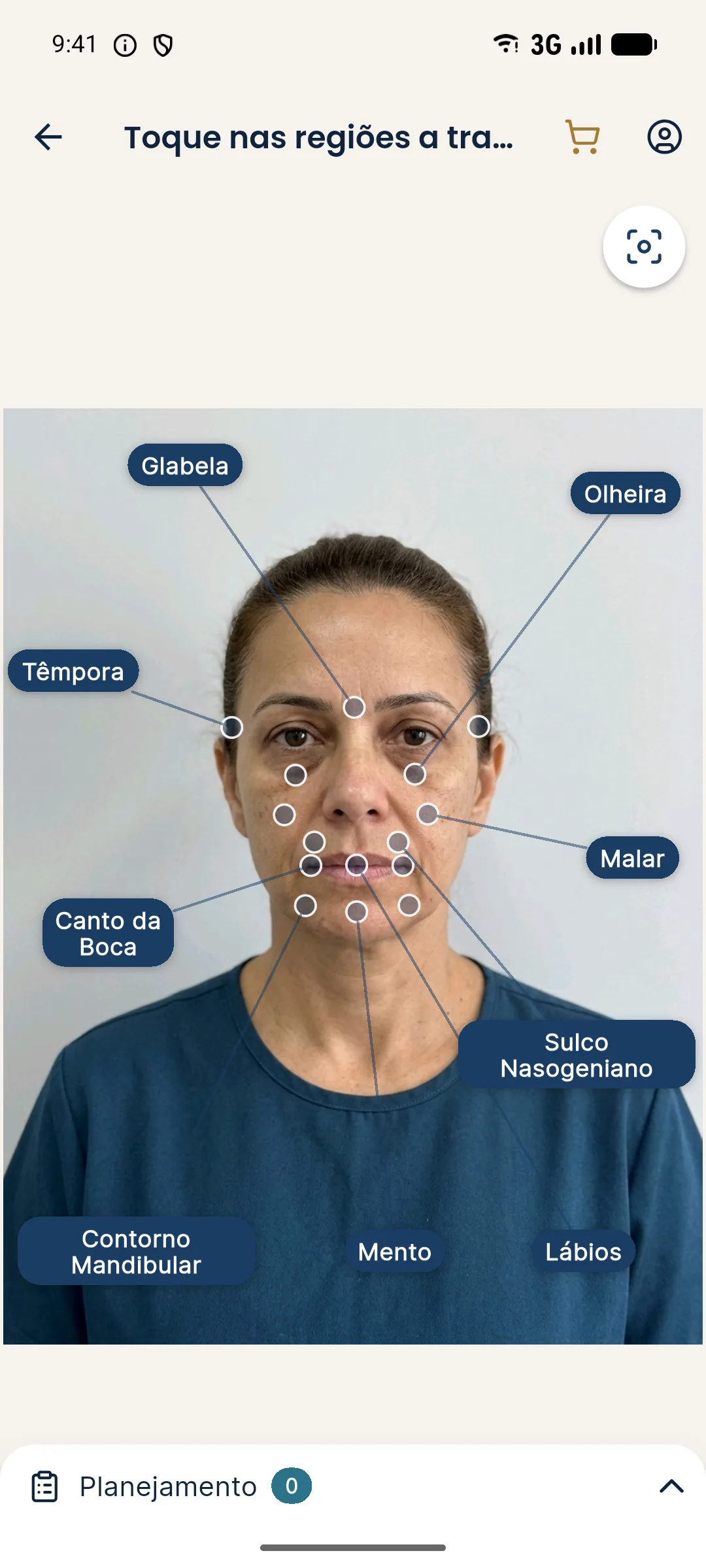
The app simulates volume changes in marked areas, but it does not simulate the effect of threads. When using the projection with someone who will have threads, be clear: the image does not represent the thread's effect and should not be presented as a prediction. At most, it can illustrate the overall harmony the patient is after. It is an illustrative simulation, not a promise of results.
Which questions should you expect?
And the informed consent?
Record the thread type, the area, the risks, the aftercare and the realistic expectation. Review the text with the patient, as in how to explain the informed consent.
A patient who understands the thread as a supporting resource, not a shortcut to surgery, tends to have a better experience and returns without frustration.
Frequently asked questions
How do you explain to the patient what PDO threads are?
Say they are thin, absorbable threads placed under the skin that can give some support and stimulate the skin to produce collagen. Make clear they do not replace surgery.
Do PDO threads lift the face?
Some types can give mild support, but they are not equivalent to a surgical lift. Avoid promising elevation and talk about improved support and quality, to varying degrees.
Do PDO threads last forever?
No. The body absorbs the thread over months, and the effect on the skin tends to last longer than the thread itself, varying between patients.
Which risks should be explained about threads?
Bruising, swelling, discomfort, asymmetry, irregularities, a visible thread, infection and, rarely, injury to structures. The patient should know there is a way to manage complications.
Harmy images are illustrative simulations generated by AI from the patient's photo to support the conversation between practitioner and patient. They are not a promise of results. Indication, technique, product and volume are solely the decision of the licensed practitioner. This content is for information only and does not replace a clinical assessment.