
Patient Who Asks for Their Own Photos: How to Respond
Quick facts
- Situation
- The patient asks for a copy of the photos taken at the consultation
- Right
- The patient has access to their data, including images, as provided by law
- Care
- Hand over securely and explain the limits on use
- Trap
- Refusing without a basis or delivering through an insecure channel
"Can I keep the photos?" The question comes at the end of the consultation, sometimes at the follow-up, and many professionals aren't sure how to react. Saying no feels awkward, handing them over feels risky. The answer rests on three ideas: the image belongs to the patient, delivery must be secure, and the patient has to understand the use.
Why does the patient ask?
The reasons are common and almost always legitimate.
- Tracking progress. They want to compare on their own.
- Showing someone they trust. A relative, a partner, a friend.
- Keeping a record. A memento of the before.
- Second opinion. They plan to show another professional.
- Posting on social media. They want to publish their own image.
Understanding the motivation helps you advise, but it does not condition the right. Asking out of curiosity, and not as a condition, keeps the conversation light.
What does the law say about the right to images?
The patient's image is personal data, and LGPD (Brazil's data protection law) guarantees the data subject access to their data. Images and health information are also part of the patient record, and professional board rules cover access and retention. If you are unsure about deadlines and formats, check your professional board's rules and, if needed, your clinic's legal counsel.
How do you hand them over securely?
The care lies in the channel and the record.
| Practice | Why it matters |
|---|---|
| Deliver directly to the patient, through the channel they chose | Prevents access by third parties |
| Avoid groups, public networks and open links | Prevents exposure |
| Confirm the number or email before sending | Avoids sending to the wrong person |
| Record the delivery in the patient record | Documents what was handed over |
| Explain that, from delivery on, the patient is the custodian | Defines responsibilities |
What if the patient asks for all the photos in the patient record?
Separate the images in the clinical record (which are part of the record) from projections or marketing material. For the clinical record, follow your professional board's rules and the clinic's guidelines. If in doubt, advise the patient to formalize the request in writing, and respond within the required time.
What should you say about the simulation?
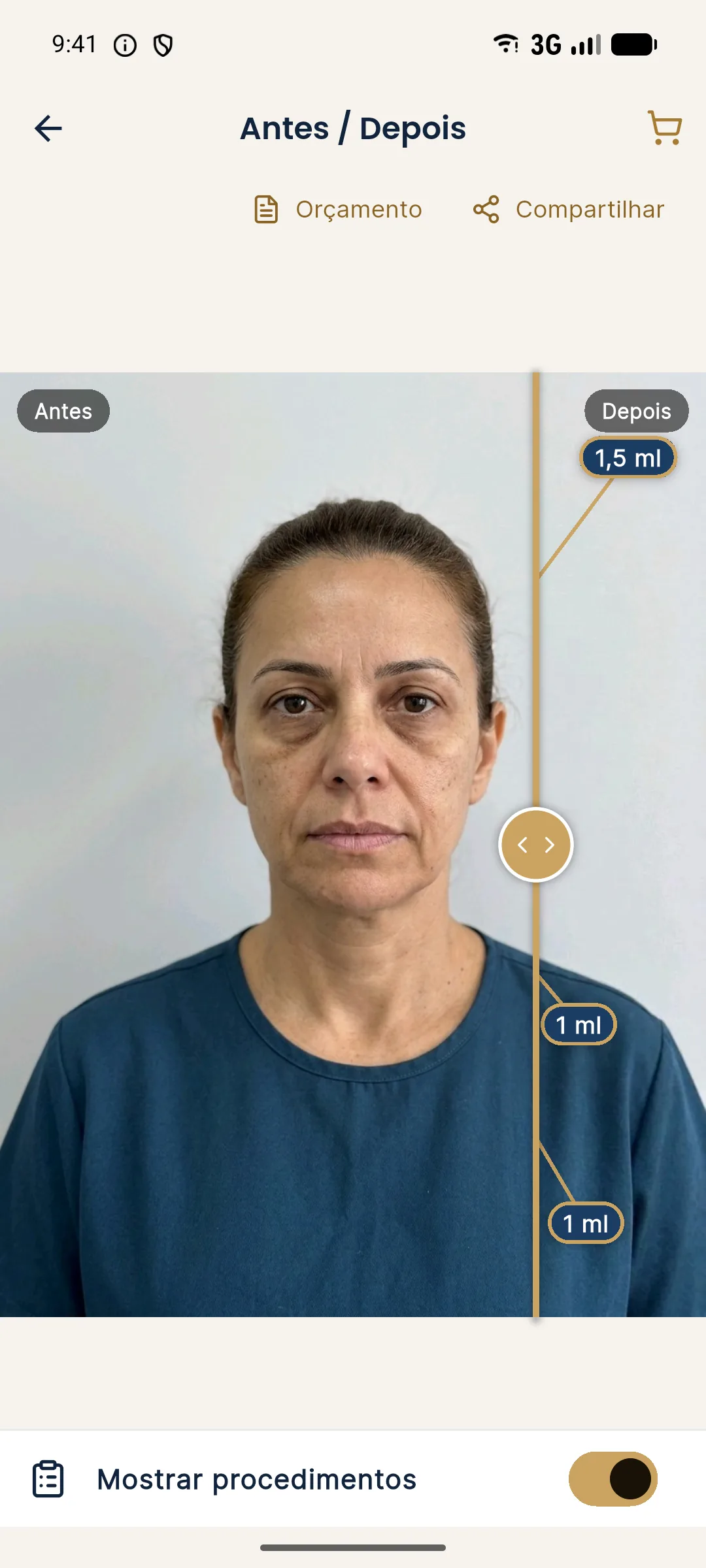
The projection generated in Harmy shows an illustrative direction. When handing it to the patient, make clear that it is not a result, that it should not be shared as if it were, and that the illustrative simulation notice is part of it. This protects the patient from unfair comparisons and protects you from accusations of misleading advertising.
What if the patient wants to post it?
People can own their own image and decide what to do with it, but you can and should advise them. Tell them the simulation is not a result and that publishing it as if it were can lead to mistaken interpretations. If the patient tags the clinic, remind them of your professional board's advertising rules. You should not encourage or organize the post as a form of promotion without specific, careful authorization. See image authorization for publicity, how to talk about it.
What do you do when the request is to delete?
Some patients ask for delivery and later for deletion. That is handled in other situations, with its own rules. See the patient asks to delete the photos and the patient wants to revoke the image authorization.
How do you record it?
In the patient record, record the date, what was handed over (photos, projection, documents), the channel used and the guidance given. If the patient asked for something beyond what you handed over, record the request and the reply. Align with the informed consent and with the image-use consent, when there is one.
Treating the request as a right, not a threat, usually lowers the tension. A patient who feels respected tends to take better care of their own image.
How can the clinic prepare for this request?
Having a routine avoids improvisation. Define who receives the request, how quickly they respond, through which channel they deliver and how they record it. Make this clear in the image-use consent and in the first conversation: if the patient already knows they can ask for a copy, the request stops being a surprise. Also agree on what is delivered by default (clinical photos, simulation, quote) and what requires a formal request (the full patient record). A simple rule communicated in advance gives both sides security.
What if the patient asks for the photos for another professional?
This is frequent and legitimate, especially when switching professionals or seeking a second opinion. Don't put up obstacles or show resentment. Hand the images to the patient securely and, if they ask, a summary of what was done as well, with dates and known products. A well-informed patient helps the next professional proceed safely, and that is care. Record in the patient record that the delivery was made at the patient's request, and stay cordial in the farewell.
Frequently asked questions
Does the patient have a right to their own photos?
In general, yes. The patient's images are their personal data, and data protection law guarantees access. Confirm your professional board's and your clinic's rules on patient records and delivery.
Can I give the patient the Harmy simulation?
You can, if you wish. It is an illustrative simulation and should be handed over with the notice, so it isn't used as if it were an actual result.
How do I hand over the image without exposing it?
Use a secure channel agreed with the patient, avoid groups and public links, and explain that responsibility for the image becomes theirs. Record the delivery in the patient record.
Can the patient post the simulation on social media?
They can generally use their own image, but it is important to advise that the simulation is illustrative and not a result. You should not encourage that use or publish their image without authorization.
Harmy images are illustrative simulations generated by AI from the patient's photo to support the conversation between practitioner and patient. They are not a promise of results. Indication, technique, product and volume are solely the decision of the licensed practitioner. This content is for information only and does not replace a clinical assessment.