
Mephisto sign: the arched brow after toxin
Quick facts
- Definition
- Exaggerated lift of the tail of the eyebrow after botulinum toxin in the forehead, with an arched or surprised look.
- Mechanism
- The lateral fibers of the frontalis stay active while the central ones are blocked, and pull only the lateral part of the brow.
- When it appears
- Usually when the toxin starts to work, from the first days to two weeks after the injection.
- Duration
- Temporary; tends to disappear when the toxin wears off, and is usually adjusted at the follow-up.
- Relevance in facial harmonization
- Frequent aesthetic complication in the upper third; predictable through assessment of the frontalis.
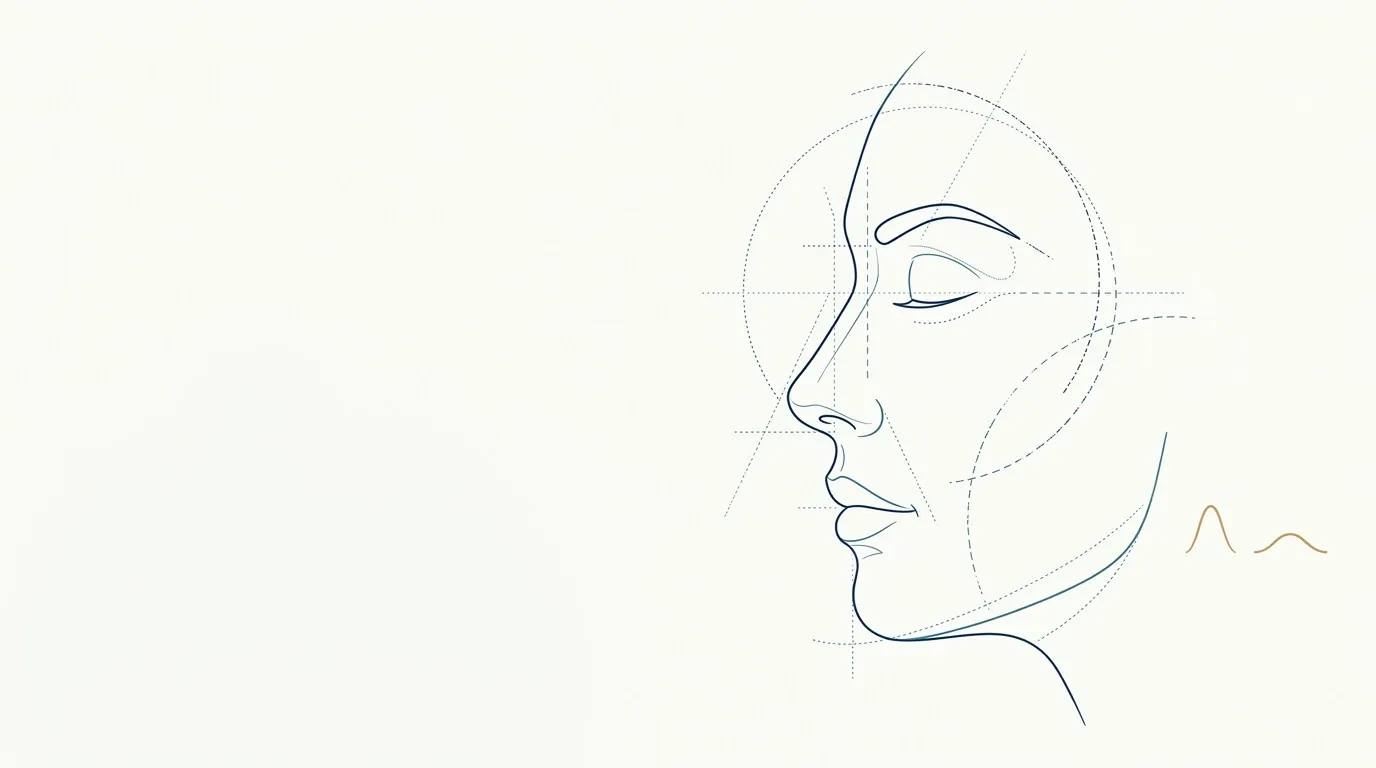
The Mephisto sign is the exaggerated lift of the tail of the eyebrow after botulinum toxin in the forehead. The brow takes on a high, angular arch in its lateral portion, with an expression of surprise or suspicion. It is also called the Spock brow, because it recalls the character. It is a temporary aesthetic complication and is generally predictable through assessment of the frontalis muscle.
Why does it happen?
The frontalis is the only muscle that lifts the eyebrow. When the toxin relaxes the central part of the muscle and the lateral fibers stay active, all the lifting force concentrates on the side. The result is the tail rising while the center of the forehead stays still.
Some factors raise the chance:
| Factor | Why it matters |
|---|---|
| Frontalis with strong or extensive lateral fibers | The untreated lateral part compensates with more force |
| Treatment concentrated in the center of the forehead | Unbalances the lift between center and side |
| Glabella and crow's feet treated together | Less depressor force on the tail, coming from the orbicularis oculi |
| Brow already arched or asymmetric | The effect is more visible on one side or both |
| Compensatory use of the frontalis | People who lift the brow to open the gaze tend to recruit the lateral part more |
Brow position is a balance between the frontalis, which lifts, and the depressors: orbicularis oculi, depressor supercilii, corrugator and procerus. Any treatment that changes this balance changes the shape of the brow.
What is the difference between the Mephisto sign and a desired lift?
A discreet lift of the tail, symmetric and in proportion to the face, can be sought on purpose and is usually well accepted. The Mephisto sign is the excess: an angular, disproportionate arch, often with a band of wrinkles still active on the side of the forehead, just above the tail. The full topic of brow shape is in botulinum toxin for the eyebrow.
How to reduce the chance during assessment?
- Watch the forehead in motion: ask the patient to raise the eyebrows and see how far the dynamic wrinkles extend laterally.
- Record the brow at rest: height, arch and prior asymmetry, with a standardized photo.
- Ask about previous treatments: the patient's past response helps predict the pattern.
- Watch for a heavy eyelid: people who use the frontalis to compensate for excess skin or a drooping eyelid may have the opposite effect, with a lower brow. The topic is in ptosis after botulinum toxin.
Other complications of the region are in complications with botulinum toxin.
Also called: Spock brow, Mephisto brow, witch brow, exaggerated lateral brow elevation.
Frequently asked questions
Why did my brow end up arched after botox?
Usually because the central part of the frontalis muscle was relaxed and the lateral part stayed active. Without the strength of the center, the lateral fibers pull only the tail of the brow upward, creating the exaggerated arch.
Can a Mephisto brow be corrected?
Usually yes. At the follow-up visit, the professional assesses the contraction pattern and decides whether there is an adjustment to make; even without one, the effect disappears when the toxin wears off.