
Heavy Forehead After Botox: What It Is and How Long It Lasts

Quick facts
- Question
- Is a heavy forehead after botox normal
- Usual range
- A feeling of heaviness in the first days to weeks, which usually fades
- Warning sign
- Visible drooping of the brow or eyelid, or worsening over time
- Who decides
- The professional who treated, at the follow-up
"Doctor, my forehead feels heavy." The complaint arrives on WhatsApp on the second or fifth day after botox, sometimes with concern, sometimes with a photo. It may be just adaptation to the new movement pattern, or it may be the start of a brow drop that deserves attention. This page helps you separate the two and respond to the complaint without minimizing or dramatizing it.
What is the heavy forehead feeling?
The frontalis muscle is the main brow lifter. When botulinum toxin reduces its activity, the patient stops using the "raise the forehead" gesture they used to make automatically. Many people describe this as "heaviness", "pressure", "stiff forehead" or a "helmet feeling". In part it is perception: the body misses a movement it used to make without thinking.
In people who held the forehead in constant tension (to compensate for droopier eyelids, for example), the perception is even greater. The habit of raising the brow when thinking, talking or looking at the phone is blocked, and the brain has to relearn.
How long does it last?
| Situation | What usually happens | How to follow up |
|---|---|---|
| First days | Toxin begins to act, with a heavy feeling in some patients | Observe and reassure |
| Up to 2 weeks | Full effect, with gradual adaptation | Assess at the scheduled follow-up |
| Following weeks | The feeling fades in many cases | Reassess if it persists |
| End of the effect | Movement gradually returns | Plan maintenance with adjustments |
| At any moment | Visible drooping of the brow or eyelid | Contact whoever treated |
The toxin's latency time explains why the complaint may appear or get worse in the first week: the effect builds up progressively. In general, a follow-up at around 14 days is the best moment to assess the result and adjust, when needed.
How to tell it apart from brow ptosis?
Brow ptosis is a real drop of the tail or body of the brow, which can close off the gaze and leave the face looking tired. Eyelid ptosis, on the other hand, affects the upper eyelid and has a different mechanism. Both are known complications of the toxin, usually temporary, and vary with anatomy and technique.
To examine, compare the brow position with standardized before photos, measure the distance between the brow and the eyelid and observe symmetry. The brow position is a useful parameter. Ask whether the patient feels "effort" when opening the eyes, which may point to eyelid ptosis.
Why does the feeling appear in some people and not in others?
Factors that often show up in the medical history: a forehead that worked hard to compensate for extra skin; already low brows; a thin frontalis or one with uneven activity; the expectation of a "smooth forehead" without realizing the loss of movement; and the combination with the glabella, which undoes the counterbalance between the frontalis (which lifts) and the corrugator (which pulls down). The imbalance between the frontalis and the corrugator is a central concept.
What can the professional do?
The approach depends on the assessment and belongs to the licensed professional. In general terms:
- Reassure and guide: explain that the feeling usually fades, and schedule a follow-up if it persists.
- Reassess at the follow-up: observe the position of the brow and eyelid, at rest and in motion.
- Adjust the next treatment: consider the distribution between areas, according to what each face needs.
- Refer when necessary: if there is a symptom suggesting another cause, the investigation goes down a different path.
There is no antidote for botulinum toxin. What is done is to monitor, wait for the effect to pass and, in cases of ptosis, use supportive measures indicated by whoever treated. The condition is detailed in drooping eye after botox.
How to talk to the patient
Avoid phrases like "this is normal, don't worry" without examining, and avoid "it was your anatomy" as well. The patient wants to be heard, and a photo with the comparison helps resolve it without conflict. Also share the post-botox instructions to reinforce what to do in the first days.
Does planning with the projection help?
Harmy does not simulate the toxin's action on muscles, but it can help organize the conversation. The app's Glabella area uses a symbolic unit, and the projection shows a visual expectation of smoothing, not how the muscle behaves. If the patient expects a "smooth forehead", use the projection to align expectations and explain that the goal is to soften without losing expression.
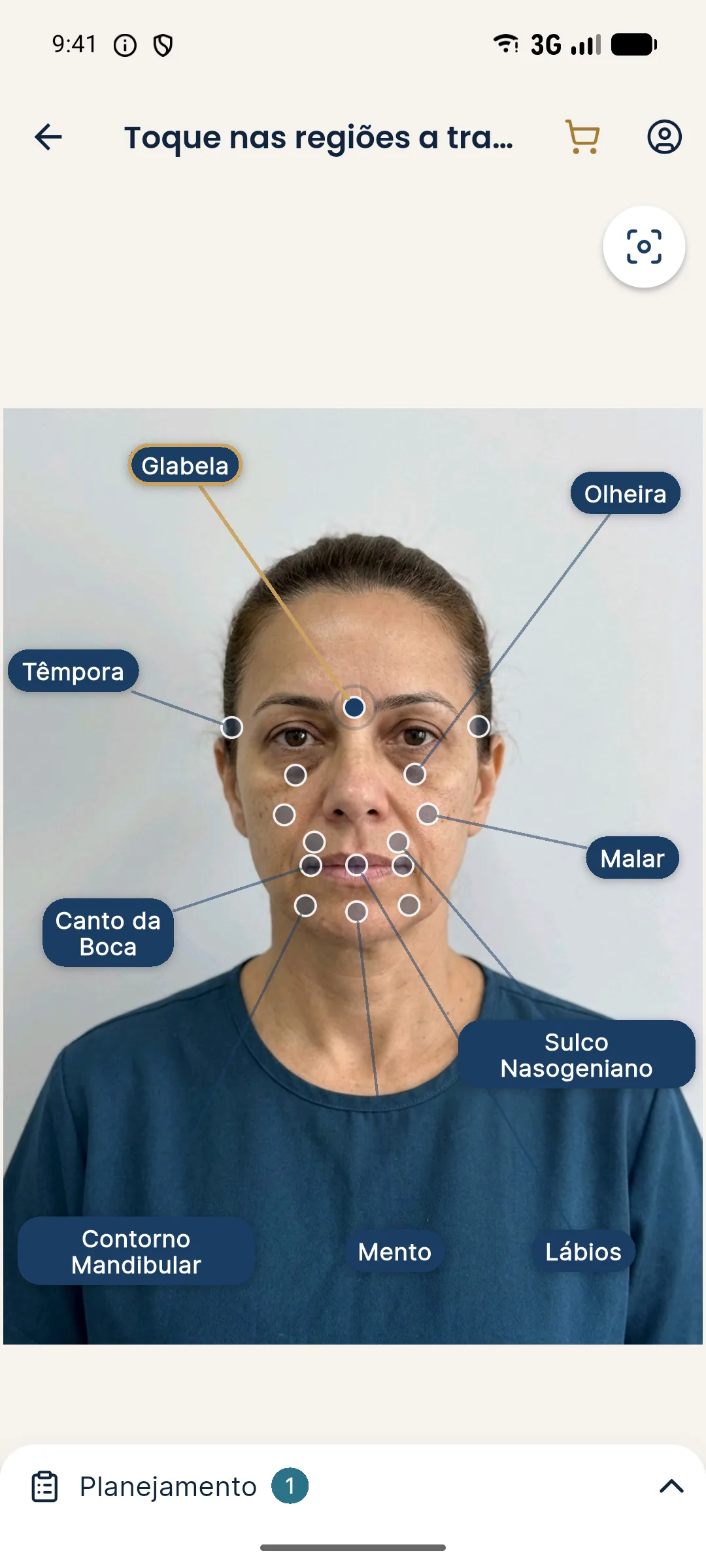
In short: a heavy forehead is common and usually transient, but only an exam tells heaviness from ptosis. Ask for a photo, compare and follow up, without promising an exact timeframe.
Frequently asked questions
Is it normal to feel a heavy forehead after botox?
It is common to feel the forehead different or heavy in the first days or weeks, because the muscle that lifted the brow has been weakened and the patient perceives the effort differently. It usually improves.
How long does the heavy forehead feeling last?
Generally, the feeling fades as the patient adapts, in days to a few weeks. If it persists or gets worse, a reassessment is worthwhile.
Is a heavy forehead the same as a drooping brow?
Not necessarily. The feeling of heaviness is subjective; brow ptosis is a visible drop in position. Both can coexist, and an exam tells them apart.
What should I do if the brow or eyelid droops?
Contact whoever treated you. The professional will assess and advise, and in general the condition is temporary, following the toxin's effect.
Harmy images are illustrative simulations generated by AI from the patient's photo to support the conversation between practitioner and patient. They are not a promise of results. Indication, technique, product and volume are solely the decision of the licensed practitioner. This content is for information only and does not replace a clinical assessment.