
Under-eye filler for people with eye bags

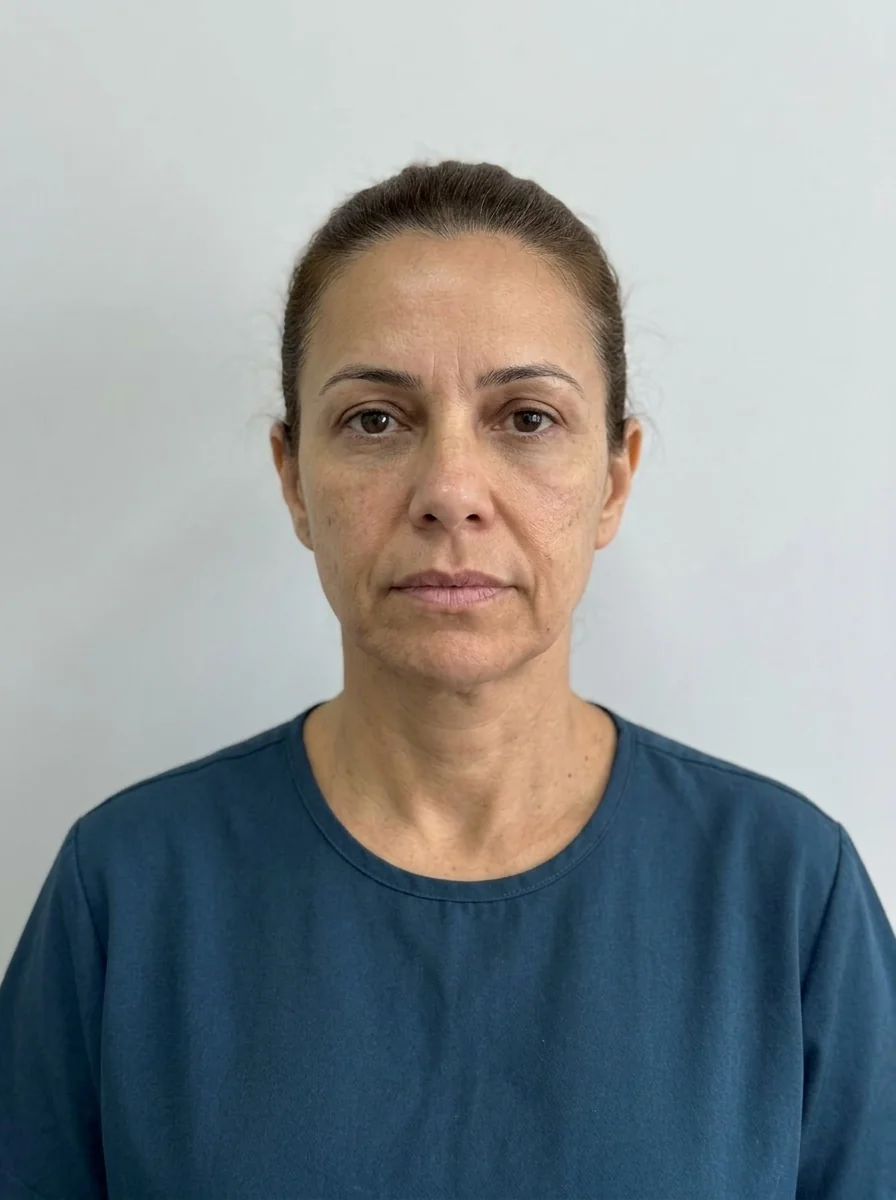 BeforeSimulation
- Highlighted area
Quick facts
- Question
- Can I get under-eye filler if I have eye bags
- Short answer
- Depends on how pronounced the bag is; often contraindicated
- Main risk
- Accentuating the bag and worsening the contour
- Alternatives
- Assessment for other approaches, including surgical ones
The short answer: in people with an evident eyelid fat pad (eye bag), under-eye filler is usually contraindicated or very limited. That is because the dark circle the patient sees is often the contrast between the bag that projects and the trough that sinks. Filling only the trough can accentuate the bag, and the result becomes a "relief" instead of a smoother surface.
The decision depends on the assessment, and it should be clear to the patient that "dark circle" is a popular name for several causes. This page helps tell when the bag allows the procedure and when it is better to refer or choose another path.
What is a bag and what is a dark circle?
The eyelid fat pad is the forward displacement of the orbital fat pads, which begin to project below the eye. The tear trough is the depression just below, between the bag and the cheek. The two can coexist, and the eye sees the contrast between one and the other.
There is also a third concern that gets mixed in: dark skin color, from pigment or from the translucency of vessels. Filler does not treat pigment, and this is one of the main reasons for frustration.
When the bag contraindicates filler
The more evident the bag, the greater the chance that gel will not solve it. Some situations tend to weigh against it:
- Prominent bag: gel in the trough creates a "bridge" that masks the groove, but increases the sense of volume in the lower eyelid.
- Persistent swelling: people with fluid retention in the area (rhinitis, sinusitis, habits) may get visibly worse, because the gel also retains water.
- Very thin, translucent skin: higher risk of the bluish look of the Tyndall effect.
- Significant laxity: loose skin does not respond to volume, and the result can look heavy.
- Expectation of "making the bag disappear": filler does not do that, and promising it would be a mistake.
When it can still make sense
In mild bags, with a well-defined trough and good-quality skin, low-volume filler can soften the transition. The decision usually considers:
| Finding at assessment | Tendency | Note |
|---|---|---|
| Mild bag, defined trough | May be considered, at low volume | The response is confirmed at reassessment |
| Moderate bag, shallow trough | Tends to be contraindicated | Risk of accentuating the whole area |
| Evident bag, laxity | Usually contraindicated | Assess other approaches |
| No bag, clear trough | Most favorable candidate | There is still a risk of swelling and bruising |
The levels are indicative. A real assessment includes palpation, dynamic observation and, if needed, standardized photography.
What to explain to a patient who wants to "get rid of the bag"
This kind of phrase protects the patient and the professional. It declines the procedure when it is not indicated and avoids the expectation that the problem will be solved with a syringe.
Which alternatives to discuss
Without going into technique, the conversation menu includes:
- Another level of intervention: in cases of an evident bag, the conversation usually moves to a surgical assessment, such as blepharoplasty, which follows its own pathway and specialty.
- Skin treatment: when the main concern is texture or color, other approaches may make more sense than volume.
- Skinbooster or biostimulator: options for skin quality, with their own limits. The comparison is in under-eye filler or skinbooster.
- Fat or acid: the choice of material comes only after the diagnosis. See dark circles: hyaluronic acid or fat.
Referring to another professional is also part of quality care, according to the rules of your professional council in Brazil.
How the bag changes the risk
Besides the contour, the bag complicates planning for three practical reasons:
- The gel can visually migrate into the bag and produce a "puffy" look.
- Initial swelling, which is normal, accentuates the bag and makes assessing the result confusing in the first weeks.
- If dissolving is needed, adjusting the area is more delicate.
That is why, even in cases where the procedure is considered, it is wise to wait until day 15 to assess. The most common problems of the area are in under-eye filler: risks and under-eye filler that went wrong. On swelling, swollen under-eye filler.
How to use Harmy in this case
The app marks the Under-eye area from a frontal photo. The projection respects the ml and, at Subtle intensity, shows a restrained, realistic change, but it does not distinguish bag from trough: the app does not diagnose. The projection is only useful for discussing expectations, never for deciding the indication.
When to refer or request tests
Some signs fall outside the scope of filler and call for another look:
- eyelid swelling that changes with the day, diet or allergies;
- sudden asymmetry of the bags;
- dark circles associated with a systemic disease or medication use;
- complaints of dry eye, burning or visual changes.
In these cases, the path is to refer, not to adjust volume. For care in the first month for someone who has had under-eye filler, see care after under-eye filler and eye bags and filler.
Frequently asked questions
Can people with eye bags get under-eye filler?
It depends on the size of the bag and the depth of the tear trough. An evident bag is usually a relative or absolute contraindication, because the gel can accentuate the relief instead of softening it.
Does filler make an eye bag worse?
It can, when injected at the transition between the trough and the bag without assessing the whole picture. Volume in the neighboring area can push the contour and make the bag more evident.
What is the best treatment for eye bags and dark circles together?
There is no single answer. The decision depends on how much is bag, how much is trough and how much is skin, and may involve low-volume filler, another treatment or surgical assessment.
If filler makes the bag worse, can it be corrected?
With hyaluronic acid, hyaluronidase can dissolve the gel and is the correction option. The decision to use it and the dose are up to the professional, and dissolving can also cause swelling.
Harmy images are illustrative simulations generated by AI from the patient's photo to support the conversation between practitioner and patient. They are not a promise of results. Indication, technique, product and volume are solely the decision of the licensed practitioner. This content is for information only and does not replace a clinical assessment.