
Biosafety checklist for the facial harmonization clinic
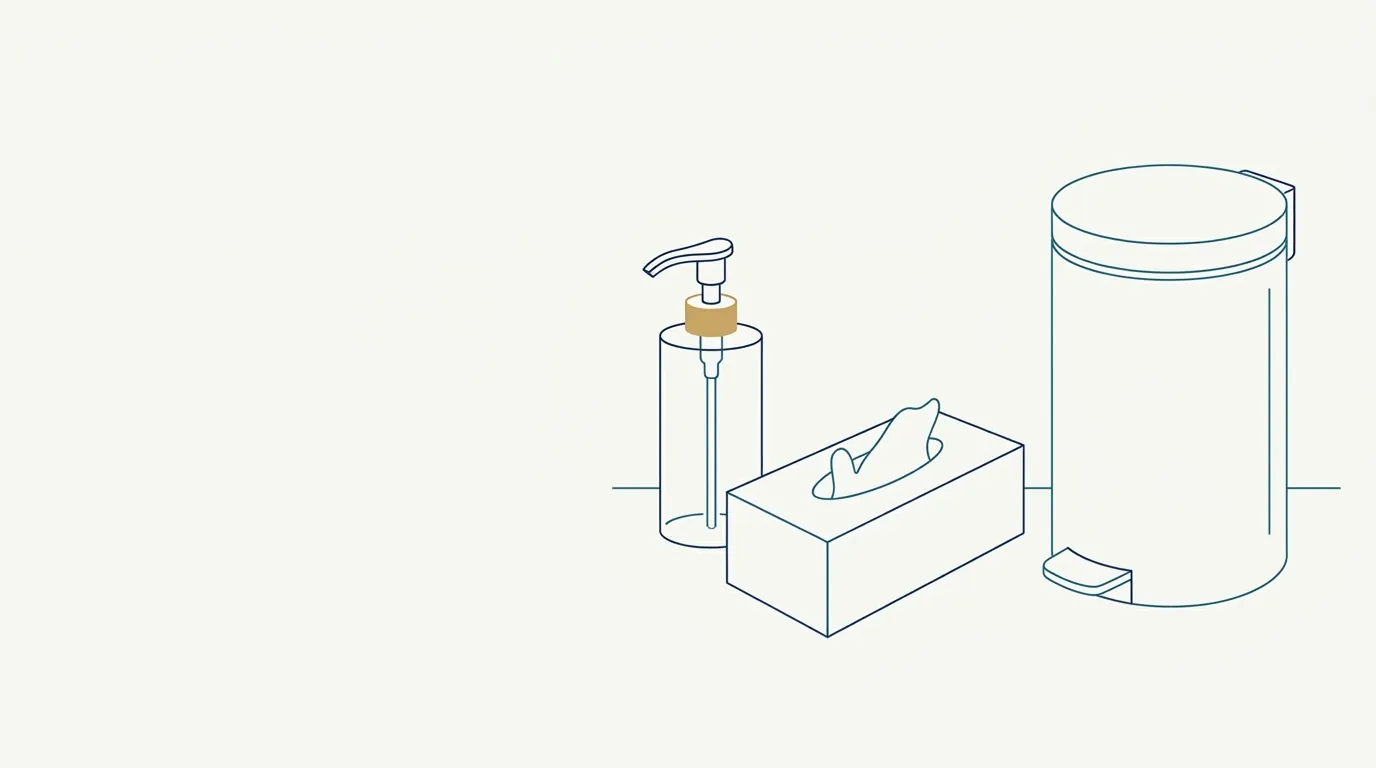
Biosafety is not bureaucracy: it is what separates a clinic that treats patients safely from one that relies on luck. In injectable procedures, the risk of contamination, of sharps injuries and of infection tied to poorly handled supplies exists every day, and prevention is built from small habits that are repeated and checked.
The template below is a starting point and does not replace the requirements of your municipality in Brazil, the clinic's waste plan or the guidance of the technical manager.
What are the pillars of biosafety in orofacial harmonization (HOF)?
- Hand hygiene, before and after each patient and at every glove change.
- PPE suited to the procedure, available in sufficient quantity.
- Cleaning and disinfection of surfaces, treatment table and equipment between patients.
- Sterile or single-use supplies, with intact packaging and expiration dates checked.
- Correct disposal of sharps and waste.
- Records of what was checked, who checked it and when.
Aseptic technique during the procedure is part of it too: see the glossary entry on asepsis and the article on biosafety in HOF. When contamination progresses, the subject becomes biofilm.
Where do failures usually happen?
How to organize the routine throughout the day?
| Moment | What to check |
|---|---|
| Opening | Clean room, supplies, PPE, expiration dates, sharps container |
| Between patients | Disposal, disinfection, change of drape and gloves |
| During the procedure | Aseptic technique and supplies free of cross-contamination |
| Closing | Terminal cleaning, waste, records and stock |
Use it together with the procedure room checklist and the PGRSS (Brazil's health service waste management plan).
Biosafety checklist template
Frequently asked questions
What is biosafety in a facial harmonization clinic?
It is the set of practices that lowers the risk of infection and accidents for patients and staff: hand hygiene, use of PPE, cleaning and disinfection, handling of sterile supplies, correct disposal of sharps and recordkeeping of routines.
Which PPE is used in injectable procedures?
Generally gloves, a mask and, depending on the procedure, eye protection and a gown or lab coat. The exact set depends on the clinic's protocol and on the requirements of the technical manager and the local health surveillance authority.
How should needles be disposed of in an aesthetic clinic?
In a rigid container made for sharps, without recapping the needle and respecting the fill limit, following the clinic's waste management plan and ANVISA RDC 222/2018 (Brazil's health regulatory agency).
How often should the biosafety checklist be reviewed?
At least every quarter, and whenever a procedure, supplier, room workflow or surveillance requirement changes. An outdated checklist tends to verify things that are no longer done.