
How to explain the collagen biostimulator to the patient

Quick facts
- Core message
- The product stimulates the body to produce collagen, the effect is gradual
- Common mistake
- Promising an immediate effect or a surgical result
- Useful resource
- Timeline with follow-up dates
- Record
- Consent with the expected timeframe and number of sessions
The biostimulator is one of the hardest procedures to explain, because patients associate "injectable" with an immediate effect, and here the logic is different. It does not deliver ready-made volume: it asks the body to do the work. If the conversation does not make this clear, the 15-day follow-up turns into a complaint that "nothing happened." This page shows how to explain the collagen biostimulator clearly and without promising what it does not do.
What is the best way to explain what it does?
Use a simple image, in two sentences. The first says what the product is, the second says how the result arrives.
Avoid analogies like "recharging the skin" or "turning back time." They sound like promises. Prefer words like "improve quality," "stimulate" and "support."
How do you talk about the timing of results?
This is the point that causes the most frustration. Be concrete, but without promising an exact date. A timeline shows the patient that a period with no visible change is expected.
Timeframes vary with the product, the area and the patient. Say "generally" and "usually," and leave the decision to the assessment. For the patient's question on this topic, see biostimulator: how long until results show.
How do you set it apart from filler and surgery?
Two expectation errors are common: expecting a filler effect and expecting a lift effect. Address both right at the start.
| The patient thinks | What you explain |
|---|---|
| "It will give volume right away" | Immediate volume, if any, is temporary; the effect is gradual |
| "It will lift my face like surgery" | It may improve skin support and quality, to varying degrees, without replacing surgery |
| "I do it once and I'm done" | More than one session and follow-up may be needed |
| "It's a type of botox" | They are different things: the toxin relaxes muscles, the biostimulator works on the skin |
For the specific conversation about this confusion, there is the page fill or stimulate. There are also different product types, such as calcium hydroxylapatite, poly-L-lactic acid and polycaprolactone, and the choice belongs to the professional, without naming brands to the patient in the general explanation.
Which risks need to be mentioned?
The patient needs to hear, in proportion, the most relevant risks: swelling, bruising, nodules, irregularities and, more rarely, a vascular complication. They should also know that there is a way to manage a nodule and that they need to tell you if they notice lumps. Explain that the follow-up is for this. See the overview at biostimulators: overview.
How do you use Harmy's simulation in this conversation?
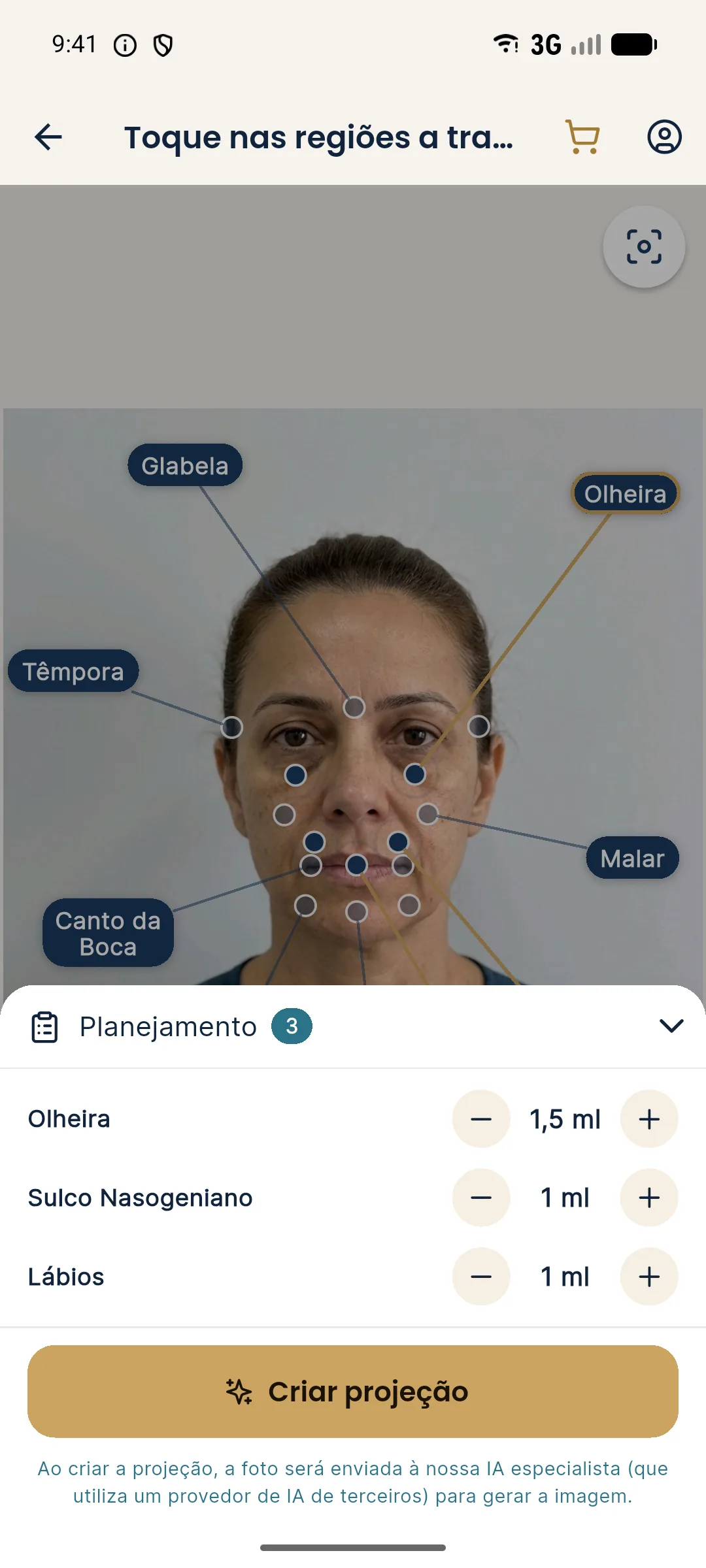
Harmy generates an illustrative volume projection by area from a front photo. It does not simulate the collagen effect over time, which is gradual and individual. So, when using the app with a patient who will have a biostimulator, say frankly that the image is an illustration of overall harmony, not a prediction of how the collagen will behave. It is an illustrative simulation, not a promise of results.
How do you handle common questions?
What should be recorded at the end?
Write down the explanation given, the patient's questions, the reassessment timeframe and the standardized baseline photos. This protects the patient from an inflated expectation and you from a demand for an immediate result.
An honest explanation about timing is the best investment: a patient who understands the wait usually comes back for the reassessment instead of abandoning the treatment thinking it failed.
Frequently asked questions
How do you explain what a biostimulator is to a lay patient?
Say it is a product that stimulates the skin to produce more collagen, and that the result comes gradually, over weeks or months. It does not fill instantly the way hyaluronic acid does.
Does the biostimulator give an immediate result?
Generally no. There may be a volume effect right after the injection, but it usually fades; the collagen effect tends to appear gradually. Make that clear beforehand.
How many sessions should you tell the patient to expect?
The number depends on the product, the area and the patient's response, at the professional's discretion after assessment. Avoid fixing a number before assessing.
Does the biostimulator replace surgery?
No. It can improve skin quality and support to varying degrees, but it does not do the job of surgery. Saying so avoids the expectation of a lift.
Harmy images are illustrative simulations generated by AI from the patient's photo to support the conversation between practitioner and patient. They are not a promise of results. Indication, technique, product and volume are solely the decision of the licensed practitioner. This content is for information only and does not replace a clinical assessment.