
How to explain neck treatment to the patient

- Muscle
- Highlighted area
Quick facts
- Core message
- The neck ages along with the face and is rarely remembered
- Common concerns
- Horizontal lines, laxity and vertical bands
- Limit
- Excess skin and fat may call for another approach
- Risk to mention
- Swelling, bruising, asymmetry, nodules and complication
Few patients come to the clinic asking for "neck treatment." Almost all of them talk about the face, the lips, the dark circles. But the neck is an area that often gives away age and that, if ignored, can leave the plan as a whole unbalanced. Opening this topic tactfully is part of the job, and this page shows how to do it without creating a need where none exists.
How do you open the conversation without sounding like a sales pitch?
The starting point is the concern. Ask: "Do you notice your neck when you look at your face?" If the patient does not notice, do not push. If they do, or if you think the area affects the plan, mention it neutrally.
The last sentence is essential. It hands the decision back to the patient and keeps the conversation from looking like an attempt to expand the quote. See also how to compliment without inducing a procedure.
What does the patient usually notice about the neck?
The most common concerns, in plain language:
| Concern | What it usually is |
|---|---|
| Horizontal lines ("Venus necklace") | Horizontal neck lines, from movement and loss of elasticity |
| Vertical bands | Cords of the platysma, a thin muscle running from the neck up to the face |
| Laxity | Loss of firmness of the skin and tissue |
| Double chin | Double chin from fat, laxity or both |
| Thin, dull skin | Loss of quality and radiance |
Explaining each row helps the patient understand that "neck" is not a single concern. The page on the neck area gathers the overview.
Which options exist, in patient language?
Present the possibilities without promising. Each has its role and its limit:
- Botulinum toxin in the platysmal bands, when the muscle marks the neck. It acts on movement, not on skin laxity.
- Biostimulator, which aims at skin quality and support gradually. See biostimulator in the neck.
- PDO threads, which give mild support in some cases. See PDO threads in the neck and lower third.
- Fillers in fine lines, with great care and restricted indication. See hyaluronic acid in neck lines.
How do you explain what each option does not do?
The most common mistake is confusing the functions. Correct it with a conversation table.
| Option | What it can help with | What it does not do |
|---|---|---|
| Toxin in the platysma | Softens vertical bands | Does not firm the skin or reduce fat |
| Biostimulator | Improves quality and support, gradually | Gives no immediate effect and does not replace surgery |
| Threads | Mild support in some cases | Do not equal a facelift |
| Skin care | Quality and protection | Does not correct advanced laxity |
Results vary, and the choice belongs to the professional after assessment.
What does Harmy show and not show for the neck?
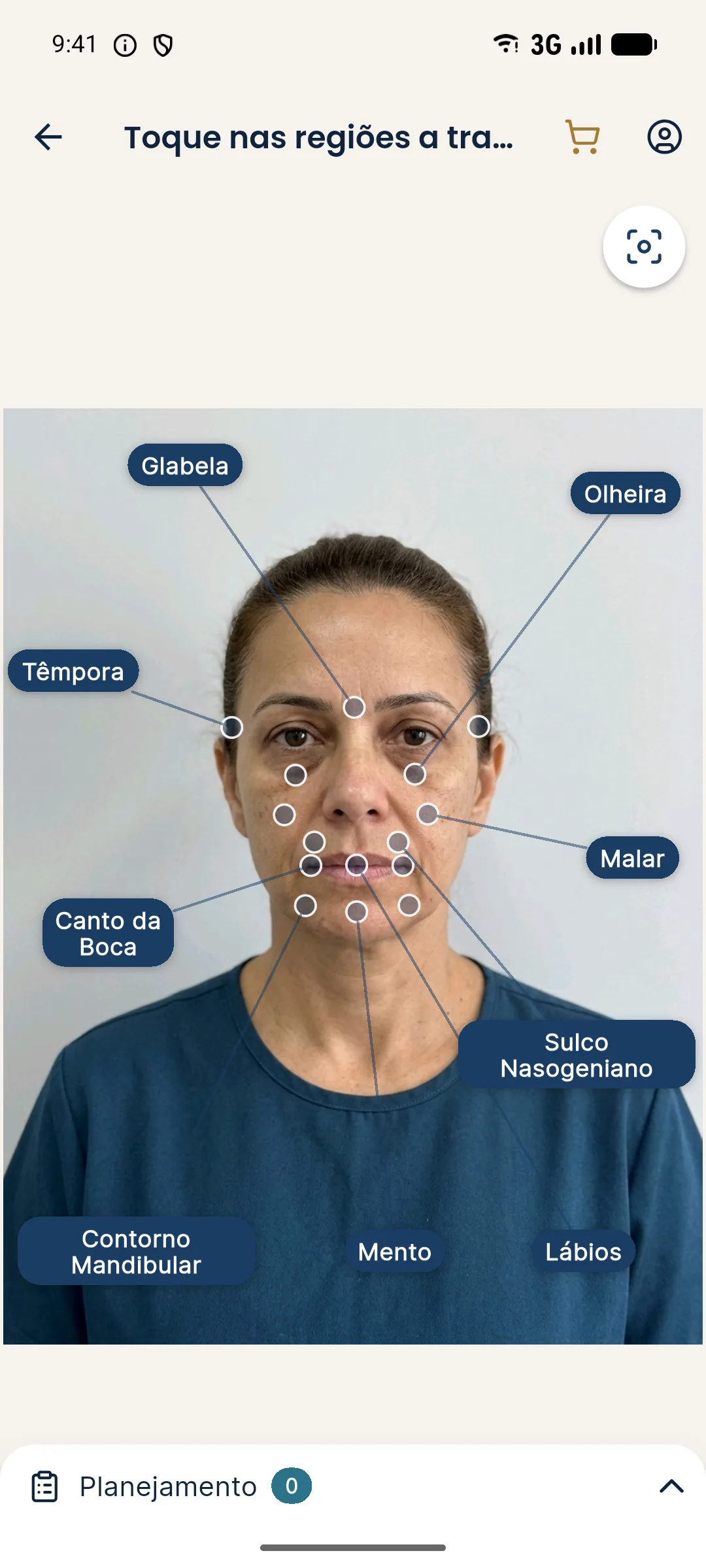
Harmy has no marking point for the neck. Its points are Glabella, Temple, Tear Trough, Cheekbone, Nasolabial Fold, Mouth Corner, Lips, Chin and Jawline, and the projection uses only the front-facing photo. So do not use the app to simulate the neck. You can, however, use it to show the harmony of the jawline and the chin, which relate to the lower third.
Which risks should you explain?
Be direct, without alarm:
- swelling and bruising, which usually pass;
- asymmetry;
- nodules or irregularities, more noticeable in thin skin;
- difficulty swallowing or discomfort, in toxin cases, when diffusion reaches other muscles;
- more rarely, a vascular complication.
For toxin, see complications with botulinum toxin; for biostimulator, complications with biostimulators. Hyaluronidase should be available when hyaluronic acid is used.
And the timing of the result?
Which questions should you expect?
What should you record?
Note the neck assessment, the concern (if any), the options discussed, the limits explained, standardized front and profile photos, and the informed consent. If the patient declines the assessment or the treatment, record that too.
Talking about the neck is an opportunity to show a big-picture view, as long as the conversation makes clear that the decision to treat always belongs to the patient.
Frequently asked questions
Why bring up the neck if the patient did not ask?
Because the neck often shows signs of aging the patient does not always notice, and ignoring it can leave the face out of proportion. Open the subject gently and without pushing.
Which neck concerns can the professional treat?
Horizontal lines, vertical platysmal bands and loss of skin quality are the most common. Options vary and the indication belongs to the qualified professional, according to the rules of their board.
Does neck treatment replace surgery?
No. It can improve aspects such as skin quality and lines, to varying degrees, but excess skin or fat may call for another approach.
Does the neck area have specific risks?
Yes. The skin is thin and there are important structures. Explain swelling, bruising, asymmetry, nodules and, more rarely, complications that demand a fast response.
Harmy images are illustrative simulations generated by AI from the patient's photo to support the conversation between practitioner and patient. They are not a promise of results. Indication, technique, product and volume are solely the decision of the licensed practitioner. This content is for information only and does not replace a clinical assessment.