
Chin and double chin: when the plan needs both

 BeforeSimulation
- Nerve
- Highlighted area
Quick facts
- Topic
- Relationship between chin projection and the definition of the cervicomental angle
- Central question
- Is the double chin fat, skin, bone or lack of chin projection
- Deciding view
- Profile with the head level
- Caution
- Not every double chin responds to volume, and some call for another approach
The double chin is one of the concerns that most confuses the plan, because the patient sees it as a neck problem, but the solution, when one exists with volume, sometimes lies in the chin. A poorly projected chin leaves the angle between chin and neck open and undefined, and the skin and fat under the chin look like excess. In other cases, the chin is adequate and the double chin comes from fat or skin, and no volume fixes it.
This page helps separate those situations, shows why the profile view is decisive, describes when the plan needs to consider the chin and double chin together and makes clear what Harmy does not simulate. For contour reasoning, see chin and jaw: why combine them in the plan.
What forms a double chin, and why does it matter for the plan?
The cervicomental angle is where the chin line meets the neck line. The more defined it is, the younger and slimmer the lower third looks. Several factors blur it: reduced chin projection, subcutaneous or deep fat under the chin, laxity of the skin and platysma, the position of the hyoid bone and even head posture.
| Likely cause | How it presents | Direction of the plan |
|---|---|---|
| Poorly projected chin | Profile with a recessed chin, open angle | Discuss chin projection |
| Submental fat | Soft, pinchable volume under the chin | Approaches for fat, outside filler |
| Skin and platysma laxity | Loose skin, bands in the neck | Lifting and other approaches |
| Low hyoid bone or neck anatomy | Obtuse angle unrelated to skin or fat | Realistic expectations |
| Posture | Chin tucked down or head lowered | Repeat the level photo |
Notice that only the first row of the table directly involves a volume plan for the chin. The others call for different reasoning. Planning chin filler to treat a fatty double chin is one of the predictable mistakes, and produces a bigger chin without improving the angle. See also neck and décolleté in the facial plan: when to include them.
How do you test the relationship between chin and double chin?
A few simple tests, done during the consultation, help you decide:
- Head level and relaxed: observe the natural angle.
- Pinch: pinch the area under the chin. If there is soft volume, there is a fat component.
- Head position: ask the patient to lift the chin slightly. If the double chin disappears and returns when lowered, part of the problem is postural.
- Platysma contraction: when the neck is tensed, see whether bands appear.
- Compared profile image: show the patient their own profile and ask what bothers them most.
When does the plan need both?
The plan needs both when the components are combined: a chin with little projection and a mild double chin that improves when the chin is projected. In that situation, projection can be the first step, and the double chin is reassessed afterward, with no rush to treat it in parallel.
The reverse can also occur: the patient has an adequate chin, but fat under the chin dominates the concern. The chin should not enter the plan just because the patient wants a "more defined chin". The question is always what actually causes the appearance.
Not everything is hyaluronic acid volume. In some cases the reasoning includes other approaches, which fall outside the scope of this page. It is up to the qualified professional to indicate them, according to the rules of their professional board. For the general order of decision, see what to treat first in HOF: priority criteria.
What does Harmy show and what does it not show?
Harmy works with a frontal photo. The app detects the face on the device and shows labeled points, including Chin and Jawline. You mark what you want, set the ml (0.5 ml steps) and choose the intensity (Subtle, Moderate or Pronounced).
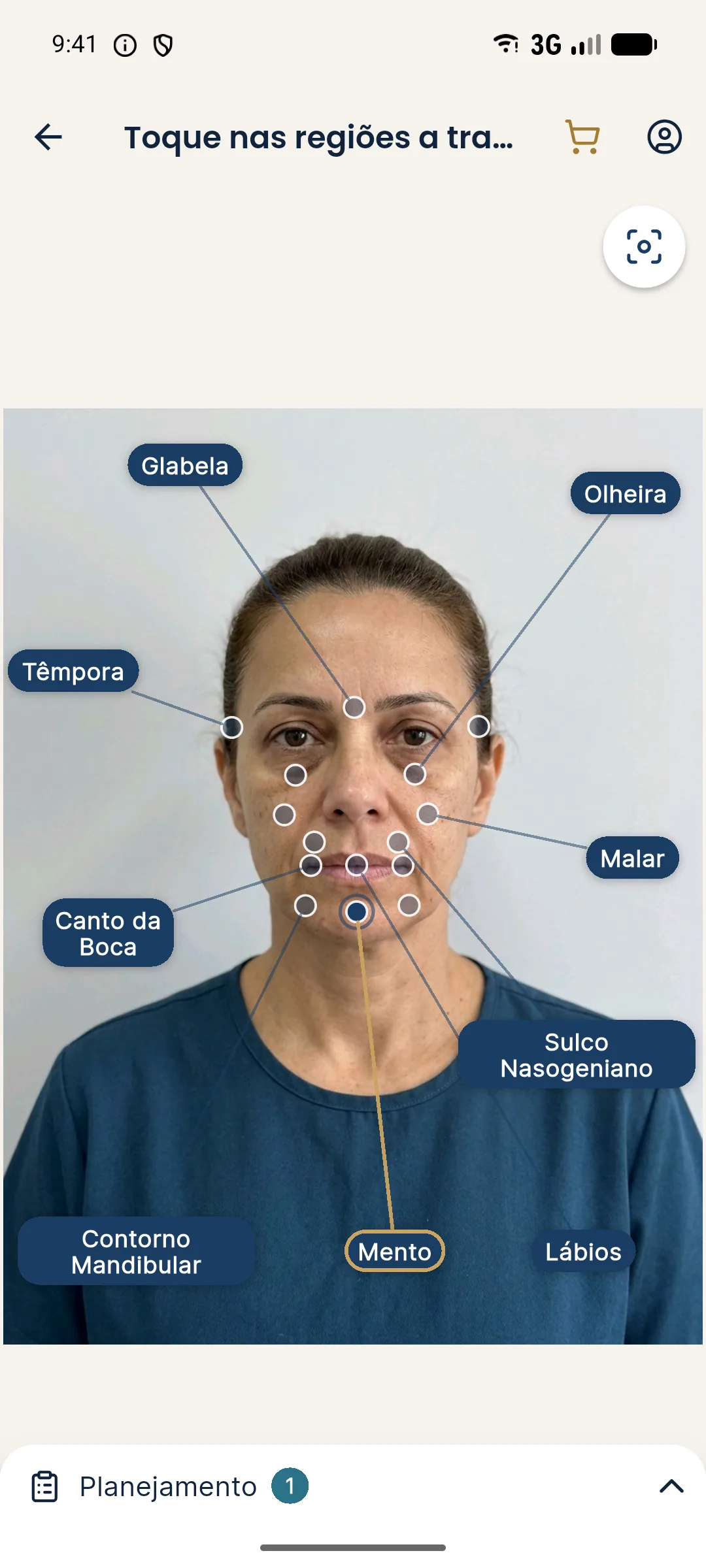
This limit has a practical consequence. If the conversation is about the double chin, the app's image can be confusing, because it shows a more defined chin from the front without proving the effect on the neck. Use the projection for what it shows, the width and harmony of the lower third from the front, and use the profile photo and the conversation for the rest.
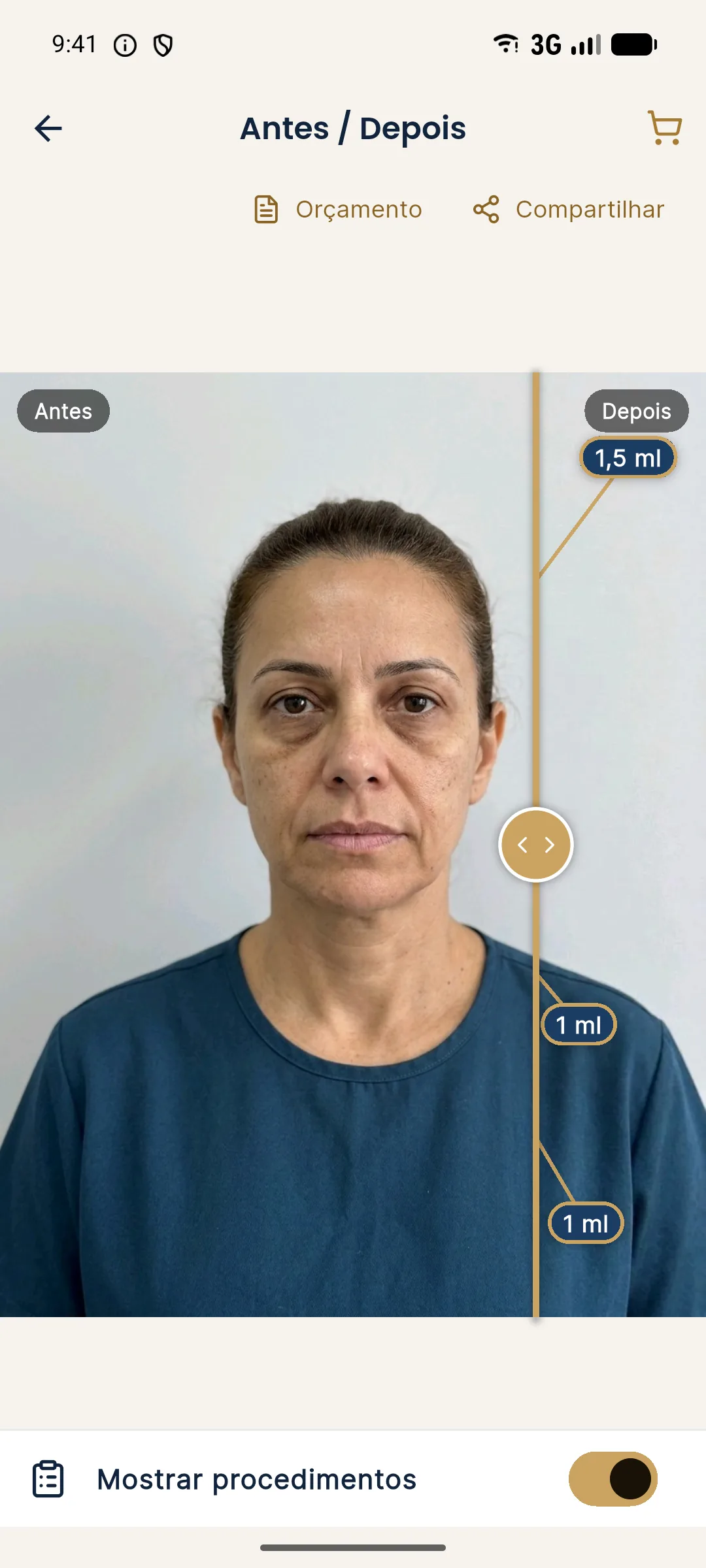
To avoid promises, always return to the rule: explaining that a simulation is not a guarantee and ethics of result simulation.
How do you record the decision?
Note what was assessed, what causes the appearance and why the plan includes or excludes each area. A decision not to treat the double chin with filler is worth as much as the opposite, because it protects the professional and guides the follow-up. See findings the patient did not ask about in the plan and plan diary: progress record per session.
Every decision on product, volume and technique belongs to the qualified professional, after assessment, and the simulation is illustrative.
Frequently asked questions
Does filling the chin improve a double chin?
In some patients, chin projection changes the perception of the angle between chin and neck and disguises part of the double chin. In others, the cause is fat or skin, and volume does not solve it.
How do I tell whether a double chin is fat, skin or lack of chin?
Through a profile assessment with the head level, the pinch test and the dynamics when the head position changes. The diagnosis is clinical, up to the professional.
Does Harmy simulate the double chin?
No. The app marks the Chin and the Jawline in the frontal view and does not simulate a double chin or the cervicomental angle.
Can I promise a more projected chin and a more defined neck?
No. The result varies with anatomy, skin and technique, and the simulation is illustrative. Avoid any promise.
Harmy images are illustrative simulations generated by AI from the patient's photo to support the conversation between practitioner and patient. They are not a promise of results. Indication, technique, product and volume are solely the decision of the licensed practitioner. This content is for information only and does not replace a clinical assessment.