
What to Treat First in Facial Harmonization: Priority Criteria

Quick facts
- Topic
- Criteria for ordering the areas of a facial harmonization plan
- Core idea
- The order comes from the criteria of the case, not from a fixed list of areas
- Criteria
- Concern, structure, impact on the whole face, risk and reversibility
- Caution
- Treating everything on day one is rarely the best order
The question "where do I start?" comes up in every planning consultation, and canned answers tend to be bad. "Always the midface." "Always the lips, because the patient asks for them." "Always the cheapest area." Each fits one case and gets in the way in another. What works is a short list of criteria, applied to the patient in the chair.
This page proposes five criteria for ordering the areas of a facial harmonization plan, shows how to weigh them, points out pitfalls and explains where the simulation fits. It does not recommend areas or protocols, and the decision always belongs to the qualified professional. For the general principle, read structure before detail in a facial harmonization plan.
Which criteria set the order?
Five questions are enough to organize most cases. None has a fixed weight: the weight depends on the patient.
| Criterion | Question | Effect on the order |
|---|---|---|
| Concern | What bothers the patient most? | Prioritizes what they value |
| Structure | Is there missing support that explains other concerns? | Structure before detail |
| Impact on the whole face | Which area changes the look of the others the most? | The one with a domino effect comes first |
| Risk | Which area carries the highest vascular or functional risk? | Higher risk calls for more caution and preparation |
| Reversibility | Which approach is easiest to adjust? | Reversible before hard to undo |
The criteria overlap. An area can be the patient's concern and also high risk, which calls for caution and conversation. Another can be structural and of little interest to the patient, which calls for an explanation. There is no formula, only a weighing process, and it should be recorded.
How do concern and structure balance out?
The concern is the starting point: it is the reason for the visit. But patients describe what they see, not necessarily the cause. Someone who asks about "under-eye circles" may be lacking support in the cheekbone. Someone who asks for "lips" may have a profile where the chin is the issue. Someone who asks about "smile lines" may have lost volume in the midface.
That is why the assessment sits between the concern and the plan. Look at the structure, the skeleton, the skin, the fat and the dynamics. If the cause lies in another area, the conversation goes: "What you describe seems to be related to this area, and I suggest we look there." That way the patient feels heard and guided, and the plan stays coherent. See domino effect between facial areas.
What about risk and reversibility?
Different areas carry different risks. The glabella, temples, tear trough and nasolabial fold are high vascular risk areas, and so is the nose. That does not mean they are off limits, only that they demand solid anatomical knowledge, preparation for complications and hyaluronidase on hand when hyaluronic acid is used. With a new patient, many professionals prefer to start with lower-risk areas that are easier to adjust, and leave the higher-risk ones for when they know the patient better and trust has built up.
Reversibility is another dimension. A resorbable product allows correction, while other approaches last longer or work gradually. The harder something is to undo, the more care the order needs and the lower the starting volume should be. See safety and complications in facial harmonization.
How does impact on the whole face change the plan?
Some areas have a domino effect: when they change, they alter how the neighboring areas look. The cheekbone is the classic example, because it supports the midface and influences the tear trough, the nasolabial fold and the contour. The chin influences the profile and how the nose and lips are perceived. Starting with the area that has the greatest impact on the whole face usually reduces the total volume needed, because the other areas may need less.
This reasoning appears on several pages: cheekbone and tear trough: why combine them in the plan, chin and jaw: why combine them in the plan and nose and chin: profile balance in planning.
Which pitfalls get in the way of the order?
- Treating everything on day one: you lose the chance to learn from the patient's response.
- Following only the request: you treat the symptom and leave the cause.
- Following only clinical logic: the patient does not see themselves in the plan and drops out.
- Letting price decide: starting with the "cheapest" area may not be the one that helps most.
- Repeating the previous patient's plan: every face calls for its own order.
Pressure for quick results also weighs in. A patient who wants everything at once needs to hear, calmly, that a plan in stages can be safer and give a better result. See patient approval of the plan.
Where does Harmy come in?
Harmy does not say what to treat first. It helps you talk about what has already been decided. In the app, after the front-facing photo, you mark the areas, enter the ml (in 0.5 ml steps) and the intensity (Subtle, Moderate or Pronounced), and generate the projection. A useful strategy is to generate two projections: one with only the first stage and another with the full set, to show the patient the difference.
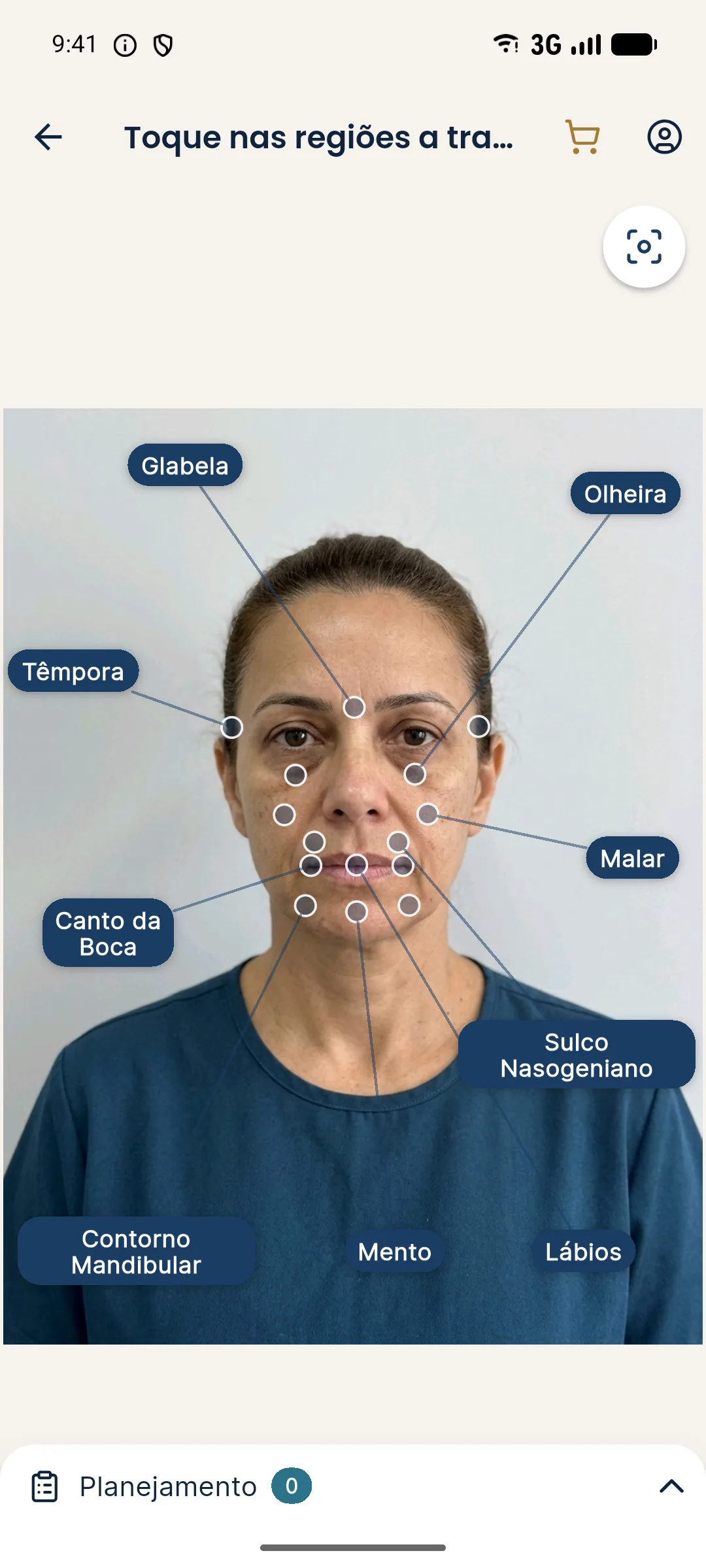
Showing the first stage on its own helps the patient accept a phased plan. See comparing the Subtle, Moderate and Pronounced intensities and explaining that a simulation is not a guarantee.

Every decision on area, order, product, volume and technique belongs to the qualified professional, in line with the rules of their professional board. The simulation is illustrative.
Frequently asked questions
Is there a standard order of areas in facial harmonization?
No. The order depends on the case. Criteria such as concern, structure, impact on the whole face, risk and reversibility help you decide, and the final decision belongs to the professional.
Should I treat the patient's concern first, or what I think is most important?
Both belong in the conversation. The concern guides, but the assessment may show that a different area explains the complaint. The plan comes from the dialogue between the two readings.
Does it make sense to start with the safest area?
Often yes, especially if the patient is new to treatment. Starting with lower-risk, more reversible areas lets you assess the response before moving on.
Does Harmy show which area to treat first?
No. The app does not say what to treat. You mark the areas and the ml, and it generates the projection. The order is a clinical decision.
Harmy images are illustrative simulations generated by AI from the patient's photo to support the conversation between practitioner and patient. They are not a promise of results. Indication, technique, product and volume are solely the decision of the licensed practitioner. This content is for information only and does not replace a clinical assessment.