
Nose and chin: profile balance in HOF planning
- Nerve
- Highlighted area
Quick facts
- Topic
- How chin projection changes the perception of the nose in profile
- Central question
- Is the nose big, or is the chin small
- Deciding view
- Level profile, alongside the frontal view
- Risk
- The nose is a high vascular risk area, hyaluronidase available
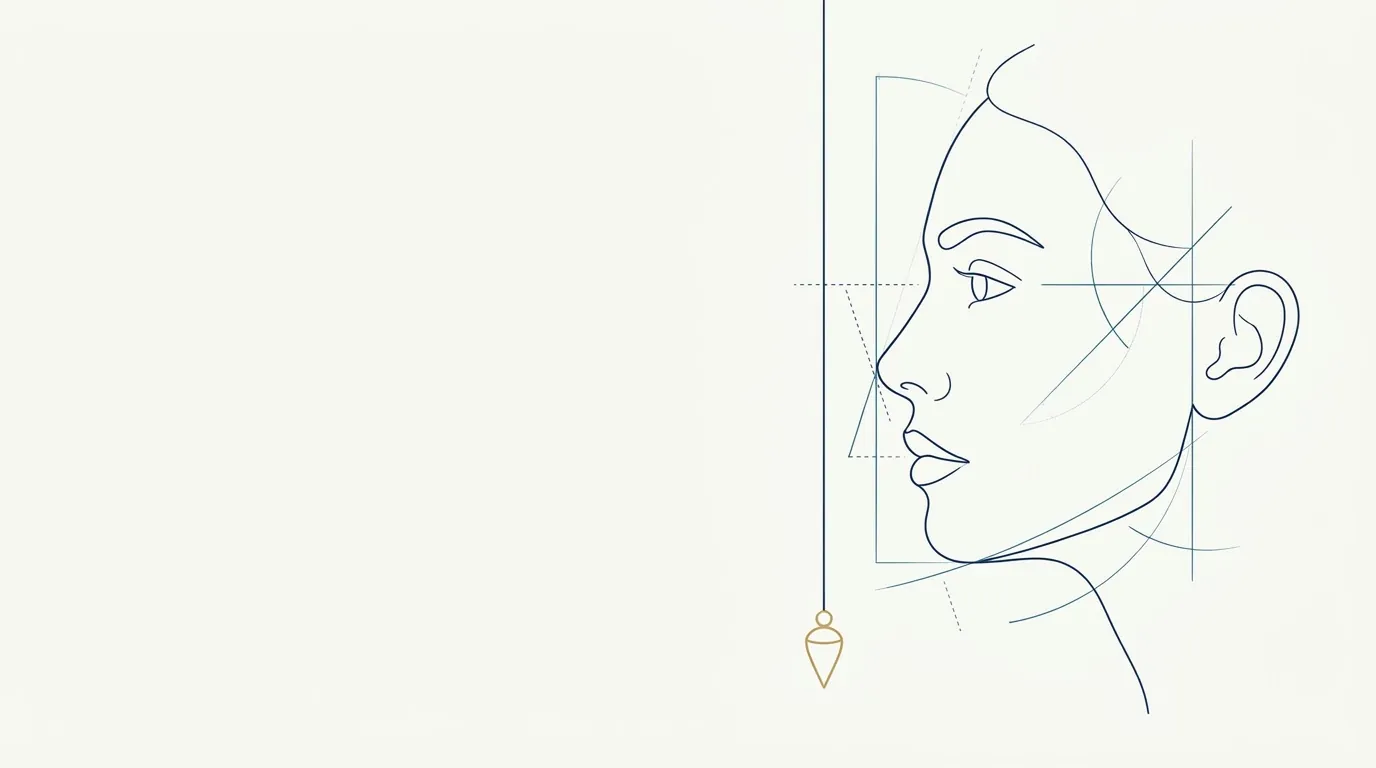
In profile, the nose and chin talk to each other. A prominent nose looks smaller when the chin keeps pace, and a recessed chin makes the nose look bigger than it is. Many patients who ask to "make the nose smaller" actually have a profile where the chin has little projection. Noticing this before planning changes the direction of the conversation and can avoid a plan that treats the symptom and forgets the cause.
This page shows how to assess the nose and chin together, what references exist for reading the profile, when chin projection redefines the perception of the nose and what Harmy shows and does not show on this subject. For the profile as a whole, read aesthetic profile: how lips, nose and chin relate.
Why does the chin change how the nose reads?
The eye reads the profile as a sequence of points: forehead, nose, lips and chin. The balance among them defines whether the whole looks harmonious. If the chin is recessed relative to the rest, the profile line looks "broken" and the nose stands out. If the chin keeps pace, the line looks continuous and the nose blends in.
The facial convexity angle and the mentolabial angle are ways of describing that reading. Reference lines, such as Steiner's and Ricketts', relate the nose, lips and chin. They are useful as a question, and they vary between sexes, ages and populations, so they should not be used as a goal.
| Profile pattern | Likely reading | Question for the plan |
|---|---|---|
| Prominent nose, recessed chin | Lack of balance with the lower third | Is the concern the nose or the chin? |
| Proportional nose, recessed chin | Convex profile due to the lower third | Does the chin call for projection? |
| Proportional nose and chin | Balanced profile | Is there a concern that justifies intervening? |
| Very projected chin | Concave or heavy lower profile | Should the plan avoid adding? |
None of this replaces the exam. Reading the profile depends on a standardized photo, with the head level, as in profile facial analysis: checklist and standardized frontal photo.
How do you order the decision between nose and chin?
In many cases, the decision about the chin comes first, because it is the area that changes the perception of the others. This is not a rule, and the actual order depends on the case. The reasoning:
- Assess the profile as a whole, not the nose in isolation.
- Ask the patient what bothers them about the profile, in their own words.
- See whether the chin has projection compatible with the nose and lips.
- Consider the skeleton: a short chin is a bony matter.
- Decide what to do first and schedule a follow-up to reassess.
See also plan to project the chin and facial skeleton before injecting. For the lower contour as a line, read chin and jaw: why combine them in the plan.
What risks does the area carry?
The nose is a high vascular risk area, with complications such as vascular occlusion and necrosis described, including a risk to vision. The chin has the mental nerve and vessels that call for anatomical knowledge. Hyaluronidase should be available when hyaluronic acid is used, and the indication belongs to the qualified professional, according to the rules of their professional board.
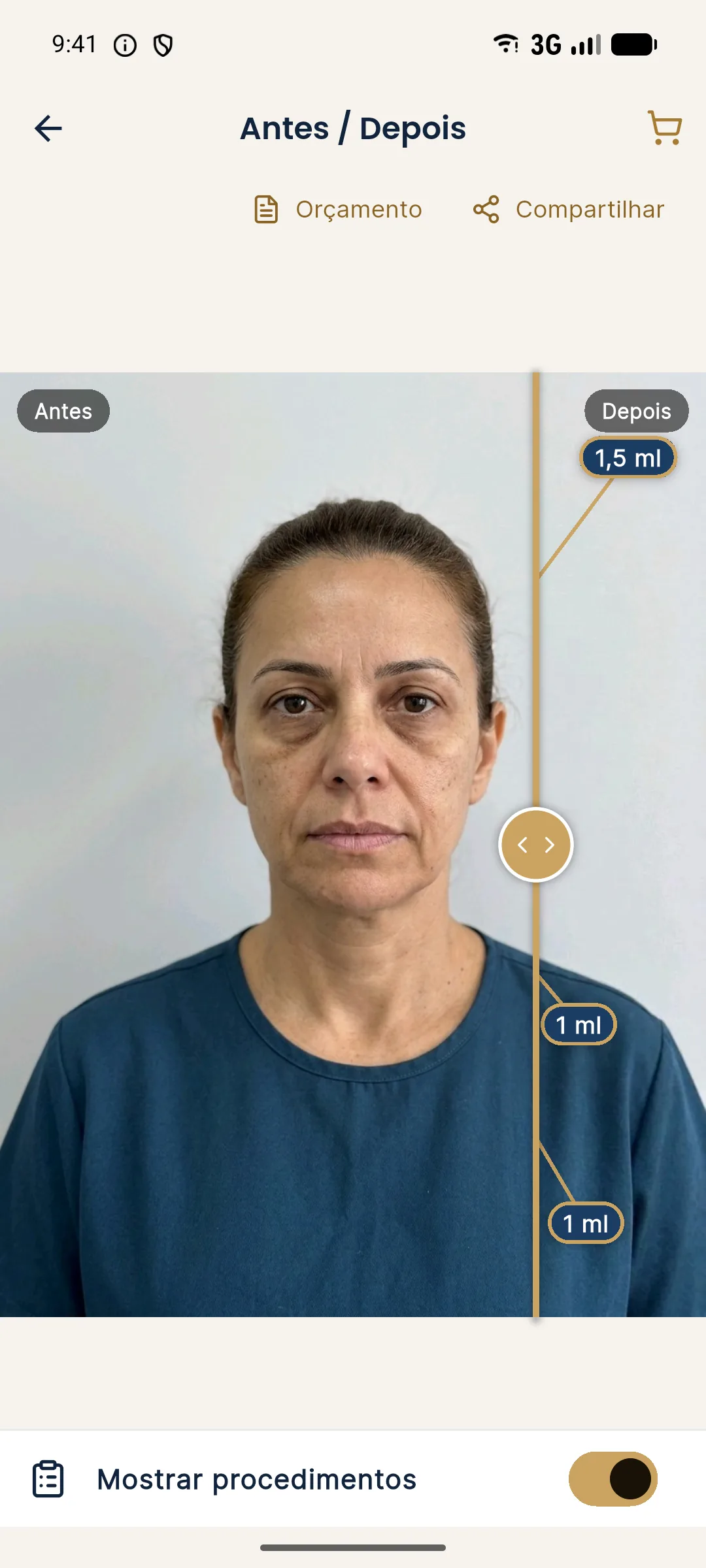
As for chin volume, the app's visual planning works in steps of 0.5 ml, from 0.5 to 5 ml per area. The "Full harmonization" shortcut uses chin 1.5 ml at Moderate as a starting point. Moderation is preferable, because too much chin lengthens the face and can create the imbalance you wanted to avoid. See ml per area: ranges used in visual planning.
What does Harmy show and what does it not show?
Harmy detects the face on the device from the frontal photo and shows labeled points. The Chin is one of them. The nose is not, and chin projection, which is a profile matter, does not appear, because the app does not use a profile photo.
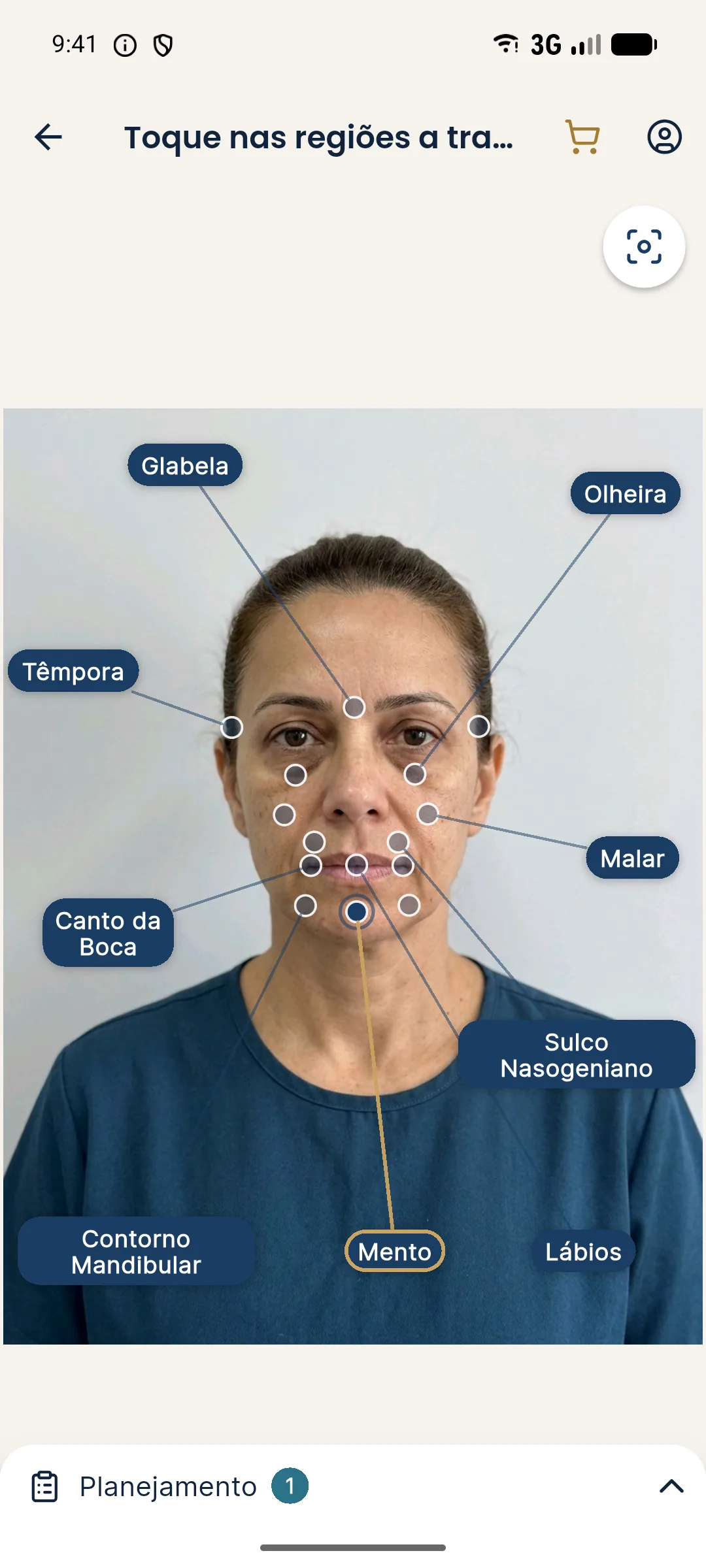
This calls for candor with the patient. If they think the simulation shows the balance of the profile, explain that it shows the chin from the front. The conversation about the profile is clinical, supported by the profile photo you took. When the patient compares before and after, remind them the image is an illustration. See explaining that a simulation is not a guarantee and ethics of result simulation.
When should you not include the chin in the plan?
- When the profile is already balanced and the patient's concern is only the nose, which deserves a different conversation.
- When the chin is projected and adding volume would weigh down the lower third.
- When the cause of the imbalance is skeletal and the patient expects a change that soft tissue does not deliver.
- When the patient seeks the plan to "fix the nose" without understanding the limits.
For the reasoning on the order among areas, see what to treat first in HOF: priority criteria and, for the neighboring area, nose and upper lip: the nasolabial angle in the HOF plan.
Every decision on area, product, volume and technique belongs to the qualified professional, after assessment. The simulation is illustrative.
Frequently asked questions
Does a small chin make the nose look bigger?
It can. When the chin is poorly projected, the nose takes center stage in profile, and the whole looks unbalanced. The profile assessment clarifies this.
Does filling the chin improve the look of the nose?
It can change the perception of the balance between the two, but the effect varies with anatomy and is not guaranteed. The decision belongs to the professional, after assessment.
Does Harmy simulate the nose and chin projection?
No. The app has no nose point and uses only the frontal photo, so chin projection, which is a profile matter, is not shown. It simulates the Chin from the front.
Which reference lines assess the profile?
There are reference lines in the literature, such as Steiner's and Ricketts', used as support for reasoning. They serve as a question, not as a goal.
Harmy images are illustrative simulations generated by AI from the patient's photo to support the conversation between practitioner and patient. They are not a promise of results. Indication, technique, product and volume are solely the decision of the licensed practitioner. This content is for information only and does not replace a clinical assessment.