
Aesthetic Profile: How Lips, Nose and Chin Relate

- Nerve
- Highlighted area
Quick facts
- Topic
- Balance among the three profile points: nose, lips and chin
- Central question
- Which of the three is out of balance and should be the first conversation
- References
- Steiner and Ricketts lines, as a question and not as a goal
- App limit
- The projection is front-facing, and the profile is not simulated
The profile is the honest view. It reveals what the front disguises: the projection of the nose, the position of the lips, the recession of the chin. That is why it is the view that teaches the most about balance, and the one that most surprises patients, who rarely see themselves from the side. The aesthetic profile is the relationship among three points: nose, lips and chin. Adjusting one without looking at the other two is a recipe for a profile that improves in one part and loses in another.
This page shows how to read those three points together, what references exist, how to decide what to adjust first, what the risks are and where Harmy fits in, along with its limitations. For the profile checklist, see facial profile analysis: checklist.
How do the nose, lips and chin influence each other?
The three points form a reference line that the eye follows. When one falls out of alignment, the others look different. A prominent nose makes the lips look recessed, and a recessed chin makes both the nose and the lips look more projected. This interplay is why the profile calls for reading the whole.
References from the literature help structure the reading. Steiner's S line and Ricketts' line relate the position of the lips to the nose and chin. The nasolabial angle and the mentolabial angle describe the transition between the points. These values vary with sex, age and population, so they should be questions and not goals.
| Point | What to observe in profile | Question for the plan |
|---|---|---|
| Nose | Projection, tip rotation, dorsum | Does the nose dominate the profile? |
| Upper lip | Position relative to the nose and the reference line | Is it retracted, projected or balanced? |
| Lower lip | Position and relationship with the chin | Does it follow the upper lip? |
| Chin | Projection relative to the lips and nose | Does it have enough support? |
| Labiomental fold | Depth of the transition | Is the transition smooth or marked? |
None of these references defines beauty. They help describe what the eye sees, and it is the conversation with the patient that decides what matters. See neoclassical canons of the face and average beauty and facial attractiveness.
Which of the three should you adjust first?
There is no single answer, but there is a reading logic. In many cases the chin is the first conversation, because it is the point that most changes how the other two are perceived and because the chin's skeleton limits what can be done. In others, the main concern is the lips and the chin is already balanced. The real order depends on the case.
- Identify the dominant imbalance: which point stands out most from the other two?
- Consider the skeleton: the nose, maxilla and mandible have a bony base that volume does not change.
- Ask the patient: what do they want to change about their profile?
- Weigh the risk: the nose is high vascular risk, and the plan needs caution.
- Define the first stage and agree on the follow-up to reassess the whole.
To understand the relationship within each pair, see nose and upper lip: the nasolabial angle in a facial harmonization plan and nose and chin: profile balance in planning. For the skeleton, read facial skeleton before injecting.
What risks does the profile bring?
Each of the three points has its own risks. The nose is high vascular risk, with complications described as vascular occlusion, necrosis and, in severe cases, visual changes. The lips have labial arteries and a risk of bruising, swelling, nodules and asymmetry. The chin has the mental nerve and vessels that demand solid anatomical knowledge. In all of them, hyaluronidase must be on hand when hyaluronic acid is used, and the decision to treat, the product and the technique belong to the qualified professional, in line with the rules of their professional board.
What does Harmy show of the profile?
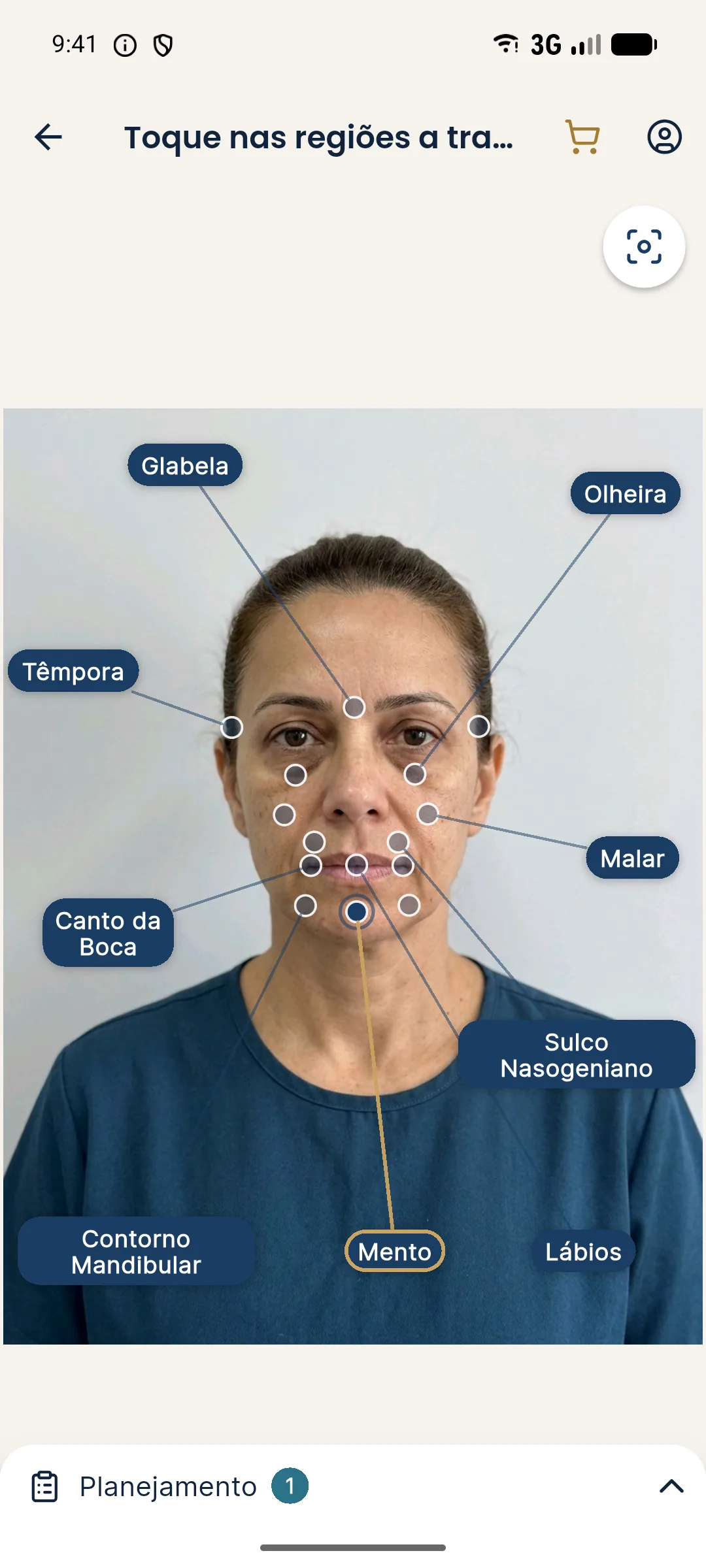
Harmy does not show the profile. The app uses a front-facing photo, detects the face on the device and shows labeled points. Among them are Lips and Chin, which can be marked with ml (in 0.5 ml steps) and intensity (Subtle, Moderate or Pronounced). The nose is not a point in the app.
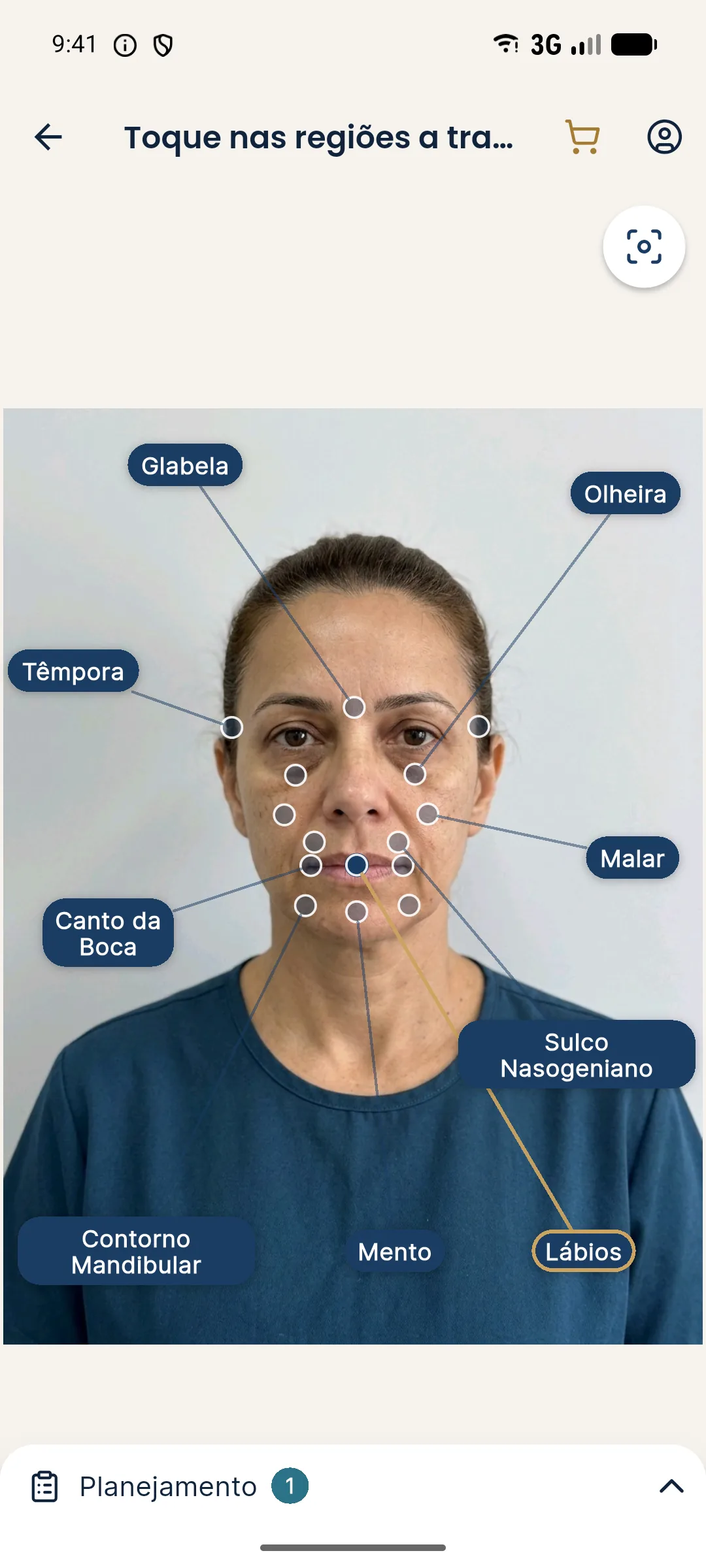
This limitation needs to be part of the conversation. If the patient wants to see how the profile will look, the app's simulation does not answer that. Use it for what it shows, the harmony from the front, and run the profile conversation with the side photo and your own assessment. See explaining that a simulation is not a guarantee and ethics of result simulation.
When does the profile call for a different conversation?
Some patients want to change their profile in a way that soft tissue cannot reach. A chin that is very recessed because of bone, a retracted maxilla or a nose with a structural base may call for assessment by other professionals. The role of the plan, in that case, is to be honest about what can and cannot be done, and to refer when necessary. For expectations, see findings the patient did not ask about in the plan.
Every decision on area, product, volume and technique belongs to the qualified professional, after assessment. The simulation is illustrative.
Frequently asked questions
What is the aesthetic profile in facial harmonization?
It is how the nose, lips and chin relate to each other in the side view. The balance among the three, rather than each one alone, usually defines the harmony people perceive.
Which profile point should be assessed first?
In general you assess the whole and identify which is out of balance. The chin is often the first conversation, but the order is a clinical decision.
Are the Steiner and Ricketts lines goals?
No. They are references from the literature that relate the nose, lips and chin. They vary with sex, age and population, and serve as an assessment question.
Does Harmy simulate the profile?
No. The app uses only the front-facing photo and simulates the Lips and Chin from the front. The nose and the profile are not simulated.
Harmy images are illustrative simulations generated by AI from the patient's photo to support the conversation between practitioner and patient. They are not a promise of results. Indication, technique, product and volume are solely the decision of the licensed practitioner. This content is for information only and does not replace a clinical assessment.