
Aesthetic profile reference lines in practice
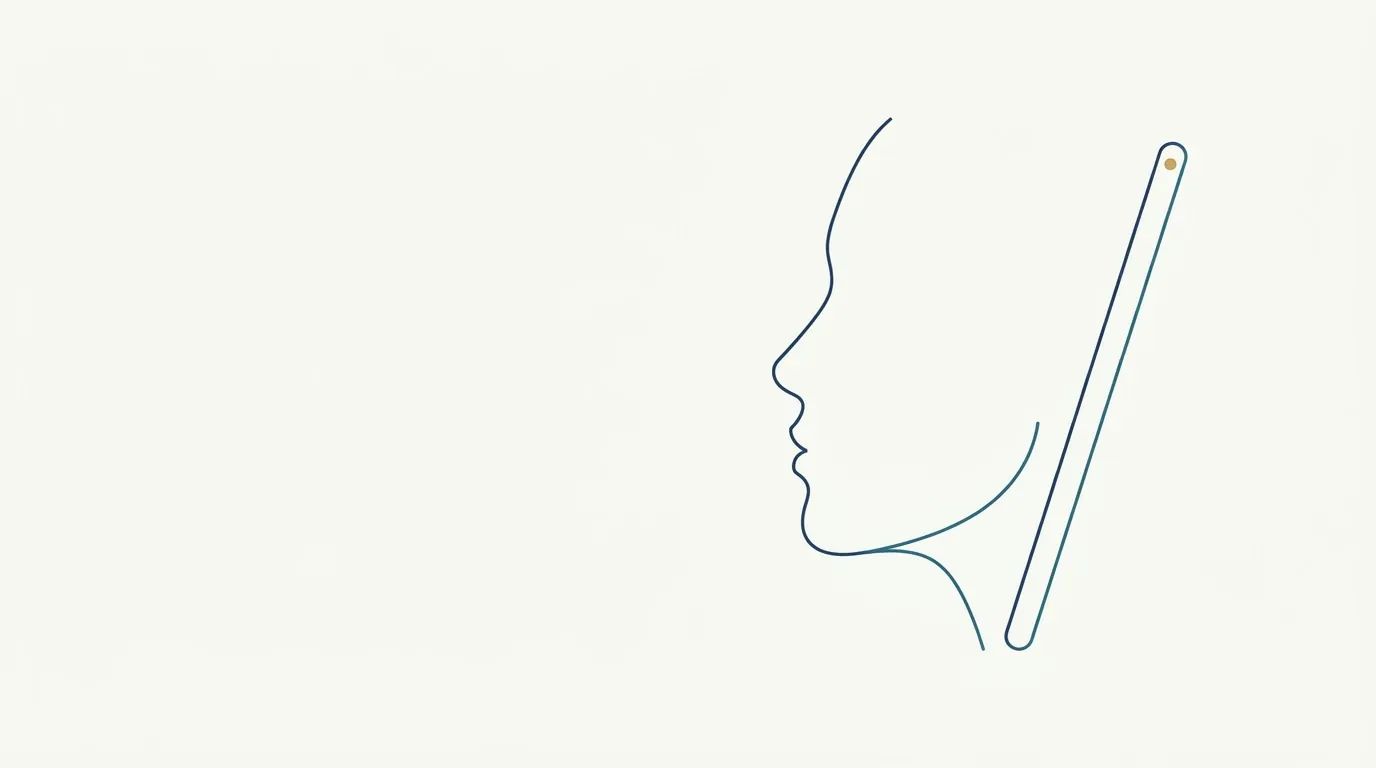
- Nerve
- Highlighted area
Quick facts
- Concern
- The profile looks unbalanced between nose, lips and chin
- Method
- Standardized profile photo and reference lines drawn with the Frankfort plane horizontal
- Structures
- Nose, lips, chin and relation to the skeletal base
- Caution
- The lines are starting references and vary with sex, age and ancestry
The profile is the only view in which the face reveals what the front hides: the projection of the nose, lips and chin and the balance between them. To organize this reading, facial specialties adopted reference lines, which serve to identify where the whole departs from a usual balance. Using them with good judgment helps the plan and the conversation with the patient.
This page explains how to apply three well-known lines in harmonization practice. It ties in with straight profile, convex profile and plan to balance the profile.
What are the lines and what does each one measure?
| Line | Points it connects | What it is for in the reading |
|---|---|---|
| Ricketts E-line | Tip of the nose to the pogonion | Position of the lips relative to the nose and chin |
| Steiner S-line | Middle of the nose's "S" to the pogonion | Lip projection against the curve of the nose |
| Holdaway H-line | Upper lip to the pogonion | Relation of the lip to the chin and nose |
Beyond these, the nasolabial angle and the mentolabial angle complete the reading. The reference values come from orthodontic and surgical contexts and vary between sources. The safe practice is to treat them as ranges and not as an exact target.
How to draw them without error
The quality of the photo decides the measurement. The head must be in the Frankfort plane, which aligns the lowest point of the orbit with the top of the ear canal, horizontally.
How to turn the reading into a plan
The reading has three steps:
- Describe: are the upper lip, lower lip and chin behind, on or in front of the line?
- Explain the probable cause: lack of lip volume, chin retrusion, prominent nose, skeletal base or teeth.
- Choose what harmonization can modify, with caution, and what should be referred.
In practice, a recessed chin is the finding that most changes the reading. Projecting it usually improves the relationship with the lips without touching them. Chin filler and lip filler are the most common interventions, in restrained volumes and in stages, at the discretion of the licensed professional. Lips that sit well in front of the line, on the other hand, rarely call for more volume.
When to refer
When the deviation is due to the skeletal base (retrognathia, prognathism) or to tooth position, the underlying treatment is orthodontic or surgical. Harmonization can be part of the plan as an aesthetic compensation, never as a substitute when there is a functional indication. Explain this in writing. The page deep bite and recessed chin details an example.
The risks follow the areas treated: swelling, bruising, asymmetry, nodules and irregularities, plus rare vascular complications. Hyaluronidase must be available when hyaluronic acid is used.
How to show it in Harmy
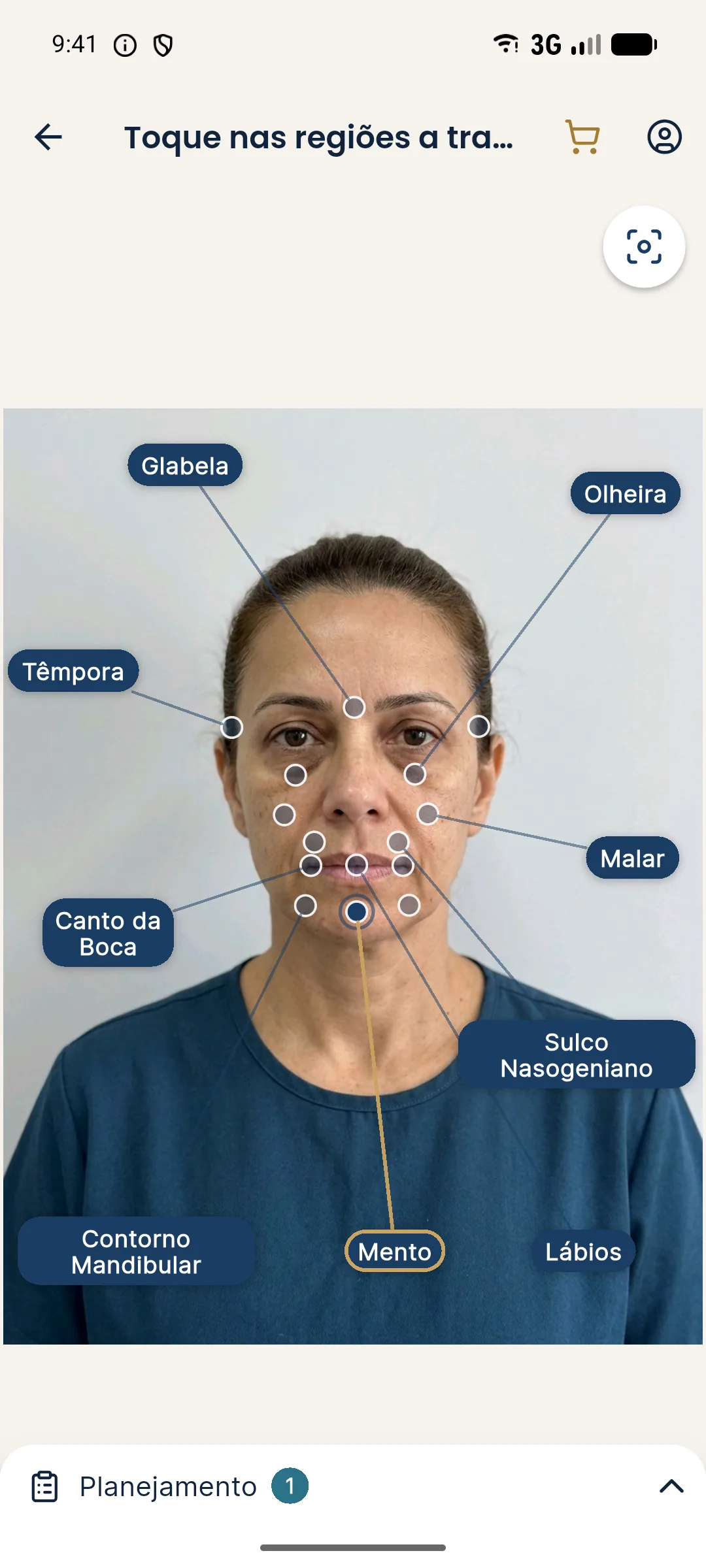
Harmy projects from the frontal photo, and there is no profile or 45-degree projection. This means the profile reference lines are measured outside the app, and the simulation only helps show the presence of volume in the frontal view. The Chin and Lips points can illustrate the idea, and the conversation about profile happens with the patient's real profile photo.
Common mistakes when using profile lines
The most common mistake is drawing the lines on a profile photo without the Frankfort plane. With the chin raised or lowered, all the relationships change, and the lip seems to sit in front of or behind the line because of posture. The second mistake is treating the lines as goals: fitting the lip exactly onto a line erases individual traits and may age poorly.
Another mistake is ignoring the nose. The lines start from the tip of the nose, and a small or large nose shifts the reference. A lip that seems to sit behind the line may be right for the whole, and the problem may be the nose. It is also worth remembering that the references were described in specific populations, and applying them uncritically to every patient is an oversimplification.
Finally, do not use the lines to impose a concern. If the patient is happy with their profile, the measurement does not create an indication.
How to communicate the limits
Use the lines to talk about balance, not flaws. Show the photo, explain that they are conversation tools, and describe what harmonization can change in the perception of the profile: chin projection, lip presence, the relationship between them. Be clear about what does not change, such as the skeletal base and the teeth. Record the original photo, the photo with the lines, the plan and the caveats. At follow-up, repeat the profile photo in the same position. Patients tend to like seeing the progress with the same references, as long as the conversation does not turn into grading the face.
Patient profiles and reading the profile
The same value on a reference line can be suitable in one patient and unfavorable in another. Factors such as age, sex, ancestry and nose shape change what is considered balanced.
Young patients tend to have more projected lips and fuller profiles; older patients lose projection and gain relative retrusion. In trans people, the profile ideal follows gender identity, and the plan starts from the patient's wish, not from a fixed standard.
In all cases, communicate that the profile belongs to the person and that the professional is a partner in the decision. The line is an instrument, and the patient's identity is what gives the plan meaning.
Wrap-up
Record the photos, the lines drawn, the description in words and the staged plan. For other profile concerns, see concave profile and recessed chin. Volumes and techniques are at the discretion of the licensed professional, in line with the rules of their professional council in Brazil.
Frequently asked questions
What are the Ricketts, Steiner and Holdaway lines for?
They are references used to assess the position of the lips relative to the nose and chin in profile. They help organize the conversation and the plan, but do not define an ideal profile.
Do the lines apply to all patients?
They serve as a starting point. Values vary with sex, age and ancestry, and the plan must respect the patient's identity.
Can the lines be drawn on a phone photo?
It gives an estimate if the profile photo is standardized, with the head in the Frankfort plane and at an adequate distance. Lens distortion affects the measurement.
Does a deviation in the lines mean I need filler?
Not necessarily. The deviation shows the point to assess, and the decision considers the patient's concern, the cause and the options, including non-injectable ones.
Harmy images are illustrative simulations generated by AI from the patient's photo to support the conversation between practitioner and patient. They are not a promise of results. Indication, technique, product and volume are solely the decision of the licensed practitioner. This content is for information only and does not replace a clinical assessment.