
Deep Bite and Recessed Chin: Assessment

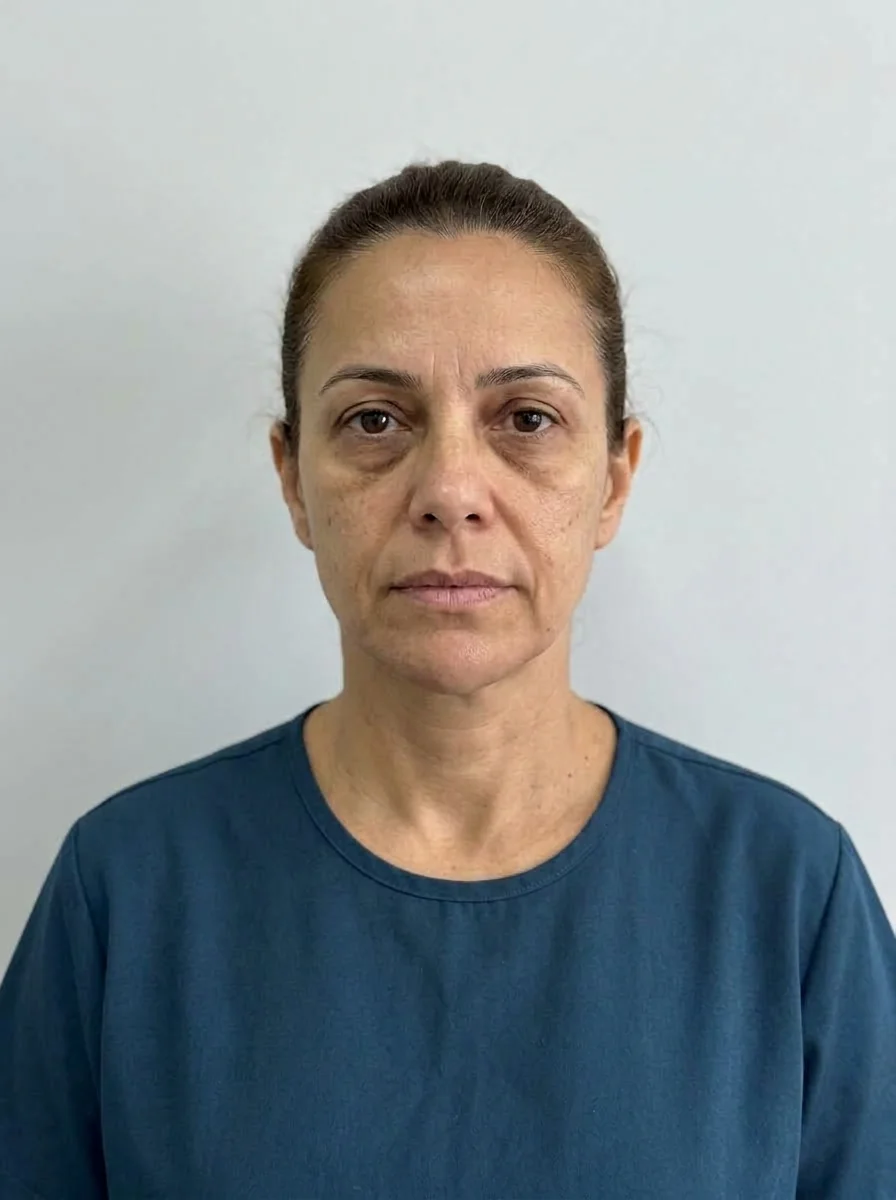 BeforeSimulation
- Nerve
- Highlighted area
Quick facts
- Concern
- Chin that looks recessed, a marked fold between lip and chin, and upper teeth covering the lower ones
- Method
- Assess the profile, the mentolabial angle and the dental relationship with the orthodontist
- Structures
- Mandible, chin, lower lip, labiomental fold and teeth
- Caution
- Projecting the chin changes the aesthetics, not the bite
In a deep bite (overbite), the upper teeth overlap the lower ones too much. In many patients, this is associated with an underprojected chin, a lower lip that rolls inward and a well-marked fold between the lip and the chin. The result, in the profile photo, is a chin that seems to "disappear".
This page shows how to assess this combination and fit orofacial harmonization (HOF) into the orthodontic plan. See also chin set back, small chin and orthodontics and profile change.
Bite, chin and lower lip
The relationship between teeth, mandible and chin is structural. In a deep bite, the mandible may be set further back, or the lower teeth may be more upright, and the lower lip sits in a different position.
| Finding | What is seen | Reading for the plan |
|---|---|---|
| Underprojected chin | Profile with a hidden chin (retrogenia) | Chin projection may help |
| Deep labiomental fold | Marked groove between lip and chin | Restoring projection softens it |
| Rolled lower lip | Vermilion turned inward | Tooth position matters |
| Short lower third | Face with reduced height | Limit of HOF |
| Concave or convex profile | Depends on the skeletal base | Reference lines |
The mentolabial angle measures the depth of the groove in profile. A very closed angle can indicate a recessed chin and a projected lower lip, and it is one of the most useful measurements for talking with the patient and the dentist.
How to assess
The profile reference lines help record the starting point.
What HOF can consider
At the discretion of the qualified professional:
- Chin projection, in a restrained amount, to improve profile harmony. See chin filler.
- Labiomental fold: chin projection can soften it without injecting it directly. See chin and double chin: combining in the plan.
- Lips: proportion adjustments, with caution, so as not to accentuate the lower lip.
- Referral: when the skeletal base is the main cause, orthodontic or surgical assessment comes first.
The consent form must state that harmonization does not change the bite. Orthodontic changes can alter chin and lip position, and the plan may need to be revised.
Risks
Swelling, bruising, asymmetry, nodules and irregularities. The chin receives branches of the submental and inferior labial arteries, and the mental nerve calls for care; vascular complications are rare and serious, and hyaluronidase must be available when hyaluronic acid is used. Excessive projection can create an artificial look.
How to show it in Harmy
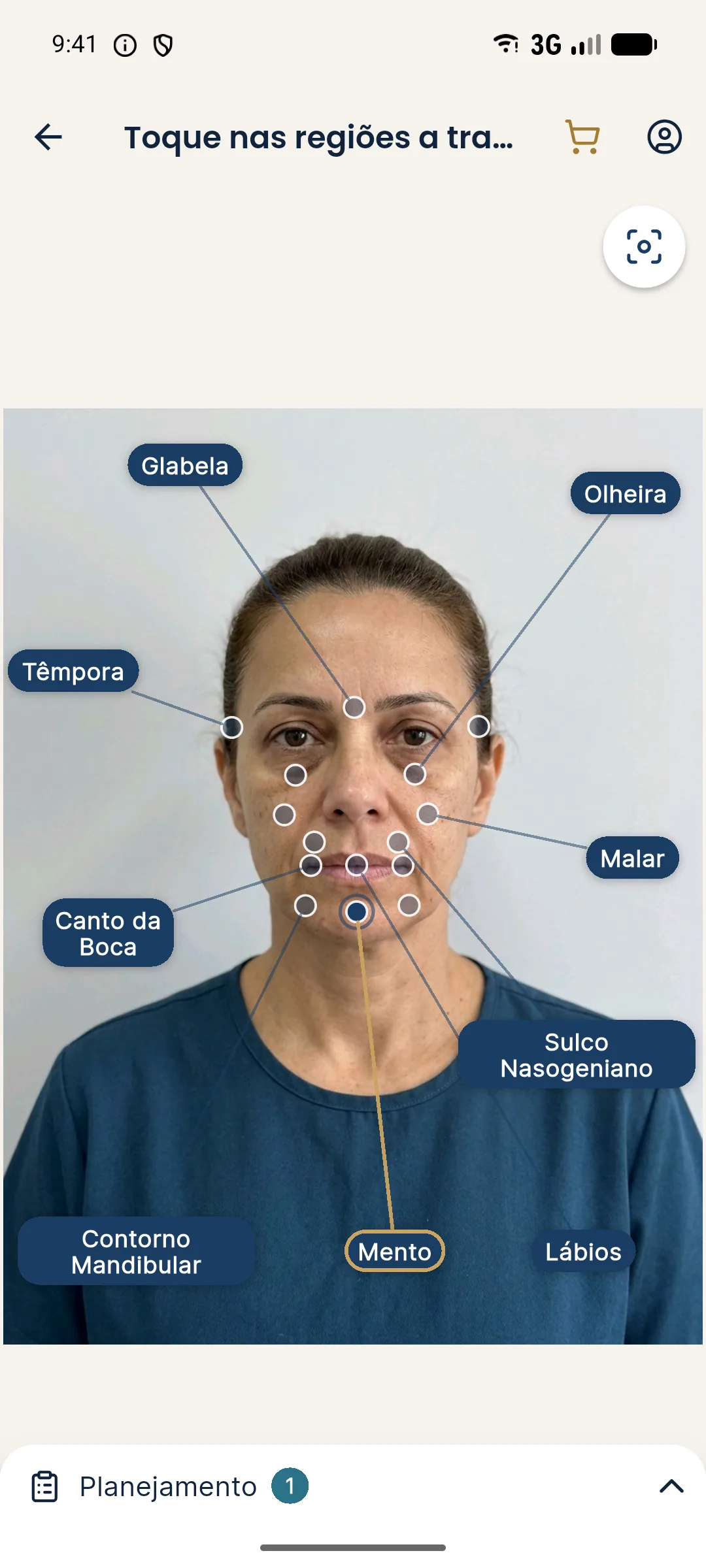
Harmy's Chin point simulates volume in the chin on the front photo, and Lips completes the picture. Because the projection is frontal, the app does not show the profile or the mentolabial angle, which is where the gain in projection is seen best. Use the app to show chin presence in the front view, and take the profile conversation to the patient's real profile photo.
Common mistakes with a recessed chin
The first mistake is projecting the chin without looking at the profile. On a front photo, the gain looks small, and the professional is tempted to inject more. In profile, the excess shows up as a "ball" chin. The second is ignoring the lower lip: if it is projected or rolled inward, the labiomental fold will stay deep even with more chin projection.
Another mistake is promising that harmonization replaces orthognathic surgery. In cases of significant retrognathia, it is a compensation, and the patient needs to know that. It is also a mistake to forget the relationship with the bite: if the patient will have orthodontics, chin position can change, and the aesthetic plan needs to wait.
Finally, beware of haste. The chin is an area where small amounts change the profile a lot, and the temptation to add more volume in the same session is strong. Waiting for the swelling to go down and reassessing is the safest approach.
Conversation and records
Show the patient the profile with and without projection, as an illustration, and explain the options. Record the profile photo, the mentolabial angle, the pogonion position and the decision. Schedule a follow-up to assess the result after the swelling has subsided. Advise on warning signs and on the possibility of reversal with hyaluronidase when hyaluronic acid is used. If orthodontics is under way, document the conversation with the dentist. This organization protects the patient from excess and shows that every step was thought through to respect their face and identity.
Patient profiles and approach
Young patients with a deep bite and a recessed chin are often in orthodontics, and the aesthetic decision should wait. Adult patients who have already completed treatment may be candidates for discreet compensations.
People with a rolled lower lip benefit from a specific conversation about the vermilion and the fold, because the chin alone does not solve it. Male patients often prefer more pronounced projection and women a softer one, but that preference is individual.
In all cases, agree with the patient on what will be done now and what depends on the dental treatment. A plan in stages makes the path clear and reduces anxiety.
Wrap-up
Record profile photos, the coordination with the orthodontist, the staged plan and expectations. For linked concerns, see open bite and appearance and concave profile. Volumes and techniques are at the discretion of the qualified professional, according to the rules of their professional council in Brazil.
Frequently asked questions
Does a deep bite cause a recessed chin?
It is often associated with a less projected chin and a deep labiomental fold, but the relationship varies. Profile assessment and orthodontic analysis clarify the case.
Does chin filler help?
It can improve projection and profile harmony, at the discretion of the qualified professional. It does not correct the bite, and talking to the orthodontist is important.
What is the labiomental fold?
It is the groove between the lower lip and the chin. When it is very deep, it gives the profile a look of a hidden chin, and chin projection can soften it.
Can I do harmonization and braces at the same time?
It depends on what is agreed with the orthodontist. Tooth position can change the profile, which changes the plan, and the order of the steps is decided case by case.
Harmy images are illustrative simulations generated by AI from the patient's photo to support the conversation between practitioner and patient. They are not a promise of results. Indication, technique, product and volume are solely the decision of the licensed practitioner. This content is for information only and does not replace a clinical assessment.