
Adjusting the HOF plan based on patient feedback

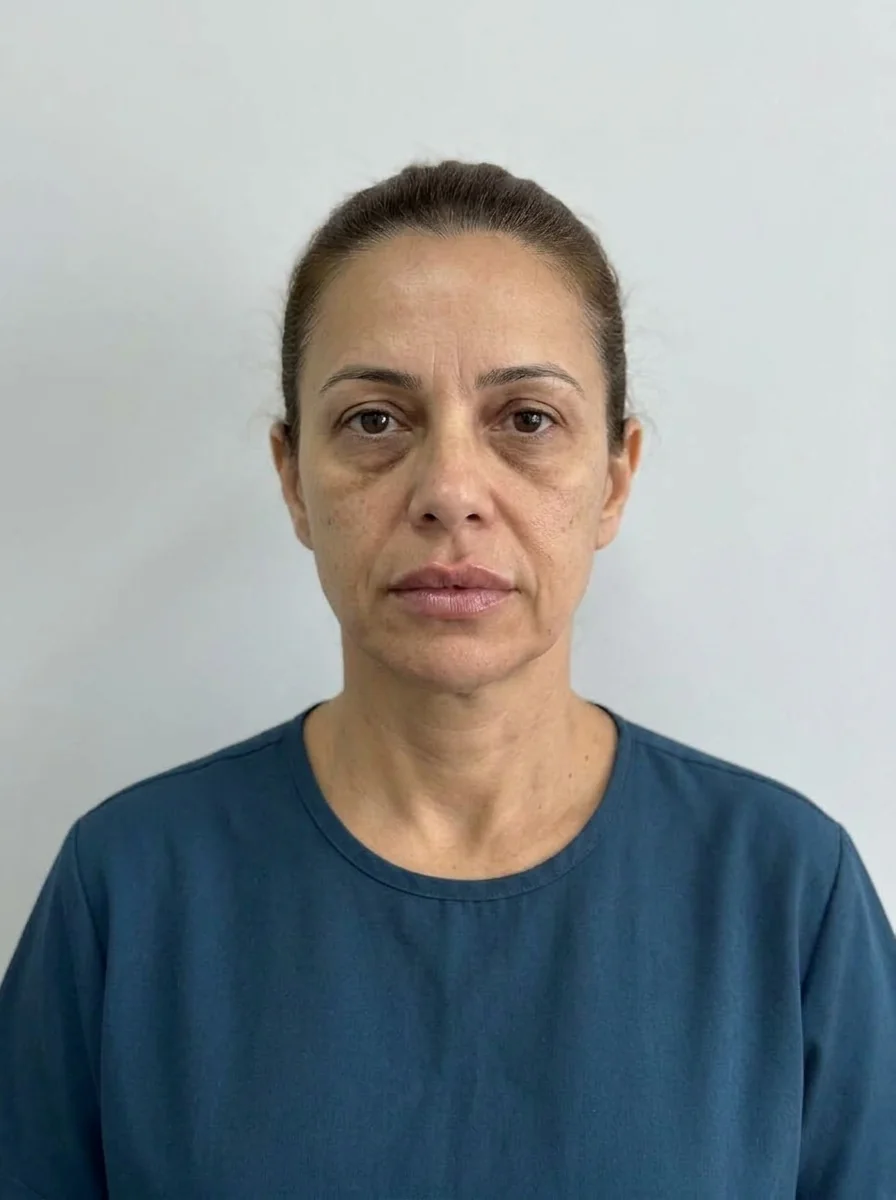 BeforeSimulation
Quick facts
- Goal
- Turn what the patient says into a plan adjustment that is safe and coherent
- When to collect
- During the simulation, at the follow-up and after the swelling has gone down
- How to ask
- Open questions first, then a scale, always with the photo in hand
- Trap
- Adjusting to please whatever the patient asks for in the heat of the moment, without checking whether it fits the face
The HOF (orofacial harmonization) plan does not end at the signature. It continues in the conversation where the patient says how they feel, what they noticed and what they think is missing. Those who know how to gather this feedback adjust treatment more accurately; those who simply obey the latest request risk chasing a target that moves with every visit.
This page shows how to collect feedback with questions that work, when to ask, how to tell a legitimate adjustment from anxiety, and how to record what was decided. For the expectations conversation before the procedure, see explaining that a simulation is not a guarantee.
At what points does feedback enter the plan?
There are four windows, each with its own type of question. Mixing them is the most common cause of useless feedback.
The final result can only be judged once the swelling has passed. Asking "do you like it?" on day two gets a reaction to the swelling, not to the procedure. The discussion on swelling and comparison is in swelling gets in the way of comparing results.
Which questions work?
Start with open ones, so the patient speaks in their own words. Then use scales to make the answers comparable between follow-ups. Finally, go back to the photo.
| Type | Example question | What it is for |
|---|---|---|
| Open | "How do you feel when you look in the mirror now?" | Capture the spontaneous perception |
| Specific | "Is there any area that feels different from what we agreed?" | Locate the discomfort |
| Scale | "From 0 to 10, how close is this to what you imagined?" | Compare across follow-ups |
| Functional | "Does it bother you when talking, smiling or eating?" | Separate aesthetics from function |
| Photo | "Shall we look at the before and the current photo side by side?" | Anchor perception in fact |
The scale is only useful if you repeat it the same way every time. Note the number with the date, and the history of progress becomes visible.
How do you tell a legitimate adjustment from anxiety?
Not all feedback calls for a plan change. Some requests reflect a genuinely new concern; others, the natural discomfort of seeing a different face. Four questions help tell them apart:
- Is the request consistent with the agreed plan? If the agreement was subtle and they want pronounced, that is a renegotiation.
- Is the request new, or had it been mentioned before? An old complaint resurfacing is usually legitimate; a new complaint right after the procedure may be swelling.
- Does the photo show what they describe? Sometimes the patient describes an asymmetry that the photo does not confirm, and vice versa.
- Is there a risk in adjusting now? Working on an area that is still inflamed can make things worse.
What should you adjust when the feedback is "little effect"?
When the patient says they barely saw a difference, the first step is not to increase the volume. Ask what they expected to see. In many cases the plan was subtle on purpose, and the expectation was anchored in a celebrity photo or a social media filter.
Possible causes and approaches:
- Expectation larger than the plan: go back to what was agreed and the illustrative simulation; offer an add-on, if it makes sense.
- Area that was not the real priority: revisit the concern; perhaps another area communicates more.
- Result still maturing: some treatments show their full effect over time; wait for the planned follow-up.
- Poor or different before photo: compare only photos taken to the same standard. See alignment mistakes when comparing photos.
And when the feedback is "it's too much"?
This is the most delicate feedback, because it may involve reversal. Before any decision, confirm it is not swelling or a bruise and wait the appropriate time before assessing. If it persists, discuss the options available, which depend on the product used and the situation.
Record the request, the date, the photos and the agreed approach. Clear communication lowers the risk of dissatisfaction turning into conflict. Investigating unexpected changes is covered in new asymmetry over the course of the plan.
How does the app help anchor feedback?
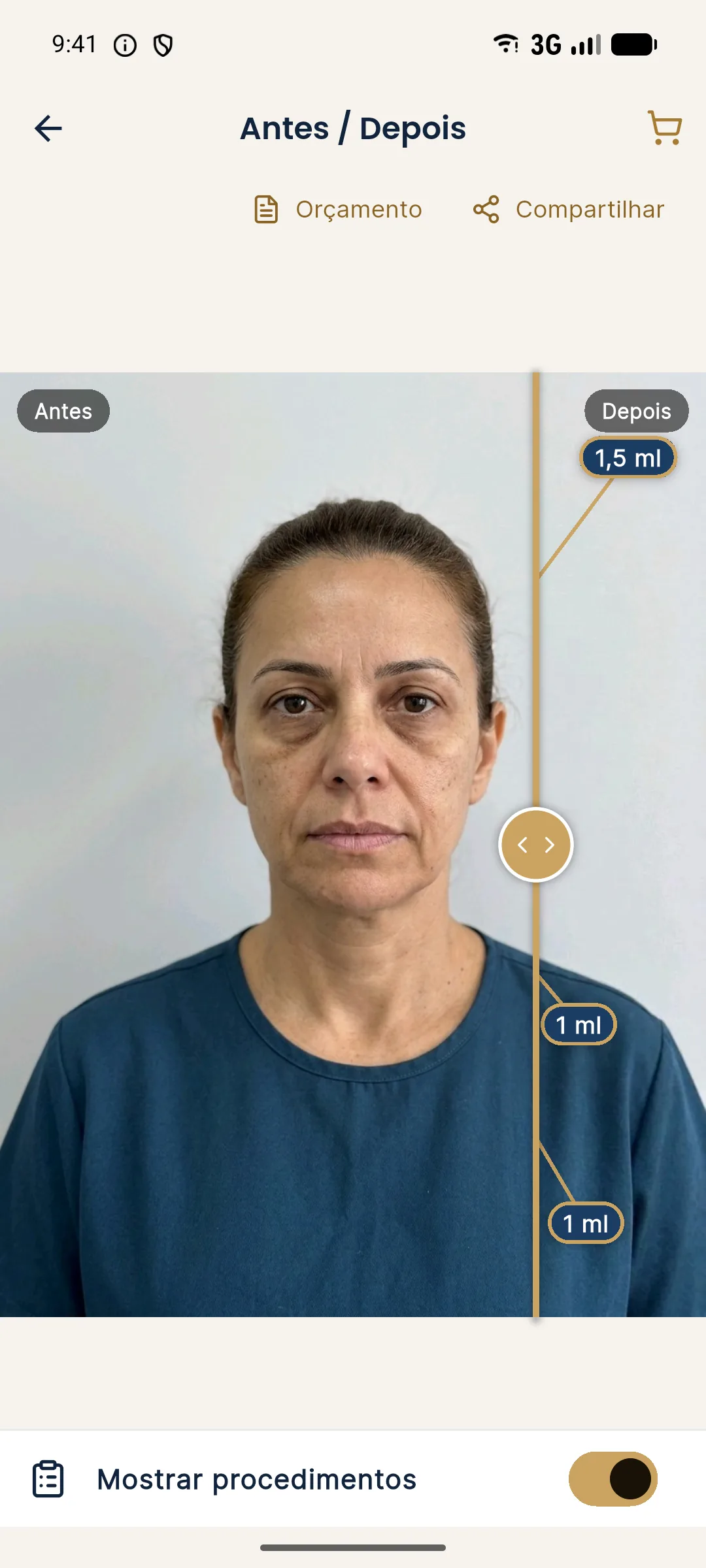
One of the traps of feedback is the patient's memory: they no longer remember how their face looked before. A standardized before photo solves that. Harmy saves the session in History, with the frontal before photo, the projection and, if you add it, the aligned actual result.
Use the comparison with care. The projection is illustrative and the actual result depends on many factors. The difference between the two is not a failure of the app or the procedure; it is the natural distance between a simulation and living tissue.
How do you record the feedback and the decision?
Always record four items: what the patient said (in their own words), what the photo shows, what was decided and what was agreed for the follow-up. Without that, the adjustment becomes verbal memory.
Myth or fact?
Summary
- Feedback has its time: consultation, first days, follow-up without swelling and maintenance visits.
- Ask before you explain; use open questions, a scale and the photo.
- Separate legitimate adjustment from anxiety with four questions.
- With "little effect" and "it's too much", investigate before acting.
- Record perception, photo, decision and follow-up.
Frequently asked questions
When should I ask for the patient's feedback after the procedure?
Do a short check in the first few days and the main assessment at the follow-up, once the swelling has gone down. Feedback given at the peak of swelling often does not reflect the final result.
The patient asks for more volume. Should I do it?
Reassess first. Ask what they want to change, show the photo and check whether more volume solves the concern. In some cases the right adjustment is another area, not more product.
How do I handle a patient who is never satisfied?
Document the agreed plan and the photos, talk about expectations and, if the pattern repeats, consider pausing procedures and assessing whether a bigger concern lies behind it.
Can I use the simulation to collect feedback?
Yes. Showing the illustrative simulation and asking what the patient would change helps align expectations before injecting. It is not a promise of results.
Harmy images are illustrative simulations generated by AI from the patient's photo to support the conversation between practitioner and patient. They are not a promise of results. Indication, technique, product and volume are solely the decision of the licensed practitioner. This content is for information only and does not replace a clinical assessment.