
Open Bite and Facial Appearance: What to Assess

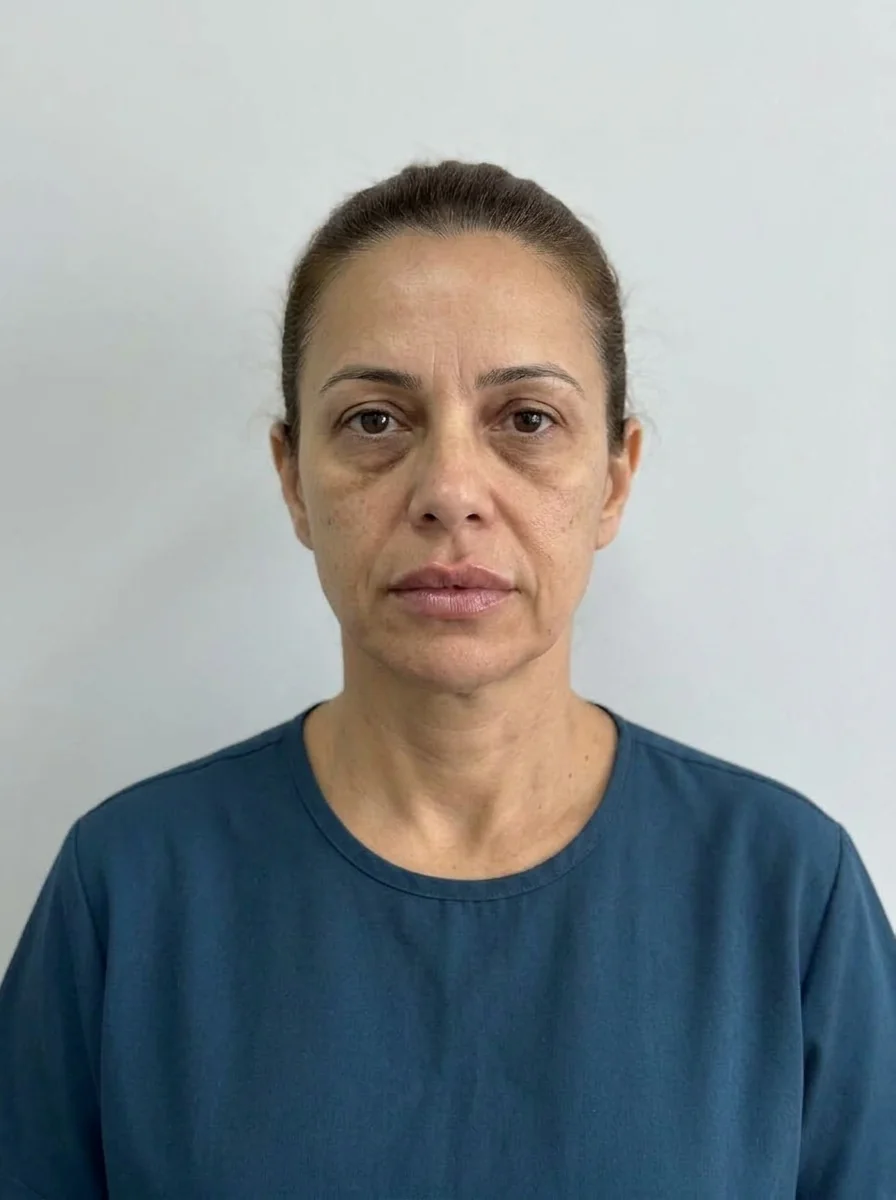 BeforeSimulation
- Nerve
Quick facts
- Concern
- Front teeth that do not touch and lips that do not close without effort
- Method
- Assess lip seal, lower third height and profile, together with the dentist
- Structures
- Maxilla, mandible, front teeth, lips and chin
- Caution
- Orofacial harmonization compensates perception, but does not correct the malocclusion
An anterior open bite is a malocclusion in which the front teeth do not touch when the mouth is closed. Aesthetically, it is not only a smile issue: it often comes with a longer lower third, lips that do not close at rest and, in some cases, a more convex profile. The patient may arrive at the orofacial harmonization (HOF) practice with the concern of a "lip that won't close" or a "long face".
This page shows how the bite fits into the assessment, and it connects with deep bite and recessed chin, crossbite and asymmetry and long lower third.
What does an open bite change in the face?
The cause can be dental (tooth position, habits such as thumb sucking or tongue thrust), skeletal (vertical growth of the maxilla or mandible) or mixed. The face reflects the cause.
| Sign | What is observed | Note for the plan |
|---|---|---|
| Long lower third | Elongated face, chin pointing downward | Limit of HOF |
| Forced lip seal | Lips not touching at rest | Active mentalis muscle, chin with "orange peel" texture |
| Incisor exposure | Teeth visible at rest | Assessment with the dentist |
| Profile | Convex or with a recessed chin | Reference lines |
| Speech and swallowing | Tongue between the teeth | Speech therapy |
Incisor exposure and lip proportion are central points. The facial profile should be read with a standardized profile photo.
How to assess together with the dentist
The bite is a dental matter, and the aesthetic assessment must respect that boundary. Ideally, the plan is agreed on with the orthodontist or surgeon.
What harmonization can and cannot do
At the discretion of the qualified professional:
- Chin: the chin can look tense or have an "orange peel" texture when the patient forces the seal. See chin filler and mentalis botulinum toxin.
- Lips: volume can change proportion, but it should not be used to "close" the mouth. In a lip that does not seal, extra volume can accentuate the opening. See lip filler.
- Lower third: fillers do not shorten the face, and they can worsen the sense of length if poorly indicated.
- Profile: adjusting chin projection can add balance, with the dentist's assessment.
Risks
Swelling, bruising, asymmetry, nodules and irregularities, plus rare vascular complications; hyaluronidase must be available when hyaluronic acid is used. In patients who will undergo orthognathic surgery, injections may be postponed on the surgeon's advice. When there is muscle tension in the chin, a poorly indicated toxin can affect speech and lip seal.
How to show it in Harmy
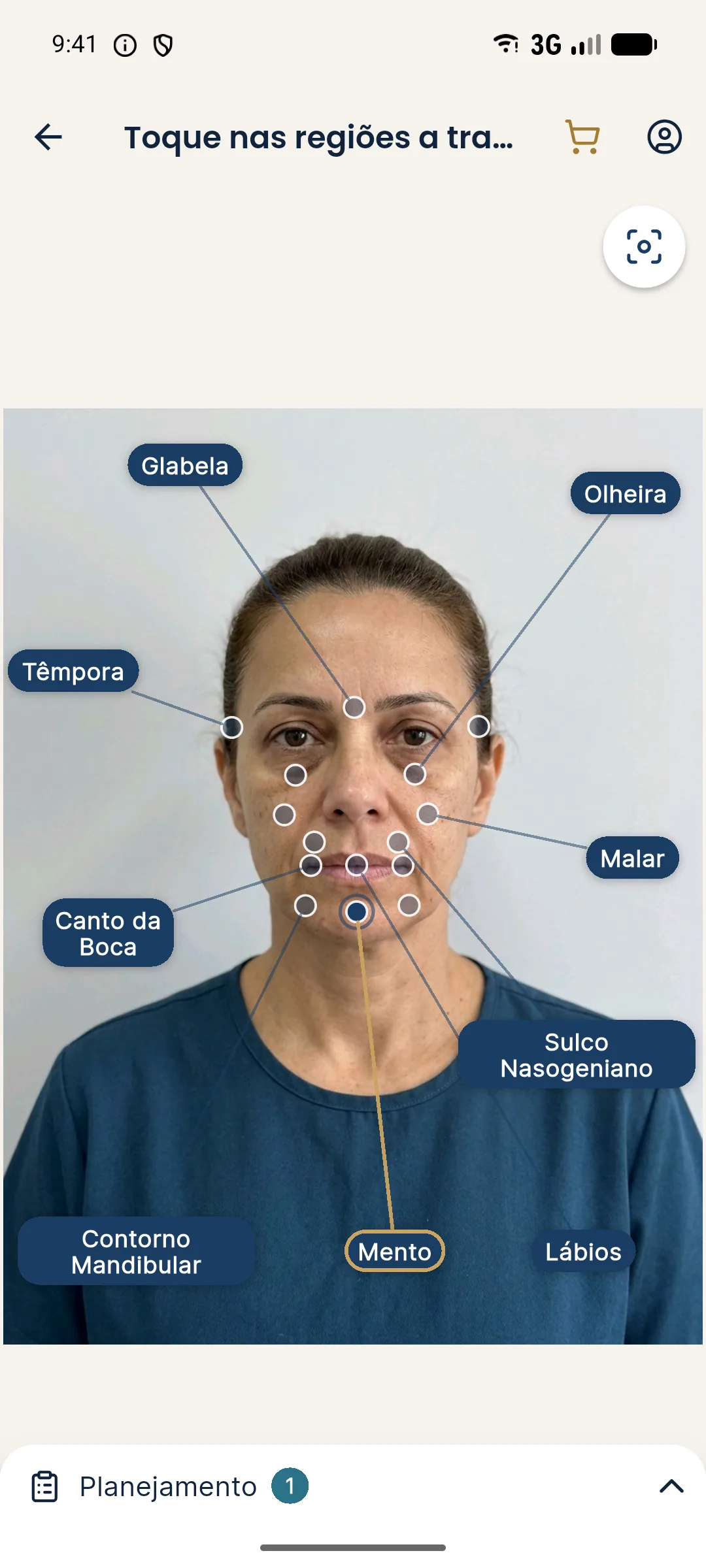
Harmy uses a front photo and simulates volume in the Lips and Chin areas. It does not simulate the bite, the length of the lower third or the profile. For this patient, the app is useful for discussing lip and chin proportion at rest, and every simulation should come with a clear explanation of its limits.
Common mistakes with an open bite
The first mistake is trying to "close" the mouth with volume. The lip does not seal because the dental and skeletal structure prevents it, and more volume adds weight to the vermilion without solving anything. The second is injecting toxin in the chin without assessing function: the mentalis muscle contracts to help the seal, and relaxing it can leave the mouth more open.
Another mistake is ignoring breathing and the tongue. People who breathe through the mouth or thrust the tongue have habits that influence the bite and the lower third, and speech therapy may play a role. It is also a mistake to promise to shorten the face, which injectables do not do.
Finally, do not plan without knowing what the orthodontist intends. An orthodontic or surgical plan can change the profile significantly, and early aesthetic investment may need revision.
Practical approach
Do the assessment as a team. Record photos at rest, at lip seal and smiling, and ask the patient for the orthodontist's records, if any. Define what HOF can contribute: lip proportion, chin projection, chin texture, and what is left for the bite treatment. Set a reassessment date after any dental change. In the consent form, record that the procedure does not change the bite and that the result may change with orthodontic treatment. Patients tend to value a professional who recognizes the role of other specialties, and an integrated approach protects everyone.
Patient profiles and approach
Patients who sucked their thumb or thrust the tongue in childhood may bring habits that persist. Patients who breathe through the mouth have a longer face and dry lips, and speech therapy or otolaryngology may be indicated.
Adults who went through orthodontic treatment and had a relapse of the open bite are often frustrated, and the conversation needs to be delicate. Patients with a surgical indication who declined surgery deserve a realistic aesthetic plan, with well-defined limits.
In every case, the HOF professional works best when they know their colleagues' plan and tell the patient what each specialty can offer.
Wrap-up
Record the photos, the lip seal, the guidance given to the patient and the conversation with the dentist. For related concerns, see protruding mouth and drooping lower lip. Volumes and techniques are at the discretion of the qualified professional, according to the rules of their professional council in Brazil.
Frequently asked questions
Does an open bite change the appearance of the face?
It can. The lower third tends to be longer, the lips may not close without effort, and the profile may look more convex. How much depends on whether the origin is skeletal or dental.
Does facial harmonization correct an open bite?
No. Malocclusion is treated with orthodontics, surgery or both. In selected cases, orofacial harmonization (HOF) can compensate for the aesthetic perception in a few areas.
Does filling the lip make the mouth close?
No. Volume in the lip changes appearance, but it does not change tooth position. In a lip that does not seal, extra volume can even accentuate the perceived opening.
When should I refer to an orthodontist?
Whenever the bite is altered and there is a concern about appearance or function. The HOF professional can join the plan afterward, according to the approach agreed on.
Harmy images are illustrative simulations generated by AI from the patient's photo to support the conversation between practitioner and patient. They are not a promise of results. Indication, technique, product and volume are solely the decision of the licensed practitioner. This content is for information only and does not replace a clinical assessment.