
12-Month Facial Harmonization Plan: Sample Timeline

Quick facts
- Idea
- Organize the year into stages, follow-ups, and maintenance instead of stand-alone sessions
- Notice
- Hypothetical example; timing and intervals vary and are set by the professional
- Structure
- Assessment, foundation, reassessment, refinement, maintenance, and plan review
- Benefit
- Predictable scheduling and cost for the clinic and the patient
Many facial harmonization patients buy stand-alone sessions: toxin now, filler next month, a touch-up whenever they remember. An annual timeline changes that logic. It gives the patient an overview and gives the clinic predictable scheduling and costs.
This page offers a hypothetical example of a structure for you to adapt. Timing and intervals are illustrative and depend on each patient, each product, and your clinical judgment.
How do you structure a year of facial harmonization?
A year usually has six blocks, though they need not take equal time:
- Assessment and planning. Standardized photos, assessment by thirds, concern, written plan, and quote.
- Foundation. The structural areas of the plan, with conservative volumes.
- Reassessment. A follow-up once the swelling has gone down, with photos and comparison against the baseline.
- Refinement. Adjustments and complementary areas, if indicated.
- Maintenance. Touch-ups and renewals according to how long the products last.
- Plan review. A look back at the year and planning for the next.
This structure mirrors that of the three-session facial harmonization plan and the facial harmonization patient timeline.
What does a sample calendar look like?
This is only a sketch. The actual calendar is set by the professional, by product and area. Product duration varies, and it is covered in maintenance: toxin, filler, and biostimulator and touch-ups: timing criteria by product.
What goes into each quarter?
| Period | Focus | Deliverables |
|---|---|---|
| Quarter 1 | Assessment and foundation | Photos, written plan, quote, foundation session, and reassessment |
| Quarter 2 | Refinement and first maintenance | Adjustments, toxin renewal if indicated |
| Quarter 3 | Monitoring | Follow-ups, photos, touch-up assessment |
| Quarter 4 | Review and renewal | Annual review and next year's plan |
Treat this table as a frame. Some patients fit into a year with two or three visits; others need six or seven. The point is to show the calendar and make the decision points clear.
How do you connect the timeline to the quote?
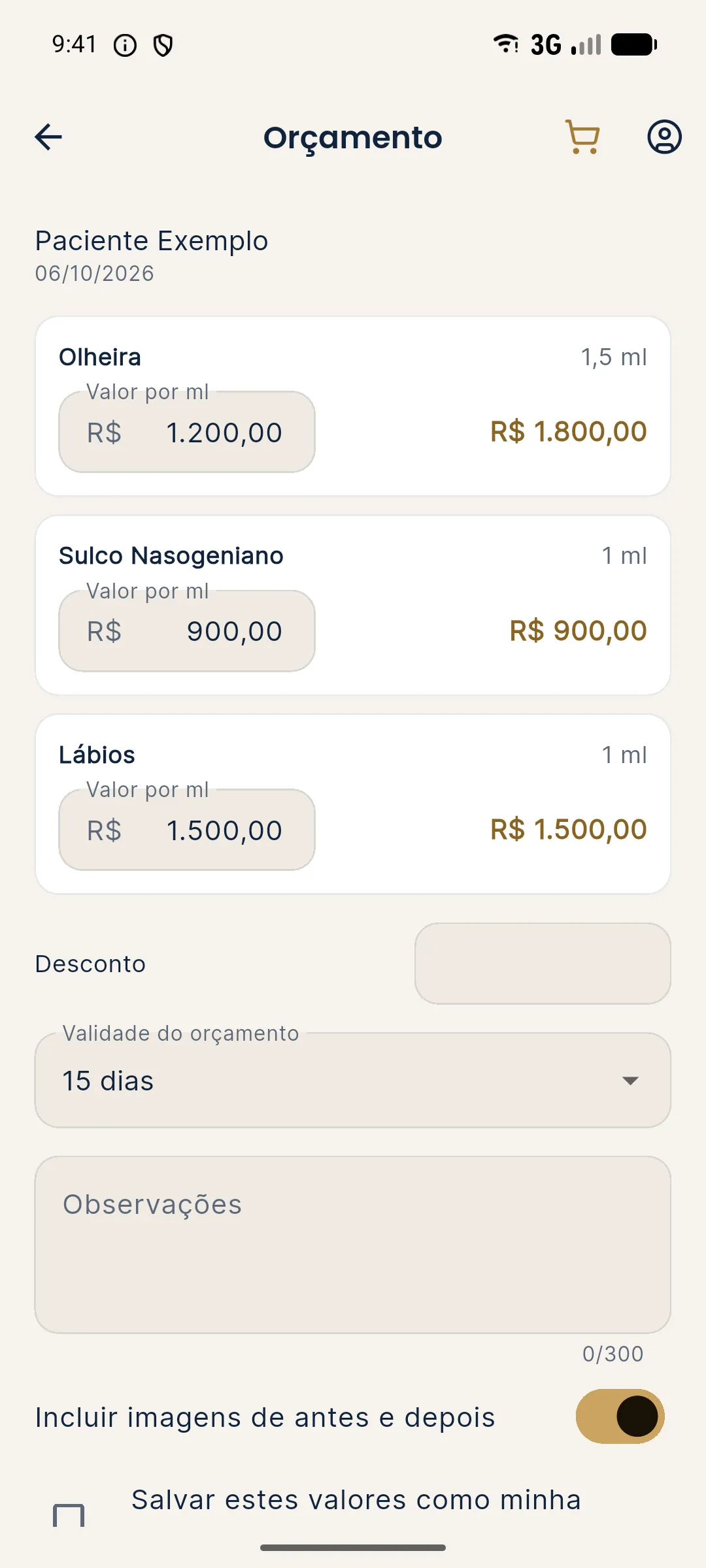
An annual plan improves the financial conversation: instead of one large amount, the patient sees stages and moments. But transparency is essential: what is settled, what is a forecast, and what depends on reassessment. See linking the plan and the quote in facial harmonization and a quote the patient understands.
How do you use the simulation throughout the year?
The simulation can follow the timeline: a projection at the assessment, to align expectations; a new one at the reassessment, to compare what was expected with what was achieved; and another at the annual review. This builds a record of decisions. Each projection uses the photo from that time, so it represents the face at that moment. It is an illustrative simulation, not a promise of results.
If the patient wants to compare, the app compares Projection, Actual result, and Projection vs Actual, once you add the aligned after photo. See comparing projection and actual result and organizing projections by patient.
How do you adjust the plan during the year?
Three triggers justify revisiting the timeline:
- A significant weight change, which alters the face;
- A different response than expected to a procedure;
- A life event or a new concern from the patient.
Record each revision and the reason. This avoids the impression that the plan "always changes." See adjusting the plan based on patient feedback.
When is it not worth it?
If the patient has a single, specific concern, an annual plan is excessive. If the patient is going through a period of change (weight, pregnancy, orthodontics), the timeline should be short and revisited often. And if there are signs of compulsive pursuit of change, a long plan may reinforce the problem. In these cases, the best approach is a smaller plan and a watchful eye.
How do you adapt the year to different profiles?
The calendar changes with the patient. Someone who only gets toxin needs regular follow-ups and few decisions. Someone starting with fillers needs closer reassessments at the beginning. Someone going through a period of change (weight, pregnancy, orthodontics) needs a shorter plan. In every case, the starting point is the patient's goal, not the calendar.
What should you do when the patient disappears mid-year?
Patients disappear for various reasons: money, fear, satisfaction, or forgetfulness. A courteous contact, without pressure, offering a reassessment is usually enough. See patient who did not return after the procedure and post-sale follow-up in facial harmonization that does not feel like a sales pitch.
How do you close out the year?
Do a review with side-by-side photos from the start of the year, and talk about what changed and how the patient feels. Decide whether the next year calls for a new plan, simple maintenance, or a pause. Pausing is as legitimate a decision as continuing, and a clinic that knows how to say so earns the patient's trust.
Practical summary
Structure the year into assessment, foundation, reassessment, refinement, maintenance, and review. Treat timing as illustrative, guide the patient stage by stage, adjust whenever the patient or the face changes, and close the year with side-by-side photos and an honest review.
Frequently asked questions
Does every patient need a 12-month plan?
No. It is a tool for patients with several stages who want predictability. Many patients need shorter plans or maintenance only.
Do the intervals in the example apply to everyone?
No. They are illustrative. Intervals for toxin, fillers, and biostimulators depend on the product, the area, the patient, and the professional's judgment.
Can the annual plan change along the way?
It should be able to. Patient response, weight changes, new concerns, and life events all justify revisiting the timeline.
Does a 12-month plan help with the patient's quote?
It does, because it shows stages and costs spread over the year. The quote should make clear what is a forecast and what may change.
Harmy images are illustrative simulations generated by AI from the patient's photo to support the conversation between practitioner and patient. They are not a promise of results. Indication, technique, product and volume are solely the decision of the licensed practitioner. This content is for information only and does not replace a clinical assessment.