
Patient timeline in HOF: how to organize it
Quick facts
- Goal
- Gather everything that happened in the patient's case in chronological order
- Items
- Consultations, photos, plans, procedures, complications, follow-ups, life changes
- Benefit
- See progress, justify decisions, and pick the case back up even when the practitioner changes
- Care
- Patient data and images are sensitive: restricted access and consent
When a patient comes back after six months, or when another colleague takes over the case, the question is always the same: what has happened so far? If the answer means opening five folders, searching old messages, and recalling conversations, the risk of error goes up. A well-organized timeline solves this: everything that matters, in the order it happened.
This page shows what goes into the timeline, how to structure it without creating bureaucracy, how it helps with follow-ups and long-term planning, and what privacy precautions it requires. It does not replace the patient record, and record-keeping requirements follow the rules of your professional council.
What is a timeline for?
It serves five functions that show up early in the routine.
- A view of progress. At a glance, you see what was done, when, and how the patient responded.
- Justification of decisions. Every change of plan has its date and reason noted.
- Picking the case back up. A colleague, or you after several months, understands the case without rebuilding everything.
- Long-term planning. The cadence of follow-ups and maintenance becomes visible.
- Conversation with the patient. Showing the sequence helps explain what was done and what is left.
The difference from the patient record is one of form: the record keeps everything; the timeline organizes the essentials in sequence. Clinical documentation is covered in patient records and documentation in facial harmonization.
What goes into the timeline?
The criterion is to include what changes how the case is read. A practical list:
| Event type | Examples |
|---|---|
| Consultation | Initial assessment, follow-ups, new concerns |
| Photos | Standardized before photo, follow-up photo, result photo |
| Plan | Initial plan, versions, changes and reasons |
| Procedure | Date, area, product type (class), and volume used |
| Complication | Swelling, bruise, asymmetry, management, and outcome |
| Instructions | What was said and handed over in writing |
| Patient's life | Weight change, pregnancy, illness, medication, events |
| Decision | Postponement, refusal, change of priority |
The exact product record, with lot and expiration date, belongs in the patient record and in traceability (see traceability of injectables). In the timeline, a reference is enough.
How do you structure it without overcomplicating?
The simplest way is a table or a vertical list, always in the same order. A hypothetical example:
Each line answers four questions: when, what, why, and what comes next. This format ties in with the plan diary: session-by-session progress record and with treatment plan versions.
How does the timeline help at follow-ups?
At the follow-up, it becomes the script for the conversation. Before walking into the room, you reread the sequence and arrive with everything in mind: what was planned, what was done, what the patient reported. That improves the quality of the consultation and builds confidence.
Questions the timeline helps answer:
- what was done last time, and how long ago?
- did the plan change at some point? Why?
- was there a previous complication?
- did the patient follow the instructions?
- how long until the planned maintenance?
The follow-up script is in what to reassess at the plan follow-up and milestone reassessment in reassessment at 3, 6, and 12 months.
And when the patient changes practitioners?
Patients move to other cities, clinics, and practitioners. The timeline eases the handoff of the case, because it summarizes what is important without exposing more than necessary. If the patient asks for their history, you can hand over a suitable version, in accordance with the law and your professional council's rules. Case handoff is covered in handing a plan over between practitioners and the case of someone coming from elsewhere in patient who already had treatment elsewhere.
How do you organize photos and simulations in the timeline?
Photos are the visual heart of the timeline. To be useful for comparison, they need the same standard, and each one must be tied to a date and an event. Simulations go in as plan versions, with the same date and a note of the reason.
Photo standardization is covered in photographic record by plan stage and the storage of simulations in saving simulation versions at each follow-up.
What privacy precautions are needed?
The timeline brings together health data and facial images, both sensitive under LGPD (Brazil's General Data Protection Law). A few precautions:
- store it in a password-protected system with access restricted to the team that needs it;
- get the patient's consent to store and use images;
- avoid sending the timeline over open channels;
- follow the record retention periods according to your professional council's rules;
- handle patient requests for access or correction in accordance with the law.
The design of consent is covered in consent and LGPD for photos.
How does Harmy fit into this organization?
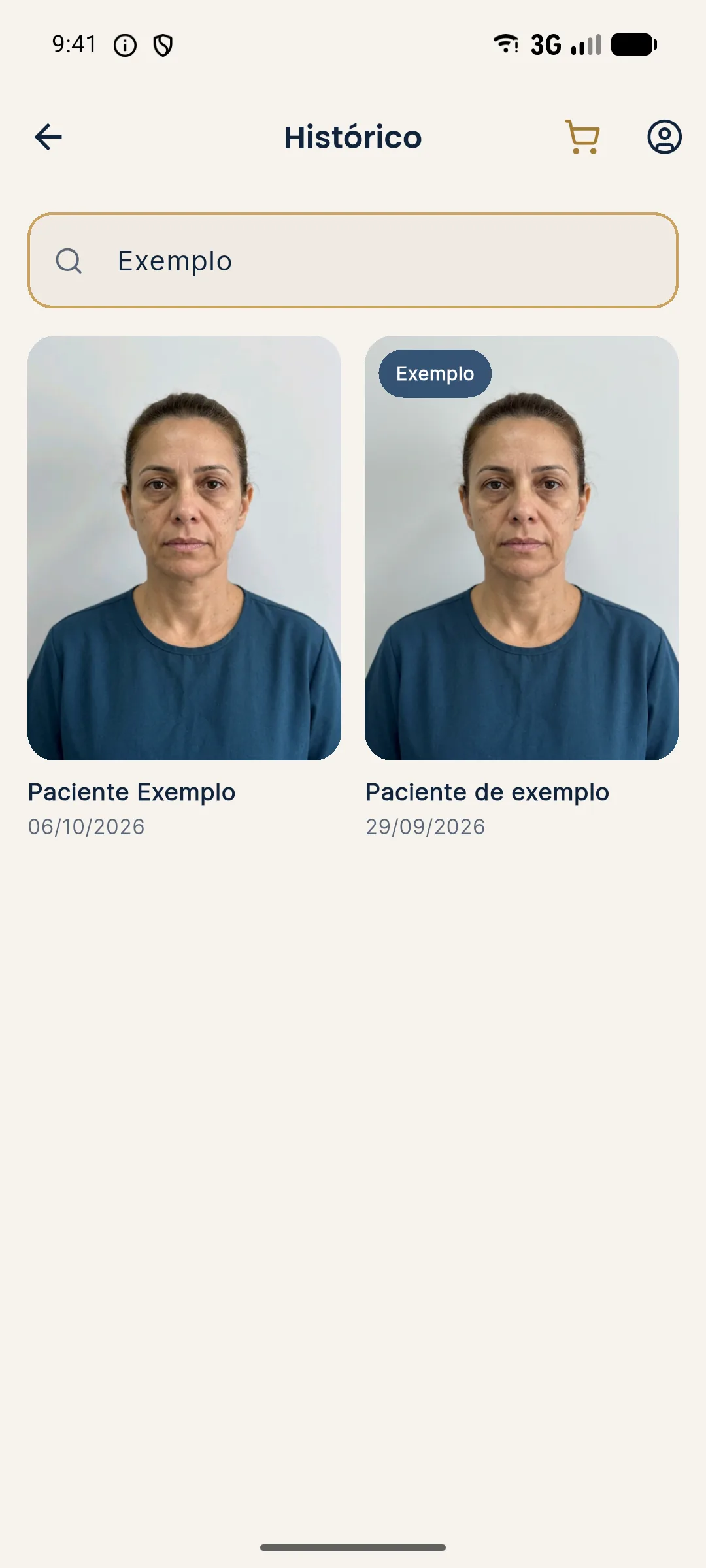
Use History as one of the supports for the timeline, and record in your patient record whatever is clinical. The steps are in history by patient in Harmy and aligned post photo in Harmy.
Quiz: timeline
Summary
- The timeline organizes what matters in the case in chronological order.
- It includes consultations, photos, plans, procedures, complications, and decisions.
- One line per event: date, what, and why.
- It eases follow-ups, case handoff, and the conversation with the patient.
- Data and images are sensitive: restricted access and consent.
- Harmy's History helps, without replacing the patient record.
Frequently asked questions
What is the patient timeline in facial harmonization?
It is the chronological record of the patient's consultations, photos, plans, procedures, complications, and follow-ups. It helps you see progress and pick the case back up safely.
What is the difference between a timeline and a patient record?
The patient record is the complete clinical file. The timeline is an organized view of it, which makes it easier to read the sequence of events and decisions without searching through several documents.
What should go into the timeline?
Consultation dates, standardized photos, plans and versions, procedures performed, complications, instructions given, changes in health and weight, and the patient's decisions.
Can I show the timeline to the patient?
Yes, and it usually helps the conversation about progress. Show only what is relevant, with attention to privacy, and remember that simulations are illustrative.
Harmy images are illustrative simulations generated by AI from the patient's photo to support the conversation between practitioner and patient. They are not a promise of results. Indication, technique, product and volume are solely the decision of the licensed practitioner. This content is for information only and does not replace a clinical assessment.