
What to Reassess at the Follow-Up of a Harmonization Plan

Quick facts
- Topic
- Patient reassessment checklist for the plan follow-up
- When
- After the tissue response time set in the plan
- Core items
- Standardized photo, concern, symmetry, complications and the next-step decision
- Caution
- A follow-up that is too early measures swelling, not results
The follow-up is when the plan is tested against reality. It is also when most mistakes happen: scheduling too early and mistaking swelling for results, comparing photos taken under different conditions, listening to the patient without recording what they say, or adding treatment on impulse. A well-run follow-up follows a script. Together with the patient, it decides whether it is time to add on, wait or wrap up.
This page proposes a reassessment script: when to schedule, what to gather, what to look at, what to ask, how to handle complications and how to decide. For what to record during the plan, see plan journal: progress notes by session.
When is the right time for the follow-up?
Tissue needs time to settle. Swelling and bruising mask the result, and gradual-acting products take even longer to respond. That is why the follow-up timing depends on the product and the area, and should be set in the plan, before the session.
| Situation | Care at the follow-up |
|---|---|
| Early follow-up | Assess safety and complications, not results |
| Follow-up after settling | Compare with the baseline photo and record the patient's perception |
| Gradual-acting product | Wait for the response time before deciding on an add-on |
| Patient with a new concern | Reassess the whole face, not only the treated area |
Two follow-ups, one early and one late, tend to be more useful than a single one. The first checks safety, and the second assesses the plan. See swelling gets in the way of comparing results.
What should you gather before the follow-up?
Prepare the visit before the patient arrives. It saves time and avoids assessing from memory.
The logic of the photos is in alignment errors when comparing photos, and the logic of volume is in planned ml vs used ml.
What should you look at and ask?
The reassessment has two parts: what you see and what the patient perceives. Both matter, and they do not always match.
What to look at:
- The standardized photo compared with the baseline, with the same light, distance and position.
- Symmetry, contour and the transitions between areas.
- Naturalness at rest and in movement.
- Signs of late complications, such as nodules, new asymmetry or skin changes.
- The balance of the whole face, not only the treated area.
What to ask, before showing the photos:
- "What do you notice that is different?"
- "What did you like and what didn't you like?"
- "Did anyone comment on anything?"
- "Is anything bothering you, or has anything changed since last time?"
Compare with the assessment goal written in the plan, as in observable goals in a facial harmonization plan. If the plan had a clear goal, the conversation stays objective. If it did not, record now what was observed so the next plan starts from something concrete.
How do you decide the next step?
There are four possible paths, and all are legitimate. The decision belongs to the professional, in line with the rules of their professional board, with the patient informed.
| Decision | When it makes sense | Caution |
|---|---|---|
| Add on | Goal partly observed, tissue settled, expectations aligned | Respect the volume limit for the whole face |
| Wait | Tissue still responding or result still maturing | Schedule another follow-up |
| Adjust | Asymmetry or irregularity to correct | Assess the cause first |
| Stop | Goal met or no room left in the face | Record it and advise on maintenance |
Adding on because the patient insists or because it suits the schedule is the path that leads to excess. See pillow face: how planning prevents the effect and adjusting the plan based on patient feedback.
How does Harmy fit into the follow-up?
The "Add actual result" feature stores the result photo aligned by the eyes and lets you compare Projection, Actual result and Projection vs Actual. Guided capture shows the "before" photo as a transparent overlay on the camera, which helps repeat the framing. This reduces alignment error, one of the most common problems in comparison.
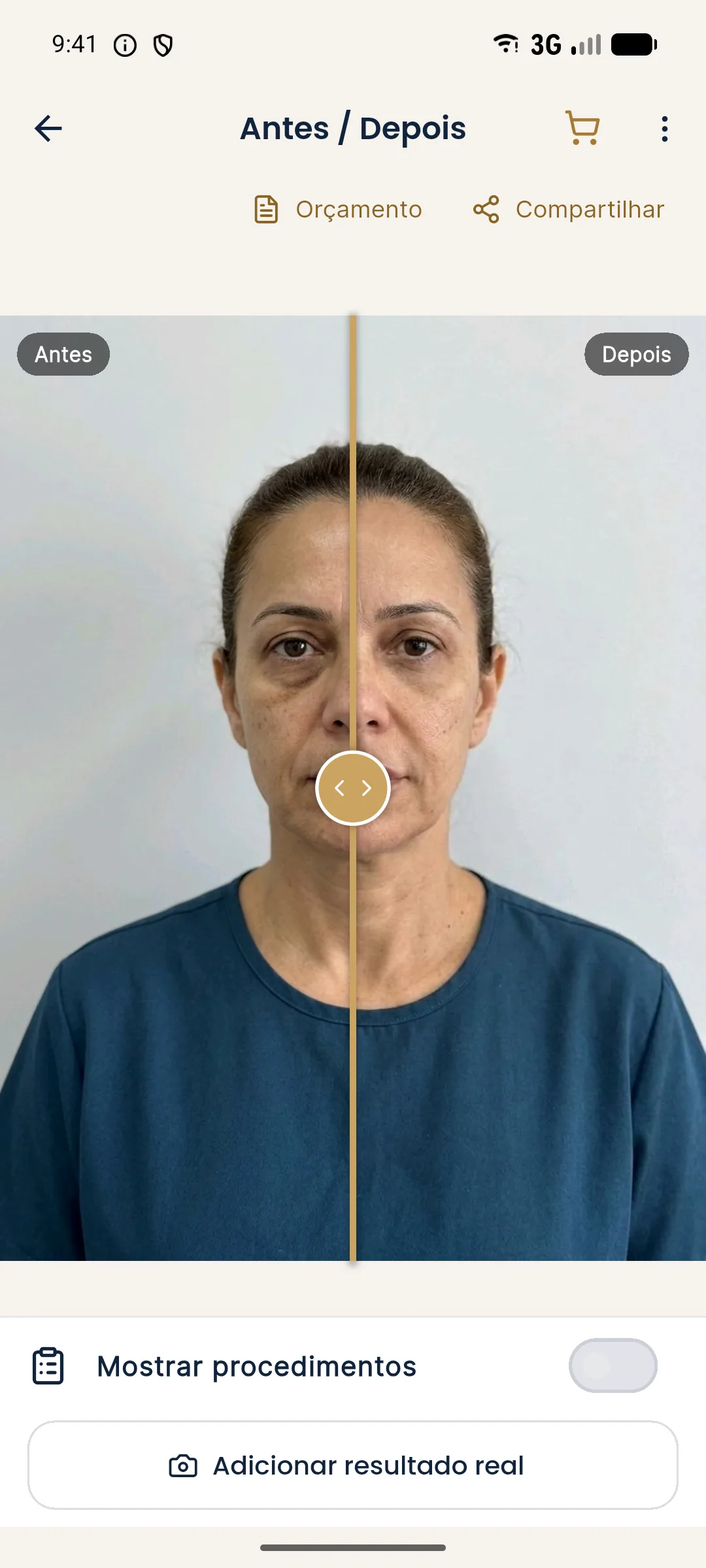
The Projection vs Actual comparison has educational value and should be handled with care. If the actual result is subtler than the projection, the conversation needs to remind the patient that the image was illustrative. If it is more pronounced, it is worth recording. In both cases, the focus is on how the patient feels and what the assessment goal anticipated. See comparing projection and actual result.
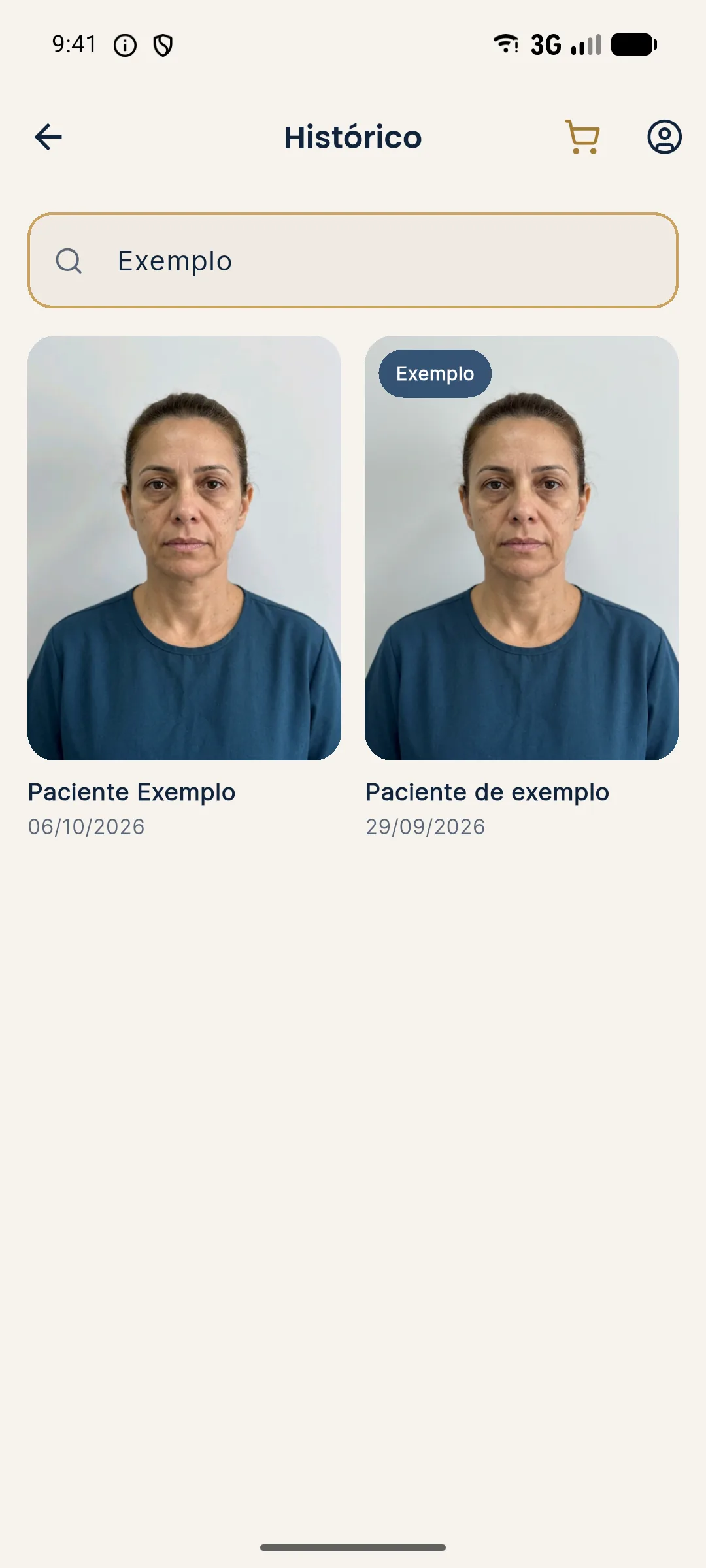
Every decision on product, volume and technique belongs to the qualified professional, after assessment. The simulation is illustrative and does not promise results.
Frequently asked questions
When should I schedule the follow-up of a facial harmonization plan?
After the tissue has had time to settle, which varies with the product and the area. The timing should be agreed in the plan so the patient does not judge swelling as the result.
What should I compare at the follow-up?
The standardized baseline photo against the follow-up photo, under the same conditions, along with the patient's perception. The aim is to check whether the plan's assessment goal was observed.
Can I add treatment right at the follow-up?
Only after assessing calmly. The decision can be to add on, wait or stop, and all are legitimate. The professional decides, in line with the rules of their professional board.
Does Harmy help at the follow-up?
Yes. With Add actual result, the app stores the photo aligned by the eyes and compares Projection, Actual result and Projection vs Actual.
Harmy images are illustrative simulations generated by AI from the patient's photo to support the conversation between practitioner and patient. They are not a promise of results. Indication, technique, product and volume are solely the decision of the licensed practitioner. This content is for information only and does not replace a clinical assessment.