
Pillow Face: How Planning Prevents the Effect

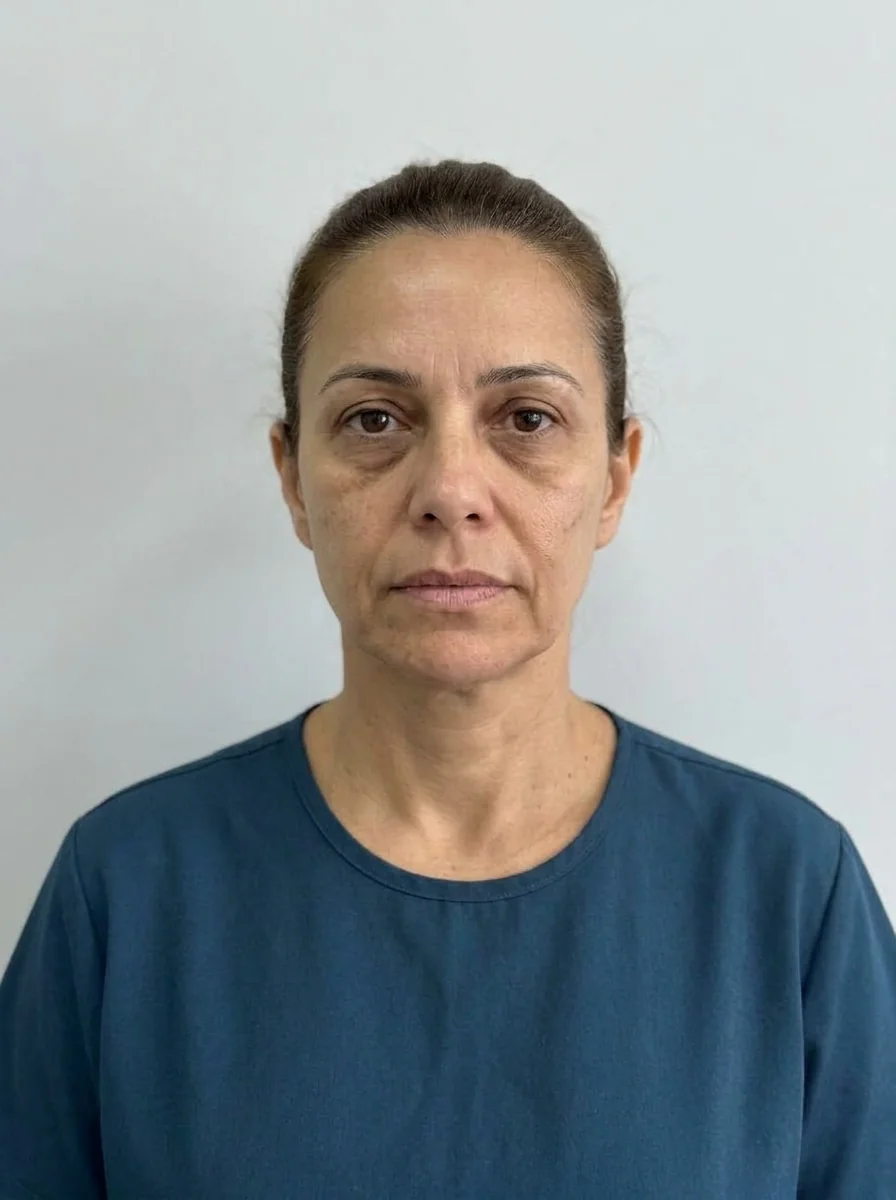 BeforeSimulation
Quick facts
- Topic
- Preventing a full, artificial-looking face caused by excess volume
- Central question
- Whether the combined volume of the whole face fits that face
- Signs
- Rounded midface, erased transitions, flat and puffy look
- Antidote
- Plan the whole face, limit ml, space out the stages and reassess
A face that looks full, rounded and too smooth, where the cheeks look like pillows and the transitions between areas disappear, has earned a name in popular conversation: pillow face. It is not a diagnosis, it is a description of perception. And it almost always has the same origin: too much volume, built up all at once or over years, without looking at the whole face. Planning is the best defense, because excess is avoided before it exists.
This page covers the signs of the effect, the most common causes, the planning principles that prevent it, how the simulation helps and what to do when a patient arrives with an already full face. For long-term patients, see also maintenance after five years of facial harmonization.
What signs characterize the effect?
The effect shows up mainly in the midface, but it can affect the whole face. Some signs, seen from the front and at three quarters:
- Rounded, high cheeks with no natural shadow.
- Erased transition between the cheekbone area and the nasolabial fold.
- Eyes that look smaller because of the volume below them.
- A face that looks wider from the front than before, with the contour lines lost.
- Expression that loses mobility, with a "frozen" look when smiling.
- Lips, chin and jaw also full, which gives a uniform look.
| Sign | How it looks | Possible cause |
|---|---|---|
| High, round cheek | "Inflated" midface | Volume added up in the cheekbone and adjacent areas |
| Erased transition | No natural shadow between areas | Lack of proportion between areas |
| Smaller-looking eyes | "Squeezed" eye | Too much volume below the eye |
| Wide face | Loss of the oval shape | Sum of lateral volumes |
| Stiff expression | Smile with little movement | Excess and poor distribution |
These signs can have various causes, including fluid retention or the effects of other treatments, and clinical assessment decides. Seeing the pattern, though, is the first step to avoiding it.
Why does excess happen?
Almost always for one of four reasons. The first is the unnoticed sum: each area receives a volume that seems moderate, but the total exceeds what the face can carry. The second is the reflex touch-up: the patient comes back asking for "just a little more" and the old plan is repeated without reassessment. The third is accumulation over time: sessions over the years, sometimes by different professionals and with no records, add up material. The fourth is expectation: the patient wants an obvious effect and the plan gives in.
Each of these causes has a remedy in planning. See domino effect between facial areas, percentage distribution of volume between areas and handing off a plan between professionals in the same clinic.
How does planning prevent the effect?
The principles are simple and change the course of many cases.
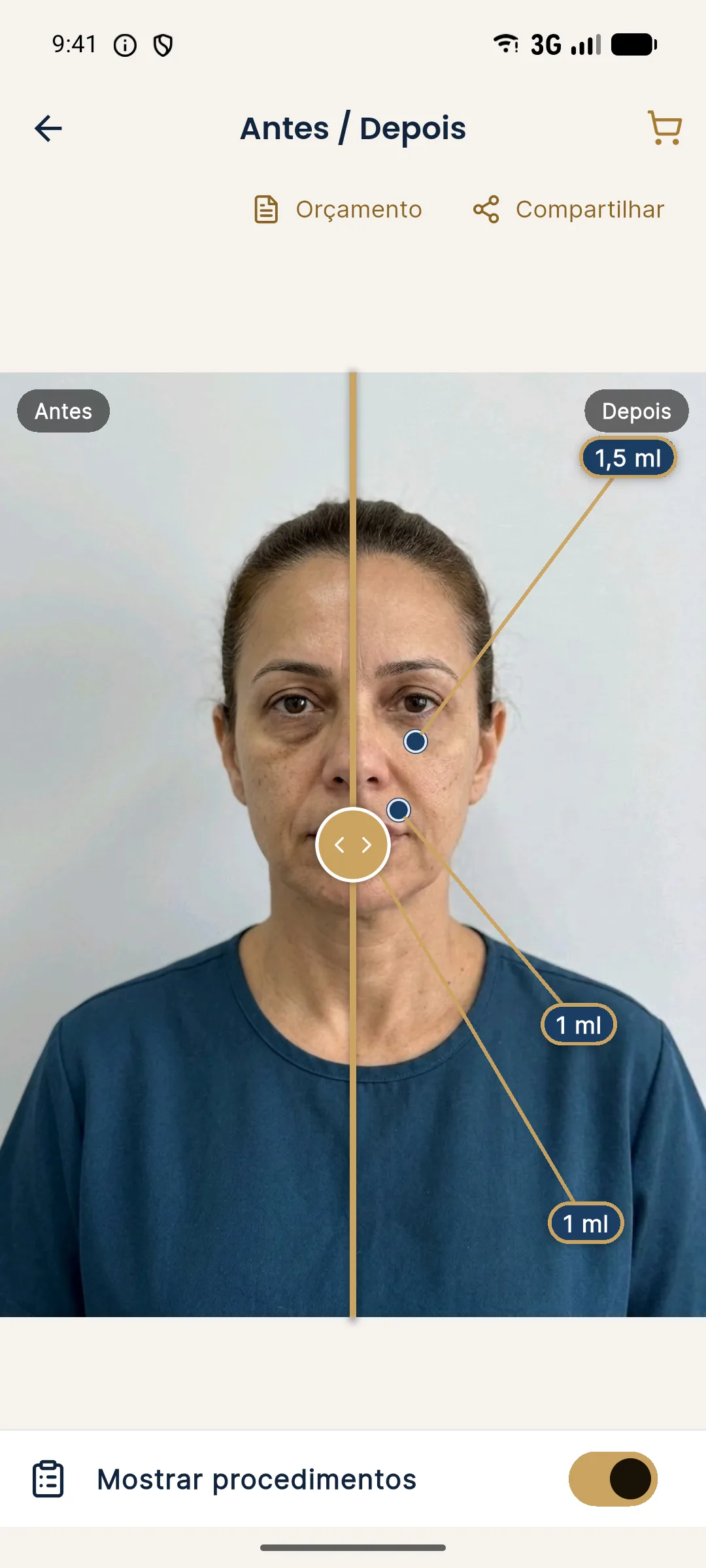
The total is the central point. Harmy's shortcuts illustrate this: "Full harmonization" adds cheekbone 2 ml, jawline 2 ml, chin 1.5 ml, lips 1 ml and nasolabial fold 1 ml, all at Moderate, plus tear trough 1 ml at Subtle. It is a starting combination for simulating, not a prescription. For many patients that total would be too much, and the decision requires individual assessment. See ml per area: ranges used in visual planning.
How does the simulation help, and where does it mislead?
The simulation shows the effect of the ml and intensity you chose, and it is useful for seeing the total. A projection with many areas at Moderate may, for example, show a fuller face than the patient imagined, and that is a sign to review the plan. In Harmy, the AI respects volume: the more ml, the more noticeable the change.
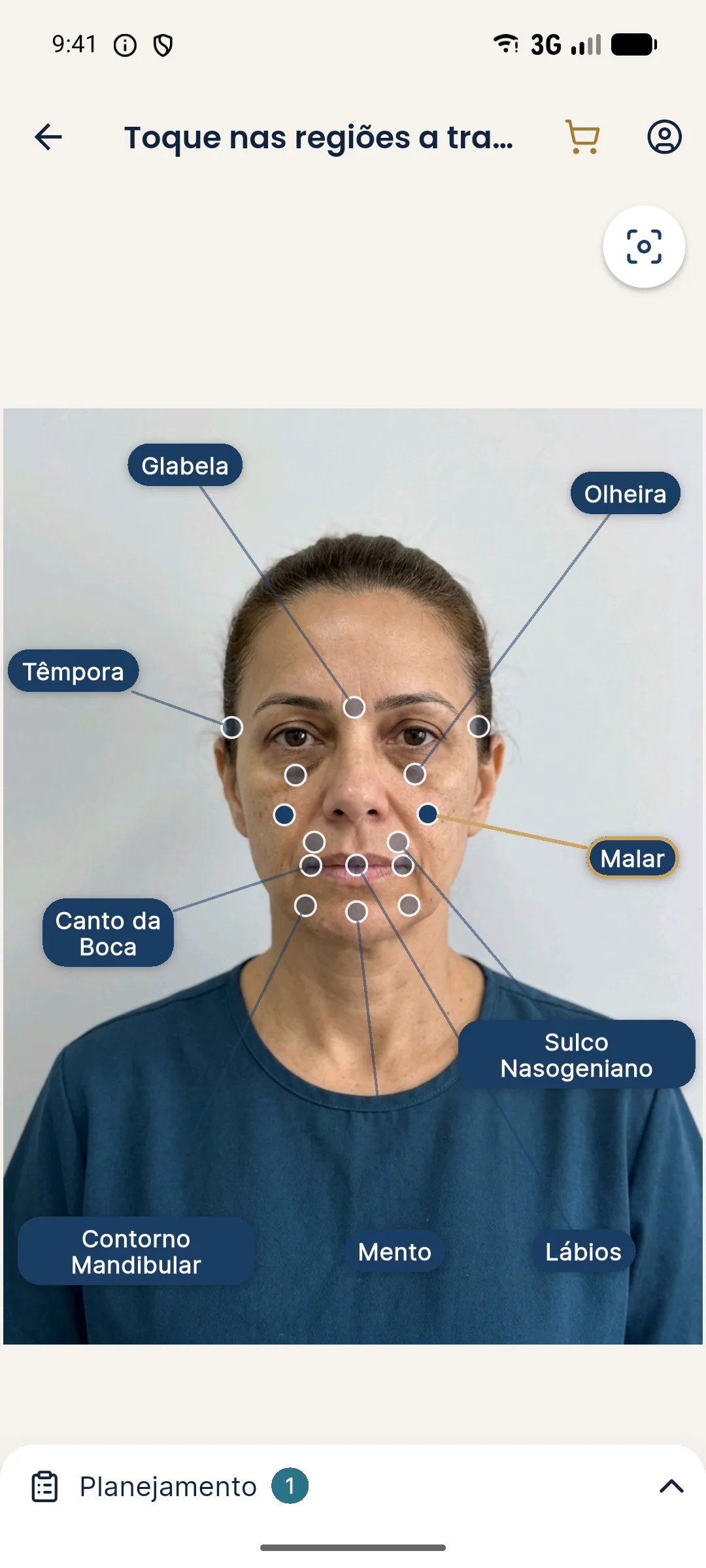
The potential for misleading runs both ways. A Subtle projection can look safe and hide a high volume. And an honest projection can be too subtle to reflect the real accumulation of years. That is why the simulation supports but does not replace the exam. See comparing the Subtle, Moderate and Pronounced intensities and ethics of result simulation.
What if the patient already arrived with a full face?
The approach shifts from planning to reassessment. The first step is understanding the history: what was done, when, with which products and which volumes. The second is assessing the cause of the look: material, fluid, tissue, expectation. The third is discussing options with the patient, including pausing and, when indicated, reversing hyaluronic acid with hyaluronidase, always at the discretion of the qualified professional, in line with the rules of their professional board.
It is a delicate conversation, because the patient may like what they see or feel guilty about it. Avoid criticizing the colleague or the patient. Focus on what can be done from now on. See maintenance after five years of facial harmonization and what to reassess at the follow-up of a harmonization plan.
Every decision on volume, product and technique belongs to the qualified professional, after assessment. The simulation is illustrative and does not promise results.
Frequently asked questions
What is pillow face?
It is the term used for a face that looks full, rounded and artificial from accumulated or excess volume, mainly in the midface. It resembles a pillow.
How does planning help prevent the effect?
By assessing the whole face, limiting ml per area, adding up the volumes before deciding, spacing out the stages and reassessing with photos before adding more.
Is there a maximum safe volume for the face?
There is no universal number. It depends on anatomy, skin, product and history. What counts is the total, the proportion and how the face responds, as assessed by the professional.
Does Harmy show the risk of pillow face?
The projection shows the effect of the ml and intensity you chose. If the image looks too full, that is a sign to review the plan. It is illustrative and does not predict the result.
Harmy images are illustrative simulations generated by AI from the patient's photo to support the conversation between practitioner and patient. They are not a promise of results. Indication, technique, product and volume are solely the decision of the licensed practitioner. This content is for information only and does not replace a clinical assessment.