
Handing Off a Plan Between Professionals in the Same Clinic
Quick facts
- Topic
- Transferring the case from one professional to another without losing information
- Risk avoided
- Repeating what was already done, or contradicting what the patient heard
- Core items
- History, photos, decisions, volumes, complications and what was said
- Caution
- Patient data circulates only with a legal basis and restricted access
Patients change professionals within the same clinic for a thousand reasons: vacations, scheduling, specialty, a colleague leaving, the patient's own wishes. When the handoff happens from memory alone, the new professional starts from zero, repeats questions, contradicts something the patient had heard and may even repeat a procedure that was already done. A structured plan handoff avoids all of that and preserves the patient's trust.
This page proposes the minimum information for a good handoff, a practical format, care with personal data and the conversation with the patient. For recording the plan in general, see facial treatment plan form: fields and plan journal: progress notes by session.
What information is the minimum?
The new professional needs to answer five questions: who the patient is, what they want, what has already been done, what has been decided and what they have been told. If the handoff answers those five, the rest can be filled in at the visit.
| Question | Information to pass on |
|---|---|
| Who is the patient? | Identification, relevant history, allergies, medications, conditions |
| What do they want? | Main concern in their own words and the plan's assessment goal |
| What has been done? | Areas, products, approximate volumes, dates and complications |
| What was decided? | Proposed plan, order, follow-up interval and what was postponed |
| What do they know? | Risks explained, projections shown, signed forms, expectations |
The last point is the most delicate. If the patient saw a simulation at a certain intensity, the new professional needs to know, because she arrives with that image in mind. Contradicting it without knowing is the cause of many conflicts.
What handoff format works?
A one-page handoff, always in the same format, works better than a long account. Standardizing reduces omissions and makes it quick to read.
The format can be a paper form, a document in the clinic's system or a note in the patient record. What matters is that it is always the same. For notation, see abbreviations and notation in a facial harmonization plan and facial map of the plan: how to draw and label it.
And Harmy projections, how do they get passed on?
The app's history stores sessions by patient, with search by name. The new professional can see earlier projections, the date of each one and, when available, the actual result photo. This only works if both use the same account or if the clinic agrees on another way to share. The history belongs to the account, and anyone with access to the account sees everything. Define in the clinic who uses each account and how credentials are protected.
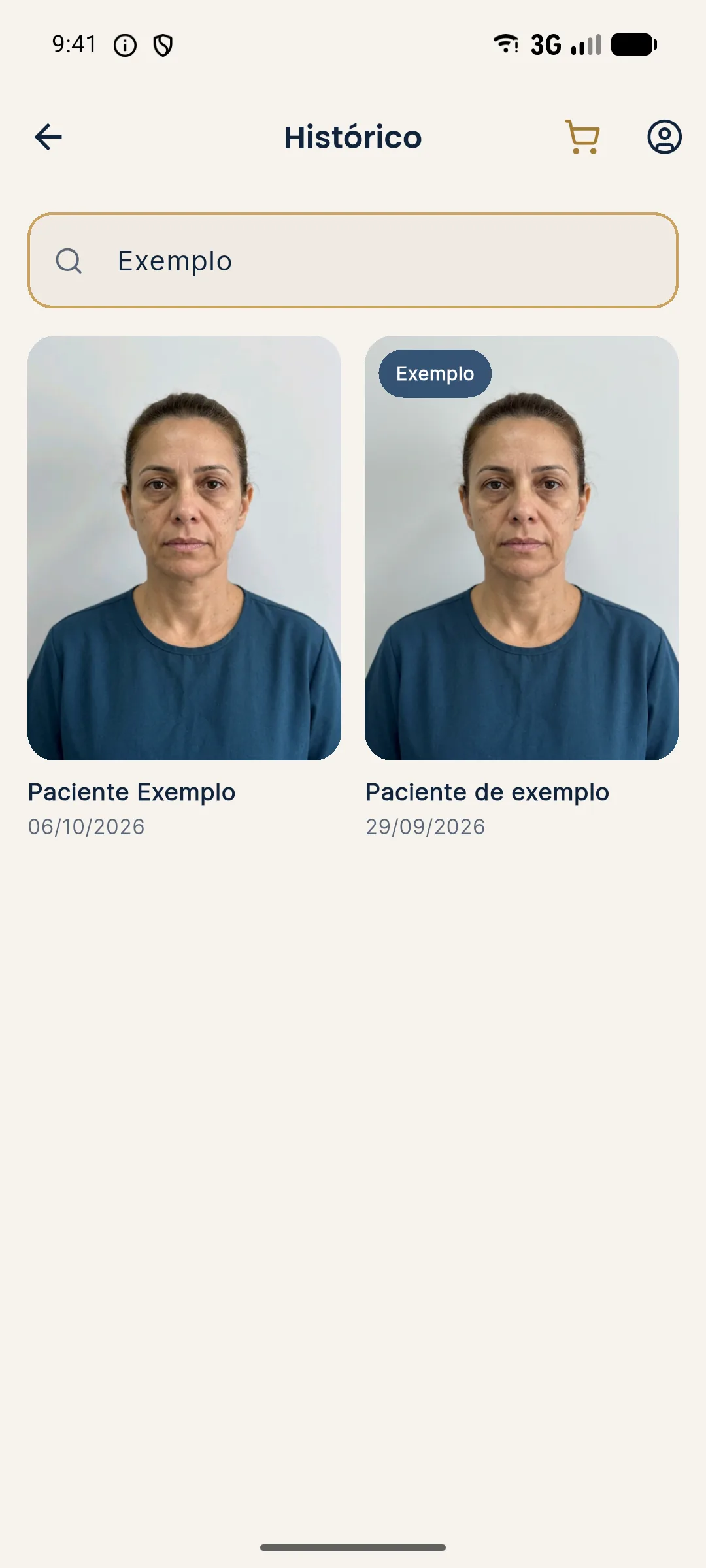
Two points deserve attention. The first is that the projection is an illustration: the new professional should not treat it as a contract from the previous plan. The second is that, if they want to generate a new projection, it starts from a new photo and does not replace the old one. The comparison is covered in comparing projection and actual result.
How do you handle the conversation with the patient?
Patients can tell when a handoff was done poorly. They repeat their story, hear a different opinion and feel that nobody remembers them. To avoid this, the new professional can open the visit by showing that they know the case, confirm what was agreed and ask what has changed. That conveys continuity.
If the two professionals differ in clinical opinion, the way forward is not to discredit the colleague or hide the difference. Record it, talk to the colleague and present the patient with what you recommend and why, without criticism. The patient's autonomy remains central. For this, see comparing plans from two professionals.
What should you do when a professional leaves the clinic?
When a colleague leaves the clinic, the risk of losing information is greater. Do a formal handoff of all patients under follow-up, using the standardized form, before the departure, and make clear who the record belongs to. Patient data follows the LGPD and your professional board's rules, and the clinic should have a retention and access policy. Agree on this in writing. See patient approval of the plan, which covers how the patient's acceptance is recorded and should travel with the case.
Every decision on plan, product, volume and technique belongs to the qualified professional, in line with the rules of their professional board. The simulation is illustrative.
Frequently asked questions
What does a professional need to know to continue another's plan?
The concern and the plan's goal, the procedure history, the baseline photos, the volumes used, any complications, the decisions made and what the patient has already been told.
Can I share the patient's photos between professionals?
With an appropriate legal basis and consent, and with restricted access. Facial photos are sensitive data, and the rules of the LGPD and your professional board apply.
Can two people use the same Harmy account?
The history belongs to the account. If more than one person uses the same account, everyone sees the sessions. Define in the clinic who uses it and how it is shared, respecting the LGPD.
What if the new professional disagrees with the plan?
Record the disagreement, talk to the colleague, explain it to the patient transparently and decide the plan with them, without exposing the conflict.
Harmy images are illustrative simulations generated by AI from the patient's photo to support the conversation between practitioner and patient. They are not a promise of results. Indication, technique, product and volume are solely the decision of the licensed practitioner. This content is for information only and does not replace a clinical assessment.