
Session Progress Log in Facial Harmonization Planning: Template
Quick facts
- Topic
- Plan diary, per-session log
- Goal
- Compare sessions without relying on memory
- Where to keep it
- The patient record
- Important
- Complete record, kept according to regulations
Anyone who follows the same patient for years knows memory fails. How many ml went into the cheekbone in the second session? Did the under-eye concern come before or after the lip? What did the patient say at the last follow-up? A session-by-session progress log answers these questions in seconds and turns the plan into something you can audit, reassess and adjust. This page offers a lean template and a way to use it.
What is a plan diary for?
It serves four clinical functions and one legal one:
- Compare sessions using the same fields, without relying on recall.
- Add up cumulative volume per area over months and years.
- Support decisions about touch-ups, pauses or dissolving.
- Hand off the case to another professional without losing information.
- Document what was explained, accepted and done.
The entries make up the patient record described in patient record and documentation in facial harmonization and feed the tracking of cumulative volume over the years and of planned ml vs. ml used.
What does the log template look like?
Adapt the fields to your routine and to the rules of your professional board. The template is not a legal document: validate the whole set against your own paperwork.
How do you keep the log from turning into bureaucracy?
Record on the same day, in short sentences, with fixed fields. The ideal is a single form for all sessions rather than a different page each time. A few things that help:
- Required fields for ml, product and lot.
- The patient's phrase in quotation marks, to preserve the original concern.
- A standardized photo linked to the session.
- Deviations from the plan with the reason, as in recording plan deviations during the session.
- Review before the next session: two minutes of reading prevents mistakes.
How does the diary connect to the plan?
The plan is the intention, and the diary is what happened. Cross-checking the two reveals the gap between them. If the plan called for 2 ml in the cheekbone in two stages and the diary shows 3 ml in one, you need to understand why. This avoids surprises and gives confidence at reassessment, as in what to reassess at the plan follow-up and reassessment at 3, 6 and 12 months.
What about the Harmy history?
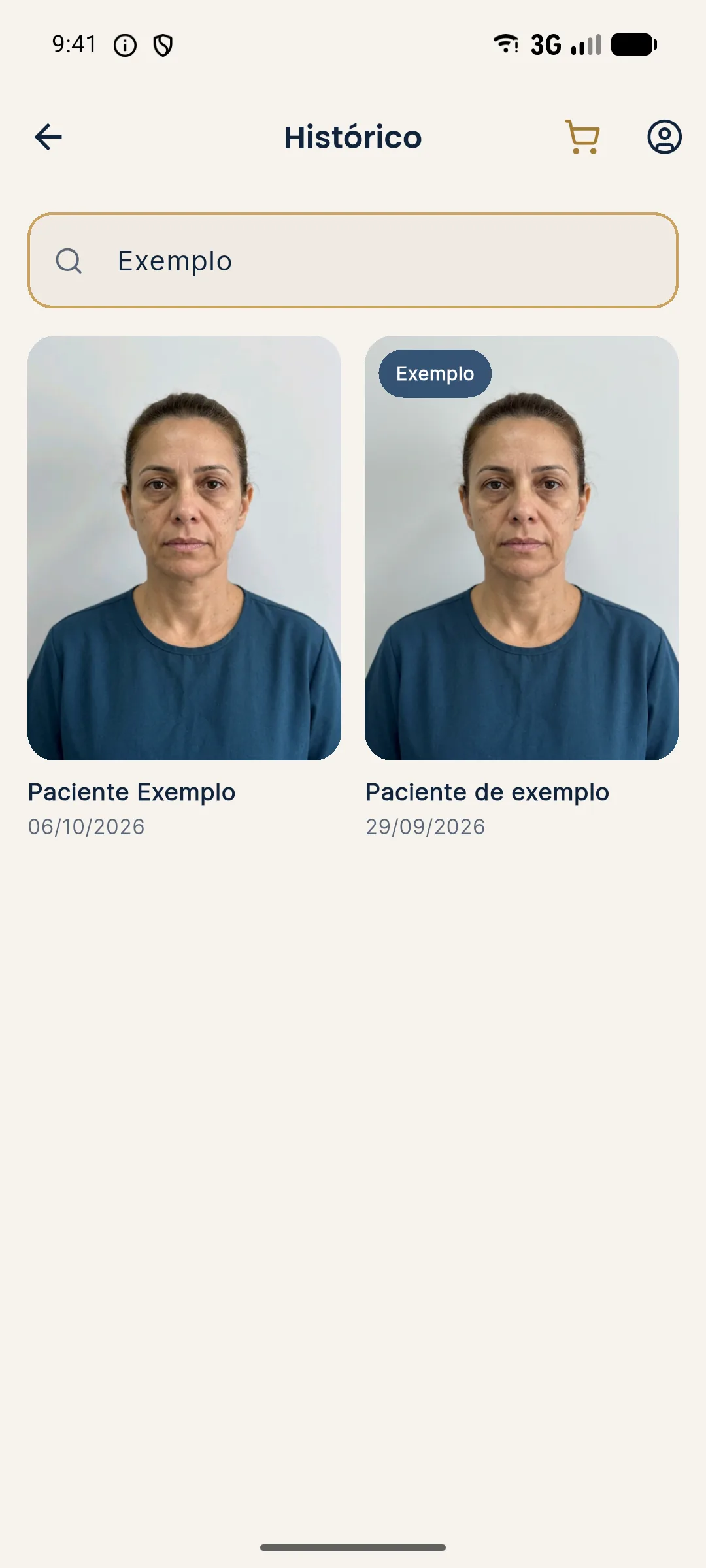
In Harmy, the history stores sessions per patient, with search by name. Each session holds the projection, the ml per area and, if you add it, the actual result. That helps you remember what was simulated and compare. But the app's history is not the patient record: it does not record lot, complications, consent form or medical history. Keep the clinical record in the patient record and use the app as a visual aid.
How do you use the diary to compare progress?
The example is only illustrative. The value is in the sum: seeing the trajectory in the diary changes the decision. For long-term design, see patient timeline in facial harmonization and a three-year facial harmonization plan.
What are the most common recording mistakes?
Some problems show up in almost every clinic and can be avoided with small habits.
- Late entries. Writing days later leads to forgotten ml, lots and complications.
- Fields that are too free-form. Without structure, every session has a different format and comparing becomes a treasure hunt.
- No linked photo. A loose photo with no date or session loses clinical value.
- Missing volume per area. Recording only the total prevents summing per area, which matters most for avoiding excess.
- Leaving out a mild complication. A larger bruise or prolonged swelling seems irrelevant but explains the patient's response at the next session.
- Not recording what the patient declined. If they declined an area or a volume, that is part of the shared decision.
To reduce these mistakes, adopt a single template, fill it in at the end of the session and, if possible, ask the patient to confirm the summary. In teams, define who fills it in and who reviews it. Product and lot traceability is part of the record and has its own page: injectable traceability.
Finally, treat the diary as a living document. By reviewing it before each session, you regain context in two minutes, avoid repeating what has already been tried and give the patient the correct sense of being followed continuously.
Who should have access to the diary?
The diary is part of the patient record and contains health data. Access should be limited to the team that treats the patient, with individual passwords and a log of who views it. Copies in messaging apps or loose spreadsheets increase the risk of leaks. Define where the diary lives and how it is backed up.
Summary
A per-session diary with fixed fields, ml per area, product and lot, photos and next steps gives the plan memory and safety. Use it to compare, add up and decide. Keep the patient record complete and protected. Every clinical decision belongs to the qualified professional, in line with the rules of their professional board in Brazil.
Frequently asked questions
What should be recorded at each facial harmonization session?
Date, the concern of the day, areas treated, ml per area, product and lot, complications, photos, instructions and the reassessment date. The format can vary, but it must be comparable across sessions.
Why record ml per area?
Because cumulative volume is only visible if every session is written down. Without that record, excess shows up late and the plan loses its reference.
Does the diary replace the patient record?
No. It organizes the progress and should be part of the patient record, which follows the applicable rules on retention and confidentiality.
Can I use the Harmy history as a record?
The Harmy history stores sessions and projections per patient, but it does not replace the patient record. Use it as support and keep the clinical record in the patient record.
Harmy images are illustrative simulations generated by AI from the patient's photo to support the conversation between practitioner and patient. They are not a promise of results. Indication, technique, product and volume are solely the decision of the licensed practitioner. This content is for information only and does not replace a clinical assessment.