
Cumulative volume over the years in HOF: how to add up sessions

Quick facts
- Topic
- Adding up volume from several sessions over the years
- Core risk
- Invisible excess that grows without any single session looking big
- What to record
- Area, product, ml and date of each session, in one place
- Control tool
- Timeline by area and reassessment before adding more
- Who decides
- Licensed professional, after assessment
Each HOF session, seen on its own, looks small and reasonable: 1 ml here, half a ml there. The problem appears when you look at the whole timeline. Three years of follow-ups can add up to a volume that no single session would justify. And because the face changes slowly, neither the patient nor the professional notices the excess until it becomes obvious. This page covers cumulative volume, the record that makes it visible and the questions to ask before adding more product.
Why is cumulative excess "invisible"?
For three reasons. The first is slow change: the face adapts and the patient gets used to it. The second is the lack of a reference: without a standardized photo of each stage, the comparison is made from memory. The third is a fragmented history: the patient may have been treated by more than one professional, and each one knows only their own part.
The typical result is the "full" or "puffy" face, where each area looks acceptable but the whole has lost its natural look. Prevention starts with the record. See when total volume becomes excess and pillow face: how planning prevents it.
What gets added up, and what gets taken into account?
Adding up is only the beginning. The clinical question is: how much of what was placed is still in the tissue, and what does that mean for the area? The answer depends on the product, the area, the time and the body, and cannot be calculated by formula. What you do is combine three elements: the ml record, the current photo compared with the previous one and the tissue exam.
| Element | What it tells you | Limit |
|---|---|---|
| Record of ml by area and date | How much was placed in total | Does not say how much remains |
| Standardized photo, current vs. previous | How the area has changed | Sensitive to angle and light |
| Clinical exam (palpation and dynamics) | Presence of product, texture and mobility | Depends on the examiner |
| Patient's account | Perception of heaviness, stiffness or asymmetry | Subjective |
When all three point the same way (a lot of volume, a full look, a report of heaviness), the excess hypothesis gains strength and a conversation about pausing or dissolving is valid. Hyaluronidase should be available when working with hyaluronic acid, and the decision to use it belongs to the professional.
Why does a long-term plan need a ceiling?
Because without a ceiling, every follow-up becomes "just a little more." A ceiling is not a magic number; it is a conversation: "what total volume makes sense in this area for this face, and at what point do we stop adding?" That ceiling is personal, changes over time and can be lowered. It protects against the pressure to "do a touch-up" out of habit.
Long-term plan structures are in a three-year HOF plan, annual maintenance plan in HOF and maintenance after five years of HOF. An important part is admitting that, in some cases, the best course is to reduce or pause, as discussed in reducing volume gradually in the plan.
How does a fragmented history increase the risk?
Patients move to other cities, clinics and professionals. If the history does not follow them, the new colleague may not know what has already been placed, in which area and with which product. The result is decisions without a basis. Ask the patient for previous records, when they exist, and note what they can report even without documents, marking it as self-reported. See handing over a plan between professionals and HOF plan for a patient from another city.
Also record procedures of other kinds that affect volume, such as biostimulators, threads and surgeries. In those cases, the sum is not only in ml; it is in effects on the tissue.
Risks associated with accumulation
Cumulative excess is linked to an artificial look, asymmetry, persistent swelling, nodules, stiffness and loss of natural expression. In areas of vascular risk, adding volume without reassessing also increases the complexity of any complication. Rare, serious complications such as vascular occlusion do not depend on cumulative volume, but anatomy altered by previous product can make management harder. Review safety and complications, overview.
How to use Harmy's simulation with the history?
In Harmy, each projection is made from a frontal photo and the ml you enter, and the app stores sessions per patient. This helps build a visual timeline: photo, projection and, when available, the actual result. Comparing photos from different times, always standardized, is one of the most honest ways to see accumulation.
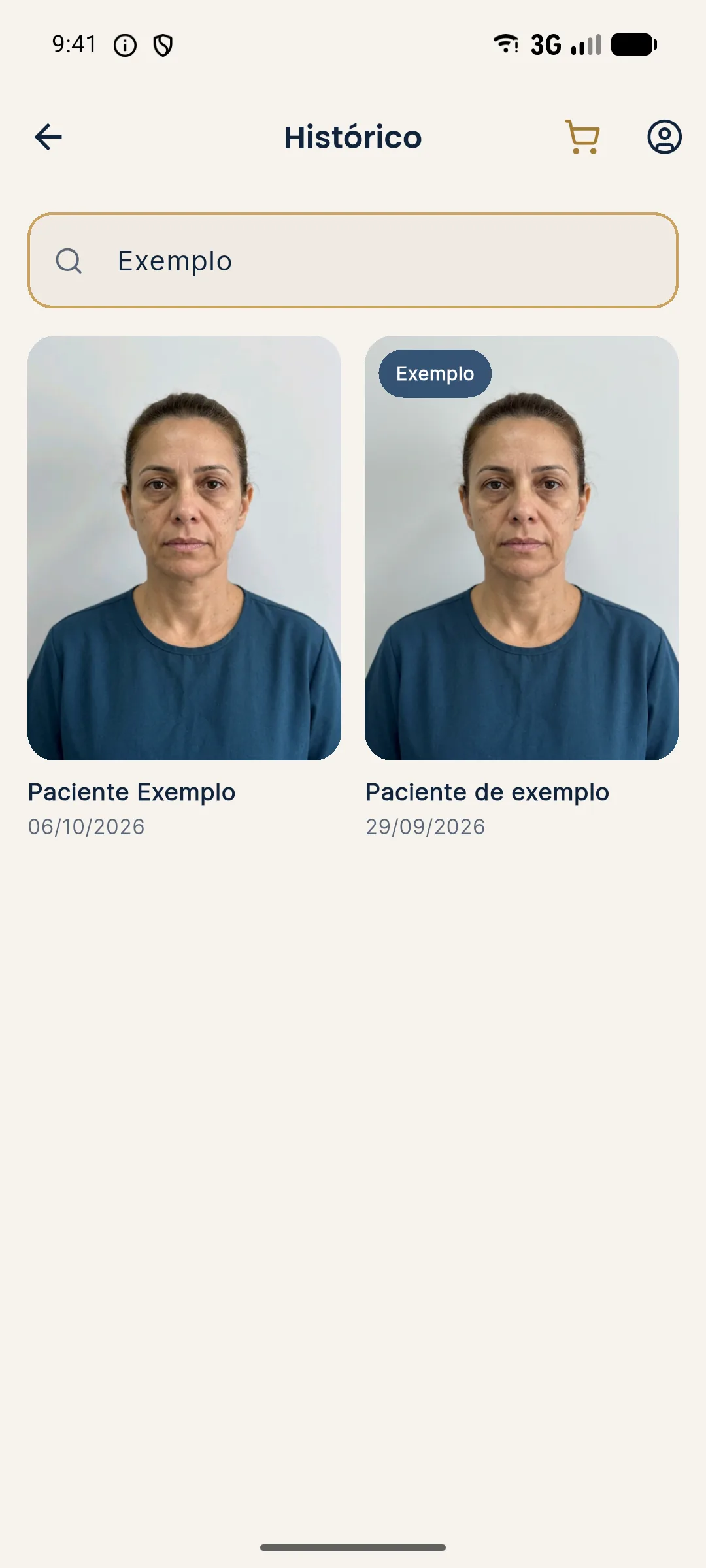
Harmy also lets you add the actual result, with the photo aligned by the eyes, and compare Projection, Actual result and Projection vs Actual. This helps you see, over time, whether the face is approaching excess. But the tool does not calculate the cumulative volume or the tissue's residual volume. Those numbers and that analysis remain the professional's job.
See also comparing projection and actual result and patient timeline in HOF.
How to organize the follow-up routine?
What to tell the patient?
The phrase prepares the patient for the possibility of a "not today." Patients who understand this logic tend to accept the pause better when it is indicated.
Checklist before adding more volume
Quick review
Summary
Cumulative volume is the silent sum of the sessions, and excess is born when nobody looks at the total. Record every session in a single table, compare standardized photos, examine the tissue, discuss a ceiling and be willing to pause or dissolve. Harmy helps with the history and projections, but the sum and the decision belong to the professional.
Frequently asked questions
What is cumulative volume in HOF?
It is the sum of what has been placed in an area across several sessions and years, taking into account that part of the product may remain and add to the new one.
Does the product always disappear after a while?
Not always completely. Breakdown varies with the product, the area and the body, and some of it may persist. That is why recording and reassessment matter.
How do I avoid invisible excess?
Record every session, reassess the residual volume before adding and consider dissolving some of the product when the reading is one of excess. The decision is clinical.
Does Harmy add up the cumulative volume?
No. Harmy simulates the volume you enter in each projection and keeps the history per patient. You record and check the total over the years.
Harmy images are illustrative simulations generated by AI from the patient's photo to support the conversation between practitioner and patient. They are not a promise of results. Indication, technique, product and volume are solely the decision of the licensed practitioner. This content is for information only and does not replace a clinical assessment.