
Annual Maintenance Plan in Facial Harmonization: A Calendar

Quick facts
- Topic
- Annual maintenance calendar in facial harmonization
- Basis of the plan
- Usual intervals by product, adjusted to each patient's response
- Working unit
- Review by area, with standardized photos
- Principle
- Maintain what works, without adding volume out of habit
- Closing
- Annual review of the whole plan
Maintenance is the part of the plan where the most money is lost and the most excesses are committed: the patient comes back "for a touch-up" with no reasonable date, or the professional adds volume because habit asks for it. A simple annual calendar prevents both. This page shows how to build that calendar by procedure, how to agree on dates with the patient and how to review the plan once a year.
What is an annual maintenance plan?
It is a forecast, by area and by product, of when the patient should be reassessed over 12 months and of what you expect to decide at each review. It is not a contract for treatments. It is a map that organizes dates, and the right date for each procedure is the clinical reassessment date, not the calendar date. The view by product is in maintenance: toxin, filler and biostimulator, and the long-term view is in facial harmonization plan over three years.
What are the usual intervals for each procedure?
The ranges below are general conversation references. The decision on when to repeat belongs to the professional, after assessment.
| Procedure | Usual reassessment range | What is assessed |
|---|---|---|
| Botulinum toxin | In general, a few months after the injection | Return of movement, asymmetry, need for adjustment |
| Hyaluronic acid filler | Between a few months and over a year, depending on the area | Remaining volume, shape, the patient's concern |
| Collagen biostimulator | Around one to two years for a new cycle, depending on the case | Skin quality, firmness, response to the sessions |
| Skinbooster | Spaced cycles, depending on the product and the skin | Hydration, texture |
| Threads | Depending on the type and the indication | Position, dimpling, extrusion |
For details on each product, see botulinum toxin, hyaluronic acid and collagen biostimulator. The conversation about maintaining or spacing out is in explaining harmonization maintenance to the patient, and the frequent question is in facial harmonization: maintenance.
How do you design the 12-month calendar?
Start with a short meeting at the final follow-up of a cycle, looking at photos, history and priorities. Then spread the reviews so that no single visit concentrates all the areas. A well-spaced calendar reduces the risk of accumulating swelling and helps the patient plan their schedule and budget.
The months above are illustrative and vary by patient and by product. Reassessment in the first 12 months follows the logic of reassessment at 3, 6 and 12 months, and what to look at in each follow-up is in what to reassess at the plan follow-up.
How do you keep maintenance from turning into excess?
The main risk of maintenance is adding volume without need. Every follow-up should start with the question "what is still there?", not "what can I add?". Compare with the starting photos, not with the patient's memory. See volume accumulated over the years and when total volume becomes excess.
The question "do I keep going or stop?" also belongs to the patient. Prepare the conversation with harmonization exit plan and stopping botox.
How do you use the projection in maintenance?
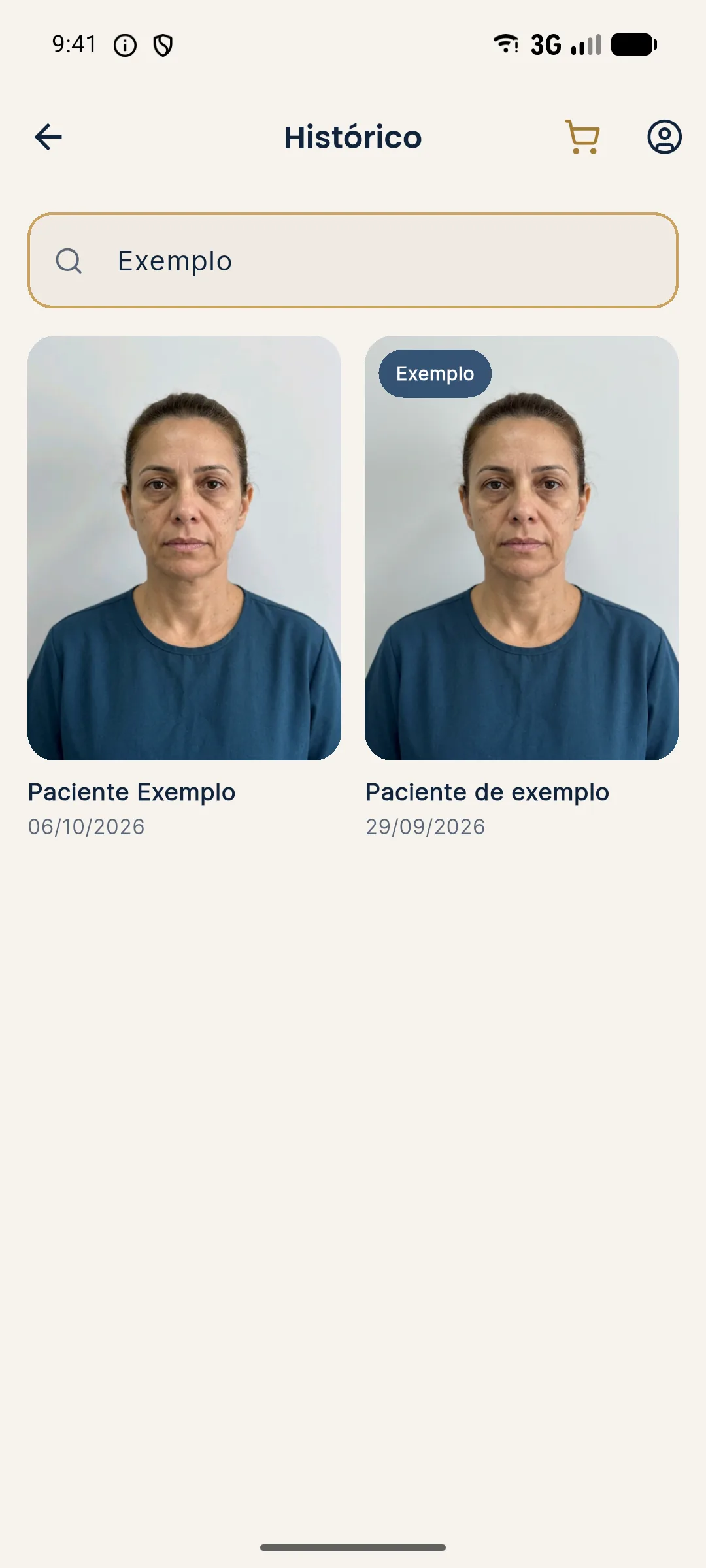
In Harmy, the projection can be redone at each reassessment from a new frontal photo. That lets you compare the earlier plan idea with today's situation and decide more clearly whether the patient needs anything. The app saves sessions by patient in the History, and the "Add actual result" feature saves the result photo aligned by the eyes, so you can compare Projection vs Actual.
Keep the honesty rule: the projection is illustrative, the follow-up photo is the clinical reference, and neither replaces the exam. See comparing projection and actual result and saving simulation versions by follow-up.
How do you talk about maintenance without sounding like a sale?
The patient should see the calendar as care, not as commercial pressure. Talk about what happens without the procedure, what is optional and what depends on assessment. Avoid creating artificial urgency ("this month only") and do not tie follow-ups to discounts that push repeat treatments. For date reminders, see reminding the patient about maintenance and follow-up and patient retention.
What about the annual quote?
An annual plan lets the patient organize their finances, but the amount is an estimate. Show the quote by area and by stage, with the quote's validity. In Harmy, the PDF quote comes with the price per ml for each area, discount, validity, informational installments and the notice. See linking plan and quote in facial harmonization and annual price adjustment in facial harmonization.
Reasoning quiz
Summary
A good annual maintenance plan has spaced reassessment dates, standardized photos, fixed questions before repeating volume and a review of the whole plan at the end of the year. It looks after the patient and the result, and makes clear that maintaining can also mean waiting.
Frequently asked questions
How often is maintenance done in facial harmonization?
It depends on the procedure, the product, the area and the patient's metabolism. In general, toxin and filler have different intervals, and the right date is the reassessment date, not a fixed calendar.
Is maintenance mandatory?
No. The patient can choose to space out or stop, and the professional should explain what tends to happen. Maintenance is an agreed option, not a commitment.
Can maintenance be planned for a whole year?
Yes, as an estimate. The annual plan is a map that should be reviewed at every follow-up, because the patient's response can change the order and the volumes.
Does Harmy help with maintenance?
It helps organize the history by patient and redo the projection at reassessment, comparing it with the previous one. The app does not set intervals or volumes, which are the professional's decision.
Harmy images are illustrative simulations generated by AI from the patient's photo to support the conversation between practitioner and patient. They are not a promise of results. Indication, technique, product and volume are solely the decision of the licensed practitioner. This content is for information only and does not replace a clinical assessment.