
How to explain facial harmonization maintenance to patients

Quick facts
- Core message
- Maintenance is follow-up, not dependence
- Timeframes
- Usual ranges per procedure, at the professional's discretion
- Common mistake
- Sounding like an obligation to always come back
- Resource
- Timeline and follow-up reminder
"So I will have to do this forever?" is a question that deserves a frank answer without pressure. If maintenance is presented as an eternal commitment, the patient feels trapped; if it is left out, they find out later that the effect wears off and feel deceived. The way through is to explain it as a chosen follow-up, with information about timing and cost from the start.
How do you define maintenance for the patient?
Two ideas are in there: the effect wears off and the decision is theirs. The second one is what prevents the feeling of dependence.
Which timeframes should you use?
Use ranges and make clear that they are usual, not guaranteed. The table below is a guide for the conversation, at the professional's discretion after assessment.
| Procedure | How to talk about timing |
|---|---|
| Botulinum toxin | In general, the effect lasts a few months and returns gradually |
| Hyaluronic acid | Usually from months to about a year or more, depending on area and product |
| Biostimulator | The effect is gradual and tends to last longer, with wide variation |
| Threads | The thread is absorbed over months; the effect on the skin may last longer |
For the patient, the logic is: each procedure has its own pace, and the maintenance plan respects each one. The phenomenon of hyaluronic acid breakdown explains why the effect fades.
How do you show the timing without sounding like a sales pitch?
A timeline shows the patient what to expect without pushing them to return. Hand it over on paper or by message, discreetly.
The dates are illustrative and vary by procedure and patient. The idea is for the patient to understand that the follow-up is a moment of assessment, not an obligation to reapply.
How do you avoid a dependence narrative?
Three practical precautions:
- Give the cost upfront. A patient who knows the approximate annual cost decides more freely.
- Offer the choice to stop. "If one day you no longer want it, the effect gradually fades and your face returns to its natural state, following your age."
- Avoid artificial urgency. Do not use phrases like "if you let it wear off, it will look worse" or "there is only one slot this week."
What about the touch-up?
A touch-up is a one-time adjustment, planned in advance, usually shortly after the procedure. Maintenance, on the other hand, is reapplication over time. The difference needs to be stated so the patient is not confused: they might see the touch-up as a "mistake" and maintenance as "dependence." See how to explain the touch-up and the glossary entry on touch-up.
How do you use Harmy for maintenance?
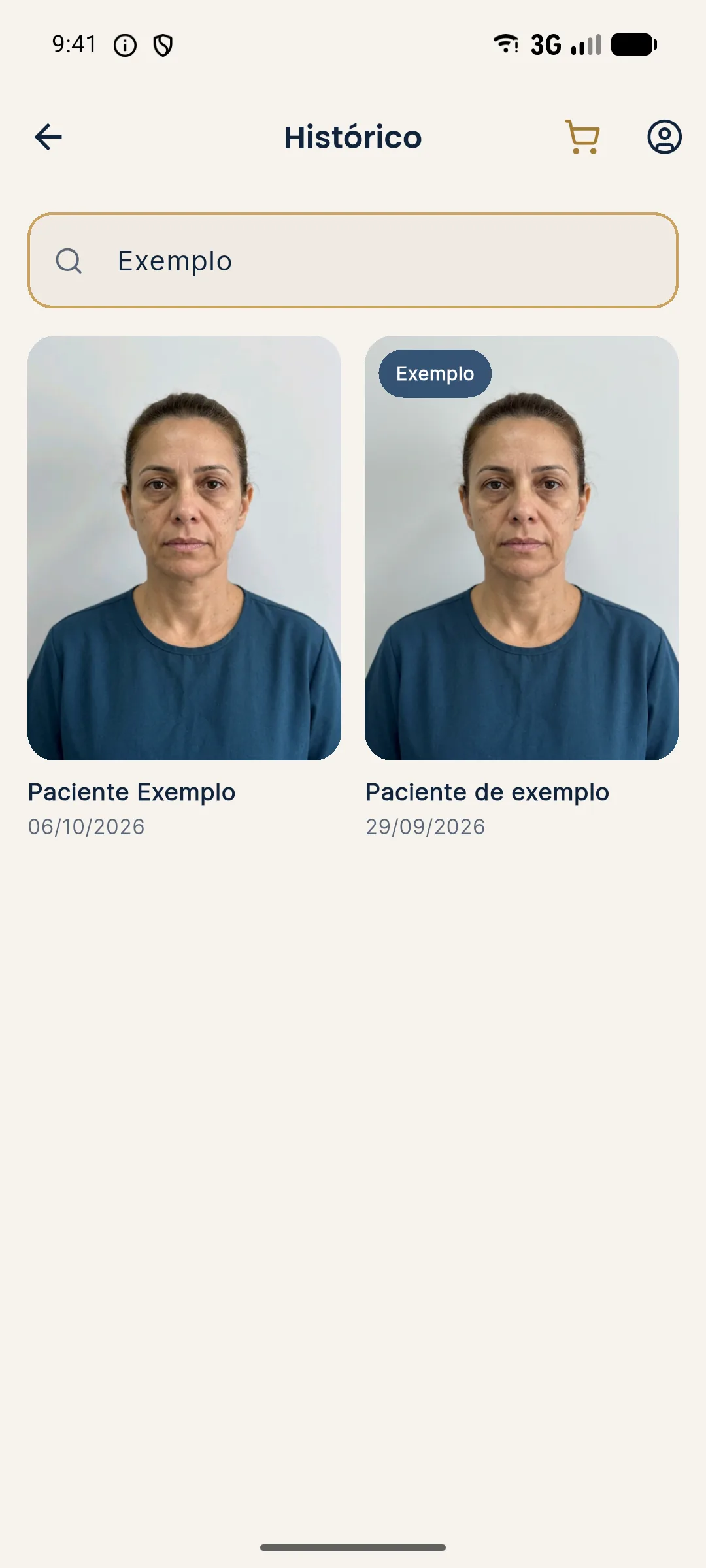
Harmy has a Maintenance marking shortcut, which applies a combination of small volumes with Subtle intensity (lips 0.5 ml; nasolabial fold 1 ml; cheekbone 1 ml). It can be used to show the patient what a maintenance session would look like. The app also helps you stay in touch with the patient: the per-patient history stores the sessions and lets you compare them with the actual result.
For an approach to contacting the patient at the right time, see reminding the patient about maintenance and follow-up and retention.
Which questions should you expect?
What should you record?
Note in the patient record that maintenance was explained, the timeframes mentioned as ranges, and the patient's decision. Include in the informed consent the information that the effects are temporary. The conversation about time expectations connects with aligning expectations about timing.
When maintenance is presented as follow-up, the patient tends to come back out of trust and not obligation, which is good for them and for the clinic.
Frequently asked questions
What is maintenance in facial harmonization?
It is follow-up and, when it makes sense, reapplication to keep the result over time. It is not an obligation: it depends on the procedure, the patient and what they want to keep.
Should I explain maintenance before the first procedure?
Yes. The patient should know from the start that the effects are not permanent and that they can choose whether to maintain them, with information about timing and cost.
If the patient stops maintenance, does the face look worse?
The effect of the procedure fades over time and the face tends to return to its baseline, following natural aging. It does not usually end up worse than it would have been without treatment, but this varies.
What maintenance interval can I mention?
Use ranges, such as months or about a year, and make clear that they depend on the product, the area and the patient. The exact timing is set at the assessment.
Harmy images are illustrative simulations generated by AI from the patient's photo to support the conversation between practitioner and patient. They are not a promise of results. Indication, technique, product and volume are solely the decision of the licensed practitioner. This content is for information only and does not replace a clinical assessment.