
Hyaluronic acid degradation: how the body absorbs it
Quick facts
- Definition
- The process by which the body breaks hyaluronic acid into smaller fragments and eliminates them.
- Main agents
- The body's own hyaluronidases and free radicals generated in the tissue.
- Fate
- Fragments travel through the lymph and are metabolized, mostly in the liver, into simple products.
- What slows it
- Cross-linking, gel concentration, and product characteristics; the area and the patient also play a role.
- Relevance in facial harmonization
- Explains the variable durability of filler and the logic of touch-ups and maintenance.
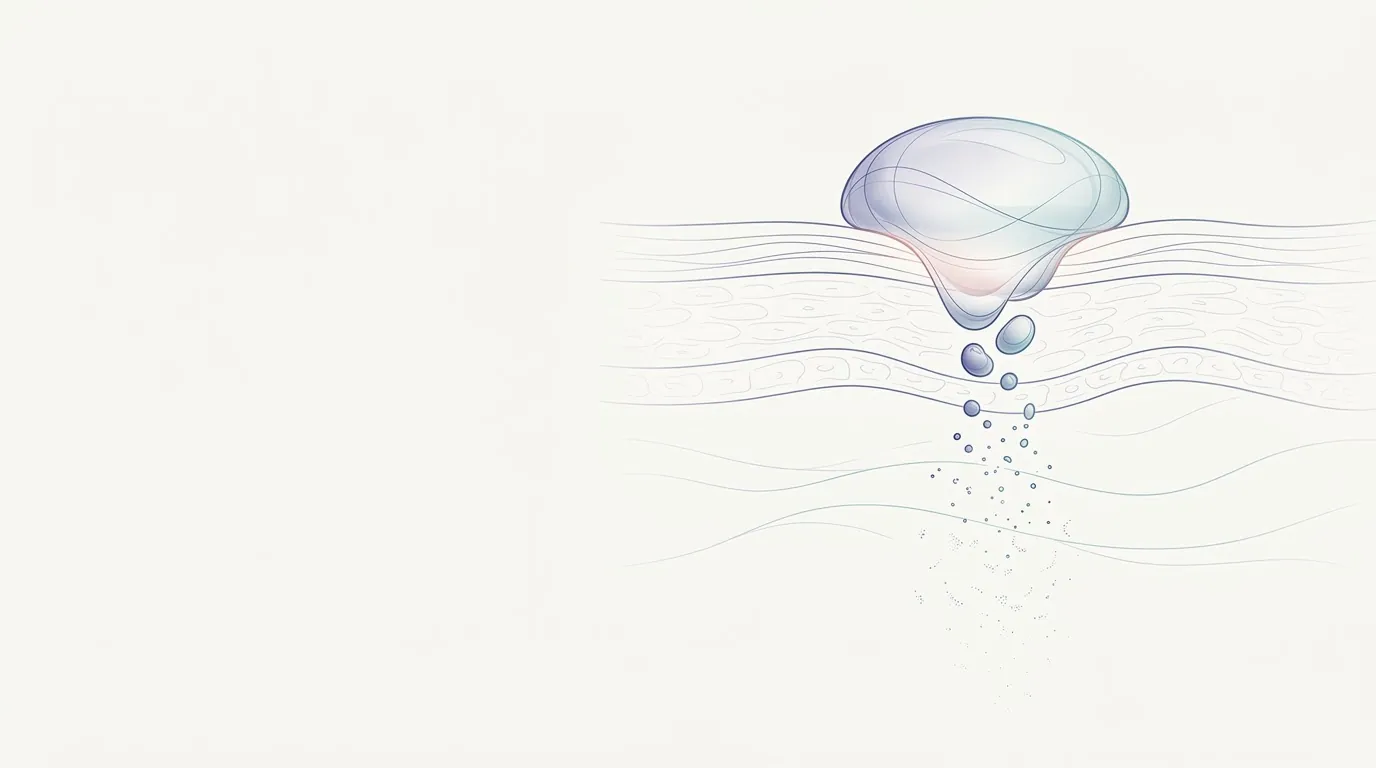
Hyaluronic acid degradation is the process by which the body breaks the injected gel into ever smaller fragments until it eliminates them. Hyaluronic acid is a natural molecule of the skin, and the body has its own mechanisms to renew it: the same system acts on the dermal filler. That is why hyaluronic acid filler is temporary and why durability varies so much between products, areas, and patients.
How does the body break down hyaluronic acid?
Two main mechanisms work together:
- The body's own enzymes: endogenous hyaluronidases cut the hyaluronic acid chains into smaller pieces. It is the same type of enzyme used, as a medication, to dissolve the gel when necessary: hyaluronidase.
- Free radicals: reactive oxygen species, produced by inflammation, sun exposure, and normal metabolism, also break the chains.
The smaller fragments are carried by the lymph and metabolized, mostly in the liver, into simple products such as water and carbon dioxide. The skin's natural hyaluronic acid is continuously renewed; the filler's lasts longer because it was modified to resist this process.
Why does filler gel last longer than the natural kind?
The difference lies in cross-linking. The cross-linking agent, usually BDDE, creates bonds between the chains and turns soluble hyaluronic acid into a gel. Enzymes and free radicals take longer to dismantle this network.
| Factor | Usual effect on durability |
|---|---|
| Degree of cross-linking | More cross-linked tends to resist longer |
| Concentration | More hyaluronic acid per ml tends to last longer |
| Treated area | Highly mobile areas, such as the lips, tend to break down faster |
| Volume and plane | Larger and deeper deposits tend to persist longer |
| Patient | Metabolism, inflammation, sun exposure, and habits vary |
Why doesn't the volume disappear all at once?
As it degrades, the remaining gel tends to attract more water, because of the hydrophilicity of hyaluronic acid. This helps maintain part of the volume even with less product, and the loss is usually gradual. The patient first notices a softening of the result, not an abrupt disappearance.
Not all volume that persists is well-integrated product. Nodules, late swelling, and migration require assessment, and old filler of unknown origin changes the planning. See patient with unknown previous filler.
Why does this matter in facial harmonization?
- Explaining durability: it helps answer "how long does it last" without promising a timeframe, as in lip filler: how long does it last.
- Planning maintenance and the touch-up: reapplication takes into account what remains, to avoid accumulating volume.
- Reversibility: the same principle allows the gel to be broken down with hyaluronidase in complications, at the discretion of the qualified professional.
Also called: hyaluronic acid absorption, filler resorption, hyaluronic acid metabolism.
Frequently asked questions
Is hyaluronic acid absorbed by the body?
Yes. Hyaluronic acid is a natural substance in the body, and the injected gel is gradually broken down by enzymes and free radicals in the tissue itself. The fragments are eliminated through the body's normal pathways.
How long does hyaluronic acid take to be absorbed?
There is no single timeframe. Durability varies with the product, the area, the volume, and the patient, and the ranges for each indication are in the instructions for use. Highly mobile areas, such as the lips, tend to break down the gel faster.