
Gradually Reducing Volume in the Facial Harmonization Plan

Quick facts
- Core idea
- Reduce volume in stages, watching the response, instead of taking the plan to zero all at once
- When to consider it
- Signs of excess, change in preference, weight change, aging of the result or a wish for a more natural look
- Strategies
- Space out touch-ups, reduce ml per area, allow natural metabolization or, at clinical discretion, reverse part of it
- Caution
- Reduction is also a clinical decision; reversal has its own indication and risks
There is a lot of talk about how to start a harmonization plan and almost none about how to scale one back. But the patient's life changes: tastes change, weight changes, the face ages, accumulation shows up. Many patients reach the point of wanting less, and the professional needs to guide that transition as competently as they guide the beginning.
This page covers gradual volume reduction at the planning level: when to consider it, what strategies exist, how to talk about it and how to document it. The clinical approach, including reversal, is up to the licensed professional, and this page does not describe technique.
Why reduce instead of simply stopping?
Stopping replacement is one way to reduce, but it is not the only one, and not always the best. A face that has had regular maintenance for years can change appearance abruptly if replacement stops all at once: the contour recedes, the patient notices and gets alarmed. Gradual reduction lets the face and the patient's self-image adapt.
In addition, a reduction plan is an opportunity to reassess the whole, correct disproportions that crept in over time, and recover naturalness. It is part of mature planning, as in exit plan from harmonization and maintenance after five years of facial harmonization.
In which situations should you consider reduction?
- Signs of excess: loss of angles, an overfilled look, a stiff expression, a complaint of a "heavy face". See when total volume becomes excess.
- Change in preference: the patient comes to prefer a more natural look.
- Weight change: a gain or loss that changes the need for volume. See reviewing the plan after weight gain.
- Aging of the result: the product metabolized unevenly and the distribution changed. See how a facial harmonization result ages.
- Accumulated volume: years of maintenance without review. See volume accumulated over the years.
- Prior excess from another professional: the patient arrives with accumulation and wants it corrected. See plan for correcting prior excess.
- Planned pregnancy or life change: the patient decides to pause. See facial harmonization plan and planned pregnancy.
What reduction strategies exist?
Strategies range from the most passive to the most active. The choice is clinical and depends on the product, the area and the patient.
| Strategy | Description | When to consider it |
|---|---|---|
| Space out touch-ups | Lengthen the interval between maintenance sessions | Stable result and a comfortable patient |
| Reduce ml per stage | Replace less than last time | Mild signs of accumulation |
| Let it metabolize | Do not replace and watch the evolution | Absorbable product and a wish to return to natural |
| Redistribute | Reduce one area and keep another | Disproportion between areas |
| Active reversal | Clinical strategy, when appropriate, for part of the product | Excess with an indication and the professional's decision |
Active reversal of hyaluronic acid with hyaluronidase is described as possible, with its own indications, risks and limits, and is a decision for the licensed professional, after assessment. The approach should not be presented to the patient as a cost-free solution. For replanning after this strategy, see replanning after hyaluronidase.
How do you design a staged reduction?
The design depends on the case, but there is a sequence of steps that helps you avoid improvising.
The number of stages and the interval vary, and the professional decides. At each step, compare with the initial photo, not the last session's, as in reassessment at 3, 6 and 12 months.
How do you talk with a patient who fears "going back to how they were"?
It is a common fear. The patient associates reduction with the return of old concerns. Show the photos from the start and the current ones, explain that the goal is balance and naturalness and that the reduction is gradual and can be reassessed. Offer a stopping point: "if you don't like it, we go back." That promise should only be made when it is sustainable, and with no guarantee of results.
The conversation can lean on explaining harmonization maintenance to the patient and explaining what a touch-up is to the patient.
What changes in the quote and the schedule?
Reduction usually lowers the ticket per visit, but it can increase retention, because the patient sees care instead of a sale. Plan the quote for reduced maintenance and make the value of each stage clear. Responsible commercial reasoning is in follow-up and retention and pricing per ml.
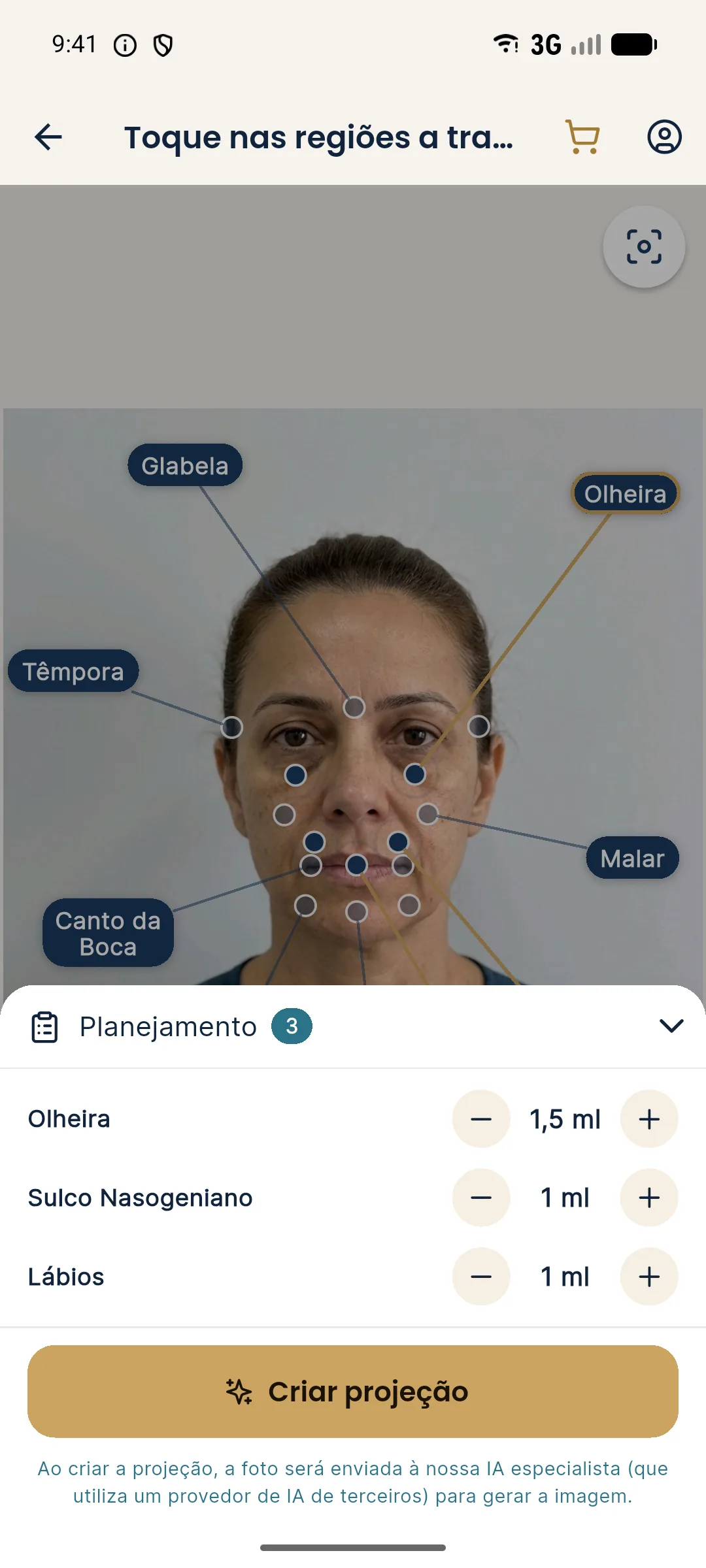
Harmy's PDF quote lets you update values per ml, discount and validity, and save the price table in My clinic. Each update should track the plan version, as in treatment plan versions.
Frequently asked questions
When is it worth reducing the volume in the plan?
When there are signs of excess, a change in the patient's preference, a weight change, a wish for a more natural look, or when assessment shows the whole has gone past the right point.
Does reducing mean undoing what was done?
Not necessarily. Often it means not replacing the product that metabolizes, spacing out touch-ups and lowering the ml of the next stages. Active reversal, when appropriate, is the professional's decision.
Is it safe to reduce all at once?
Gradual reduction lets you watch the response and avoid a face that changes abruptly. The pace is decided by the professional, case by case.
How do patients usually react to reduction?
It depends. Some feel relieved, others fear 'going back to how they were.' The conversation should explain the reason, show the comparison with photos and set up a reassessment.
Harmy images are illustrative simulations generated by AI from the patient's photo to support the conversation between practitioner and patient. They are not a promise of results. Indication, technique, product and volume are solely the decision of the licensed practitioner. This content is for information only and does not replace a clinical assessment.