
Reviewing the harmonization plan after weight gain

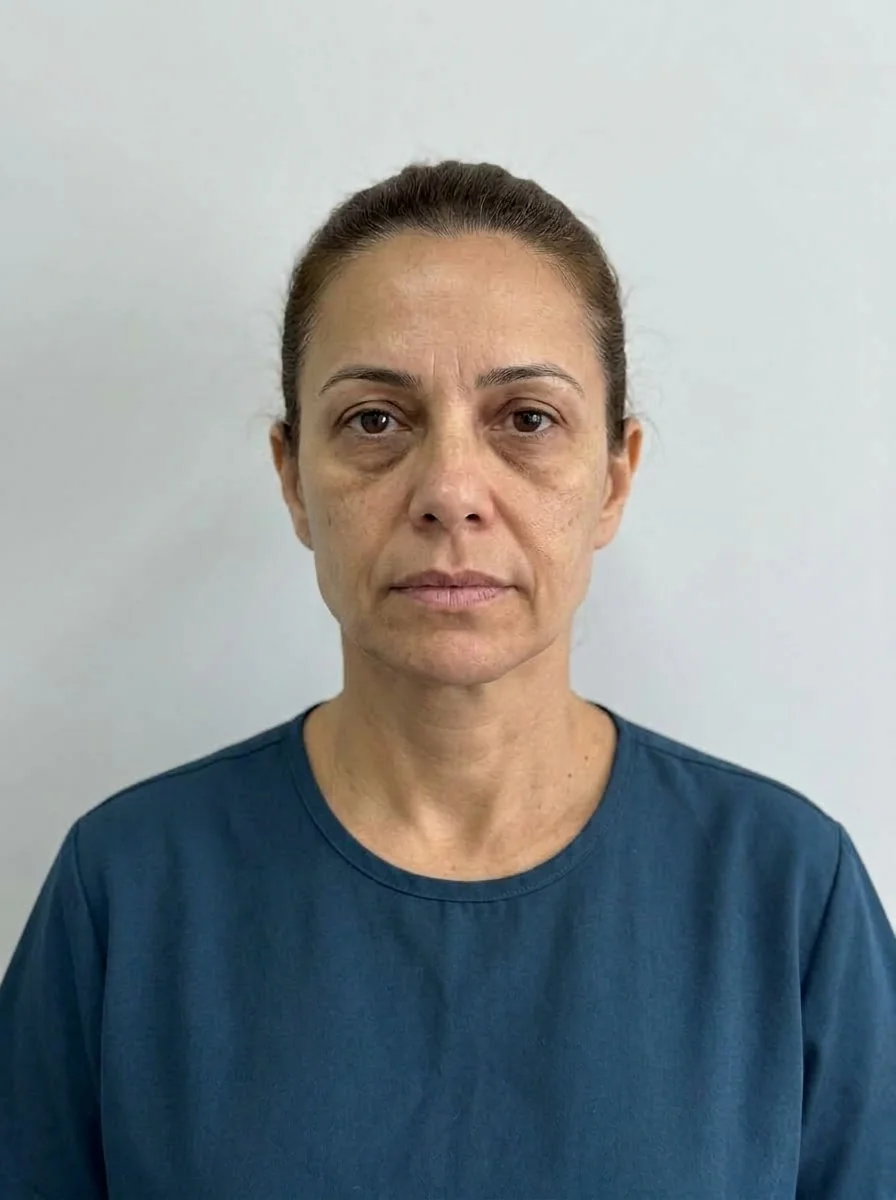 BeforeSimulation
Quick facts
- Topic
- Facial harmonization plan after weight gain
- What changes
- Facial fat, contour, double chin and the need for volume
- First step
- Wait for weight to stabilize and repeat the assessment
- Central risk
- Adding injected volume to a face that has already filled out
- Record
- Approximate weight and date alongside each photo
The face responds to the body. When a patient gains weight, facial fat increases, the cheeks fill out, the jawline softens and a double chin may appear. A facial harmonization plan made months earlier, based on a different face, may stop making sense. This page covers how to review the plan in that scenario: what to reassess, what to pause and how to talk with the patient.
What does weight gain change in the face?
Facial fat is distributed in compartments, and weight gain tends to increase the volume of several of them at once. The midface fills out in the cheeks, the jawline loses definition from fat over the jaw line, and the neck may show accumulation. As a result, areas that once needed support because of volume loss may now need less, and others, such as the contour and the chin, start to read differently.
The change goes beyond fat: stretched skin and a sense of facial heaviness change how the face reads. Anyone who has read about compartments understands why the effect is uneven, as in midface fat compartments in the plan and thin face vs full face in planning.
Why does the old plan become a risk?
The central risk is stacking. Filler planned for a thinner face, injected into a face that has already filled out, produces excess. Even filler that was already in the face can become excess when the surrounding tissue gains volume. Patients describe this as "my face got round" or "you can see the filler," and the professional sometimes only notices when comparing photos.
This mechanism is described in when total volume becomes excess and volume accumulated over the years. Weight gain is one of the most common causes of mismatch between the volume injected and the volume the face can carry.
How do you review the plan step by step?
The key point is to compare photos taken with the same technique. Photos from different periods, with different lighting and distance, hide or exaggerate the gain. See photo records by plan stage and alignment errors when comparing photos.
Which areas change the most in how they read?
| Area | Common effect of weight gain | Review question |
|---|---|---|
| Cheekbone and midface | Fuller cheek, less need for support | Is the injected volume still necessary? |
| Nasolabial fold | May soften with cheek fat | Does the fold still need treatment? |
| Jawline | Loses definition from fat over the line | Is the definition goal still achievable with filler? |
| Chin | Less visible with a double chin | Should the relationship between chin and neck be considered? |
| Lips | Proportion changes with a fuller face | Does the current volume still look harmonious? |
| Under-eye area | May change with periorbital fat gain | Does the shadow still bother the patient? |
For the lower areas, see chin and double chin: combining them and jaw and masseter: combining them. When the goal was to slim the face, read plan to slim the face.
When is facial harmonization not the answer?
In some cases, the patient wants facial harmonization to fix what weight changed. Facial harmonization does not replace weight loss, and filler along the jawline does not remove fat. The professional should be clear about the limit, point the patient toward appropriate follow-up when needed and avoid promises. Being honest here is part of the plan's safety, and of respect for the patient. See when to say no to an aesthetic plan.
It also helps to distinguish weight from swelling and transient puffiness. A face swollen by fluid retention, medication or a medical condition is not the same as fat gain, and the approach is different. When in doubt, observe, photograph and reassess.
How does the simulation help, and where does it mislead?
A new frontal photo of the current face is essential. Harmy's projection starts from the photo you upload, so an old photo would show a face that no longer exists. With the current photo, you can create a projection to talk about what still makes sense, for example jawline definition or a chin adjustment. Mark the area and set the ml; for the jawline, the app uses 4 ml in the example simulation, but you choose whatever value you like.
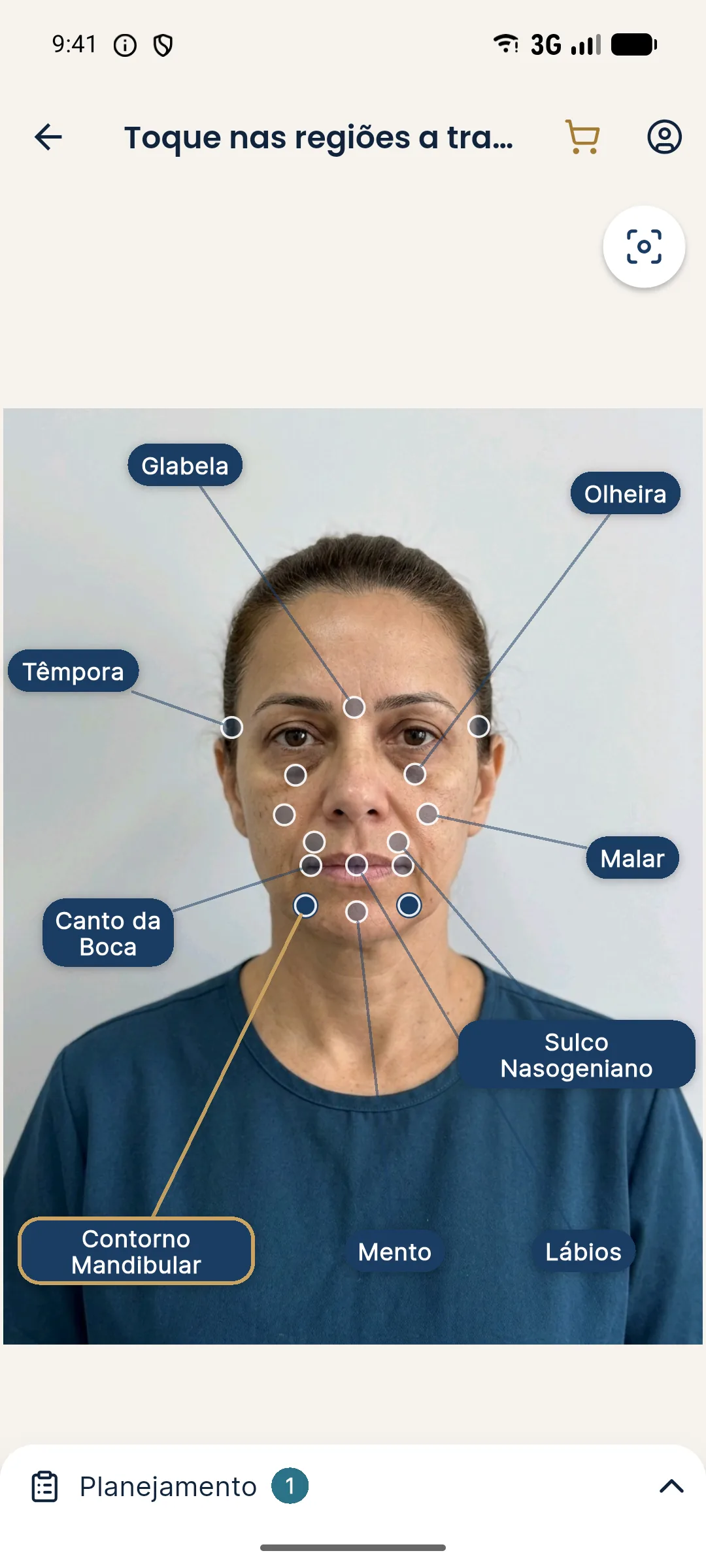
The projection is subtle and realistic, changes only what was marked and does not account for weight, tissue or layers. That is why you should not promise that the contour will look defined: a face with more fat has limits the image does not show. See limits of 2D simulation and thin face vs full face in planning.
How do you record the review?
Write down the approximate weight, the date, the photos, the decision for each area and the reason. If the patient keeps fluctuating, agree on shorter reassessment intervals. And document the conversation about the limits of facial harmonization in the face of weight gain, because it protects the relationship and records the reasoning. For organization, see treatment plan versions and plan diary: progress notes by session.
Finally, remember that the opposite also happens. Someone who loses weight quickly may find the injected volume becomes more obvious and the face looks older. The planning mindset is always the same: the face changes, and the plan changes with it. Read planning facial harmonization for people who lose weight quickly.
Frequently asked questions
Does weight gain change the facial harmonization plan?
Almost always. More facial fat changes the contour, the volume of the midface and the submental area. Areas that used to call for filler may need less, and others may call for a different approach.
Should I adjust the volume already injected when the patient gains weight?
There is no single rule. The professional assesses case by case. In some patients the earlier volume becomes excess, and hyaluronidase enters the conversation. In others, observation is enough.
Can I plan while weight is still changing?
It is prudent to wait for some stability, when possible. Planning during large swings can lead to volumes that stop making sense within a few months.
Does the Harmy simulation take the patient's weight into account?
No. The projection starts from a current frontal photo and changes only the marked areas. Weight only matters because the photo reflects today's face, which is why an outdated photo misleads.
Harmy images are illustrative simulations generated by AI from the patient's photo to support the conversation between practitioner and patient. They are not a promise of results. Indication, technique, product and volume are solely the decision of the licensed practitioner. This content is for information only and does not replace a clinical assessment.