
Jaw and masseter: filling and relaxing in the same plan

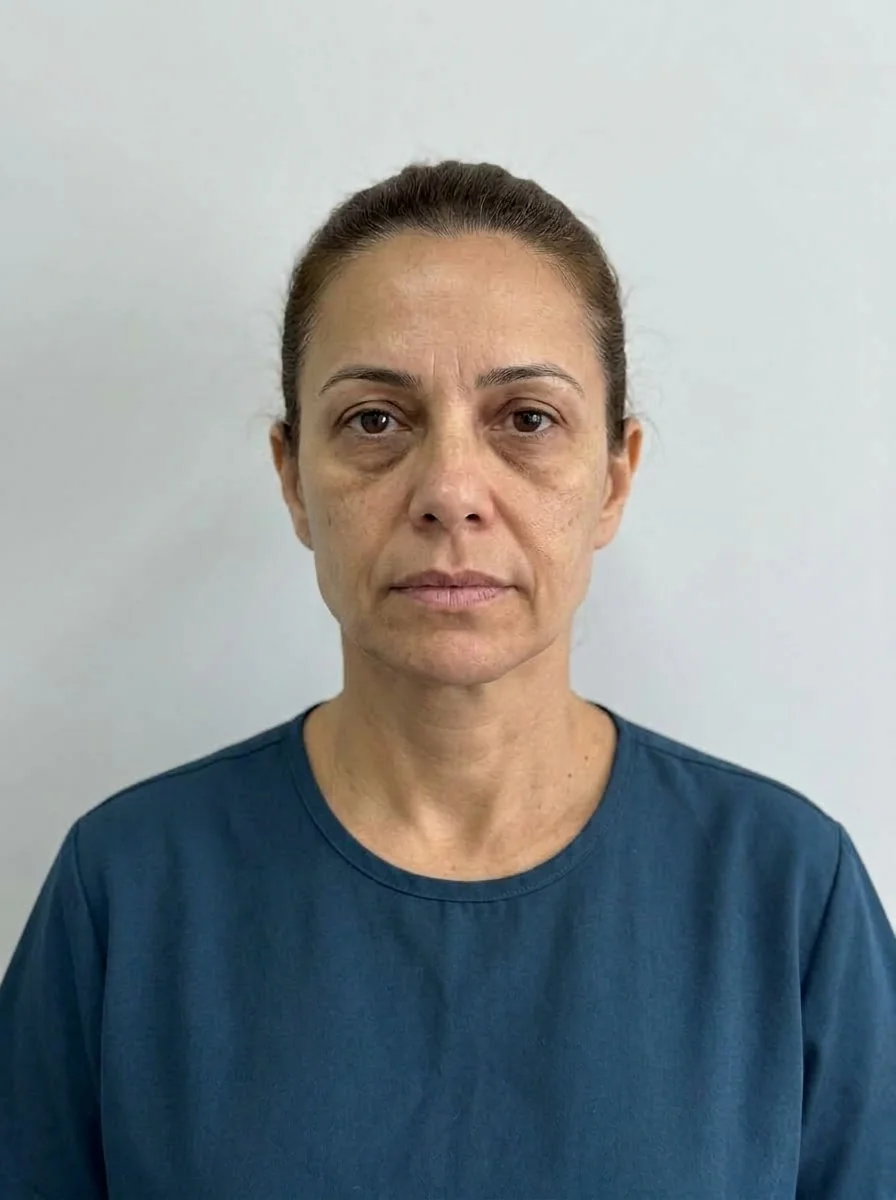 BeforeSimulation
- Muscle
- Highlighted area
Quick facts
- Topic
- Filling the contour and reducing masseter mass on the same face
- Central question
- What makes the jaw wide or poorly defined: bone, muscle, fat, or skin
- Usual order of decisions
- Diagnose the cause, then choose what to reduce and what to define
- Care
- Two opposite moves call for an intermediate follow-up
Few facial harmonization requests put two interventions with opposite aims on the same contour. The patient wants a more defined jaw, but the lower third looks wide. If the width comes from the masseter muscle, filling the line may worsen the "boxy" look, while reducing the muscle may leave the contour without a frame. Planning well means finding the cause before choosing which move to make first.
This page deals with the decision: how to tell muscular width from lack of definition, in what order to think through the plan, what the limits are, and how to use the simulation without creating an expectation the plan cannot deliver. For the general reasoning on combining areas, see domino effect between facial areas.
How do you tell muscular width from lack of definition?
The mandibular angle can look wide for several reasons. The bone may be wide, the masseter may be bulky (common in people who clench their teeth or chew heavily on one side), fat may accumulate in the premasseteric area, or the skin may have lost support. Each cause calls for a different approach.
| Possible cause | How it shows | Implication for the plan |
|---|---|---|
| Masseter hypertrophy | Volume that increases on biting, "square" face | Reducing mass may be discussed |
| Wide bony jaw | Fixed width, no change on biting | Soft tissue changes little; realistic expectations |
| Premasseteric fat | Full and soft, unrelated to biting | Other approaches besides filler |
| Laxity and loss of definition | Faded line, jowls, sagging | Support before volume |
| Short or retruded jaw | Faded contour in profile | May call for projection, not width |
Ask the patient to clench their teeth and observe the area. The volume that appears is muscular. Palpate with the mouth relaxed and then with the teeth clenched to record the difference. Note everything on the plan sheet, as in facial treatment plan sheet: fields.
What is the order of decisions?
When there are two opposite moves, the order matters because the second depends on what the first changed. A common logic, at the professional's discretion:
- Define the main cause of the width or the lack of definition.
- If there is a relevant muscular component, discuss reducing mass first, which shows up gradually.
- Reassess the contour at the follow-up, with the base already modified.
- Only then decide whether the jawline needs defining with filler.
This sequence respects the response time of each approach and avoids adding volume to an area that is still going to change. If the patient wants "everything at once", the conversation is about the risk of an unbalanced result, a topic covered in structure before detail in the facial harmonization plan.
What risks and limits exist?
At the jawline, vascular care and care for structures such as the marginal mandibular branch call for mastered anatomy and preparation for complications, with hyaluronidase available when hyaluronic acid is used. See the overview in safety and complications in facial harmonization.
As for planned volume, the visual planning range runs from 0.5 to 5 ml per area, in steps of 0.5 ml. The app's "Full harmonization" shortcut uses jaw at 2 ml at Moderate, but it is a starting point, not an indication. When in doubt, plan less and reassess. See ml per area: ranges used in visual planning.
How does the masseter change how the contour reads?
The masseter is a large, superficial muscle. When bulky, it creates a width that rises from the angle up to the cheekbone area, and the face looks square. Reducing the mass can slim the base and give a sense of a V, but the effect is not immediate and depends on the patient. In turn, the contour depends on bone and fat that the muscle does not resolve.
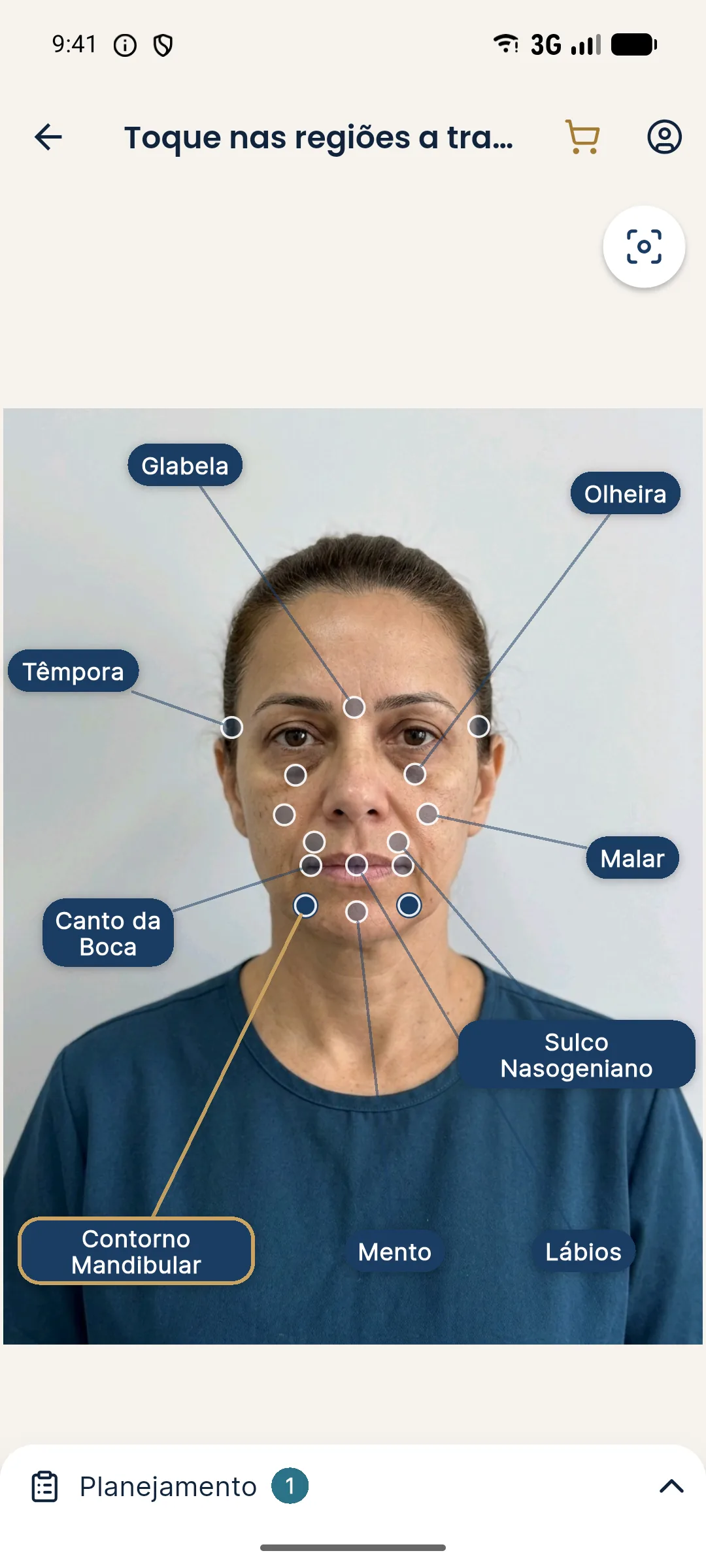
To visualize the whole, the simulation can help, as long as the patient knows the app only shows what was marked. It simulates the Jawline, not masseter reduction.
This calls for care in communication. If the plan includes reducing the masseter and the projection shows only the defined contour, the patient may think the image represents the whole. Say plainly what the image covers. The general rule is in ethics of result simulation.
When should you combine and when separate in time?
Combining in the same plan does not mean doing everything on the same day. In general, the interval between approaches lets you assess the response and decide the second step with the image from the follow-up.
To see the contour next to the chin, which often completes the line, read chin and jaw: why combine in the plan. For balance with the midface, see cheekbone and jaw: balancing the V-shaped contour.
Every decision on product, volume, and technique rests with the qualified professional, after assessment, and the simulation is illustrative.
Frequently asked questions
Can I fill the jaw and reduce the masseter in the same plan?
That combination can occur when the cause of the width is muscular and the contour needs definition. The decision, the order, and the interval belong to the professional, according to their professional council's rules.
What should be treated first, the masseter or the jawline?
Generally you first decide what is causing the width. If it is muscle mass, reducing it first and reassessing usually avoids adding volume on a base that is still going to change.
Does reducing the masseter change jaw definition?
It may change the perceived width of the lower third, but the effect is gradual and varies. Contour definition also depends on bone, fat, and skin.
Does Harmy simulate masseter reduction?
No. The app simulates the areas it marks, such as the Jawline. Muscle mass reduction is not simulated.
Harmy images are illustrative simulations generated by AI from the patient's photo to support the conversation between practitioner and patient. They are not a promise of results. Indication, technique, product and volume are solely the decision of the licensed practitioner. This content is for information only and does not replace a clinical assessment.