
Cheekbone and jaw: balancing the V-shaped contour in the plan

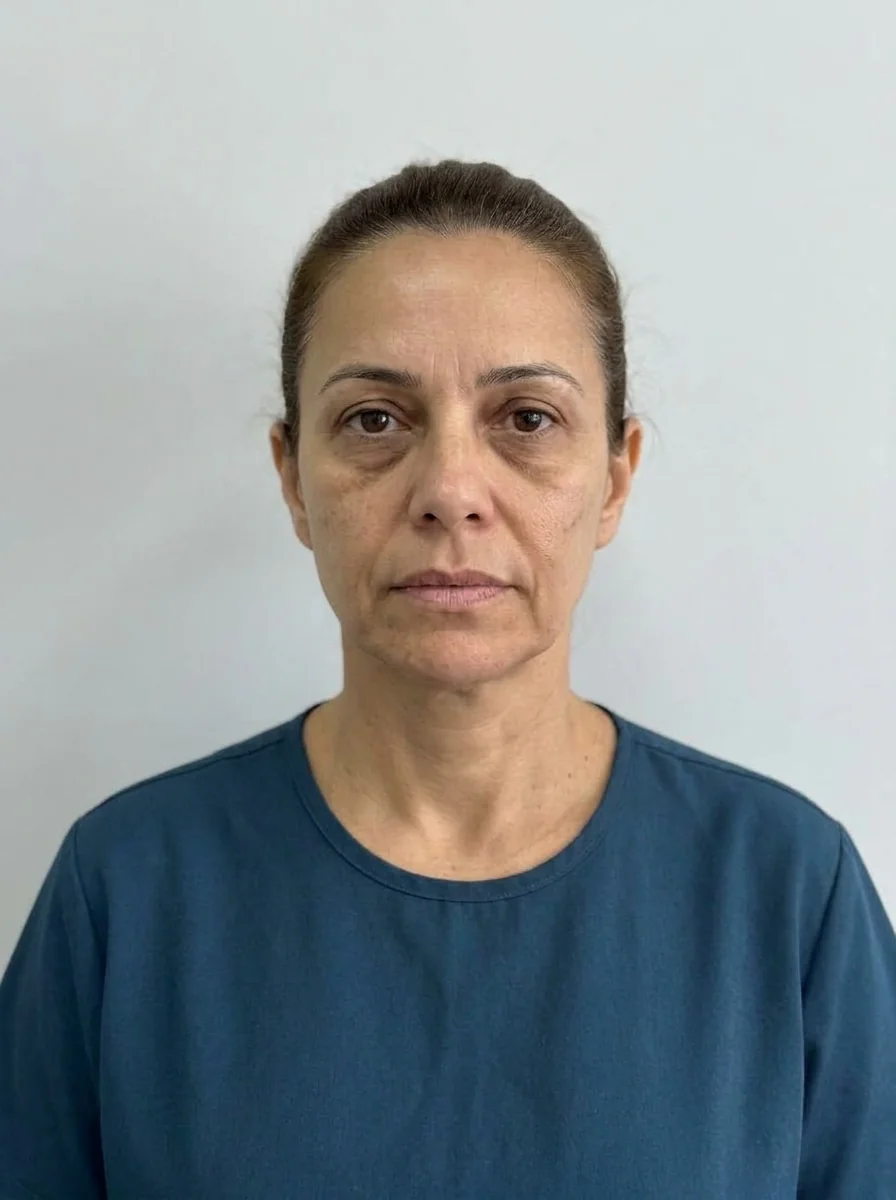 BeforeSimulation
- Highlighted area
Quick facts
- Topic
- Relationship between the width of the malar area and the width of the jaw
- Central question
- Which of the two widths is out of proportion relative to the other
- Usual order of decisions
- Skeleton and proportion, then cheekbone, then jaw, at the professional's discretion
- Care
- Adding volumes without reviewing the whole leads to a wide, heavy face
Cheekbone and jaw are the two ends of one question: how the width of the face is distributed from the middle third to the lower third. Many requests for a "more defined face" or a "V-shaped contour" are really asking for an adjustment to the relationship between the two widths, not to an isolated area. Planning one without looking at the other is one of the most common paths to a result that looks right up close and odd from a distance.
This page organizes the decision: how to read the relationship between cheekbone and jaw, what to do when one is wider than the other, how to think about the order of the plan, and how to use the simulation to talk with the patient. For the general reasoning on combining areas, see domino effect between facial areas.
How do you read the relationship between cheekbone and jaw?
On the frontal photo, compare the width of the zygomatic area with the width of the mandibular angle. In many faces perceived as harmonious, the malar area is equal to or slightly wider than the jaw, and the contour descends continuously to the chin. This is an observation of perception, not a rule, and it varies by person, sex, and background.
Three questions help organize the reading:
- Does the malar area look narrow, flat, or lowered relative to the rest of the face?
- Does the jaw look wide, poorly defined, or with a faded angle?
- What does the patient notice and want to change: the eyes, the cheek, or the chin line?
| Observed pattern | Likely reading | Question for the plan |
|---|---|---|
| Subtle cheekbone, defined jaw | Midface with little projection | Is the jaw already at its limit? Is balancing the cheekbone enough? |
| Full cheekbone, poorly marked jaw | Lack of lower definition | Does defining the angle solve it, or is the problem fat and skin? |
| Both subtle | Face with little supporting structure | Is there skeleton to consider before volume? |
| Wide jaw, narrow cheekbone | Wide-based face | Does more cheekbone help, or is the path to reduce mass (for example, the masseter)? |
The skeleton comes before volume
The cheekbone and the mandibular angle depend on bone. A poorly projected zygoma or a short jaw changes what soft tissue can do. Injecting to compensate for what is structure may work in part, but it changes how volume reads in other areas and may require touch-ups. This reasoning is in facial skeleton before injecting and in structure before detail in the facial harmonization plan.
Skin thickness and the fat compartments of the midface also matter, because they change how much the same volume shows. See skin thickness in planning and midface fat compartments in the plan.
What is the order of decisions in the plan?
There is no single order, but a sequence of questions usually prevents excess. One way to think about it, always at the discretion of the qualified professional:
Notice that the plan can end up in a single area. If treating the cheekbone already rebalances the width relationship, the jaw can wait, and the patient decides with the image from the follow-up. This reduces cost and the risk of a heavy result, a topic covered in pillow face: how planning avoids the effect.
How much volume makes sense to plan?
For visual planning, the usual ranges run from 0.5 to 5 ml per area, in steps of 0.5 ml, and the real decision belongs to the professional. The important point is the sum. Cheekbone and jaw, each with moderate volume, result in full middle and lower thirds that can take up more width than the face can carry.
Some signs that the whole has gone too far in the plan:
- The face looks wider from the front than in the starting photo.
- The transition between the cheekbone and the premasseteric area has no natural shadow.
- The nasolabial fold looks deeper by contrast, not because of a real worsening.
- The patient describes a "full face" and not a "defined face".
The division of volume by area is in percentage distribution of volume between areas, and the care with ranges per area in ml per area: ranges used in visual planning.
How do you simulate cheekbone and jaw in Harmy?
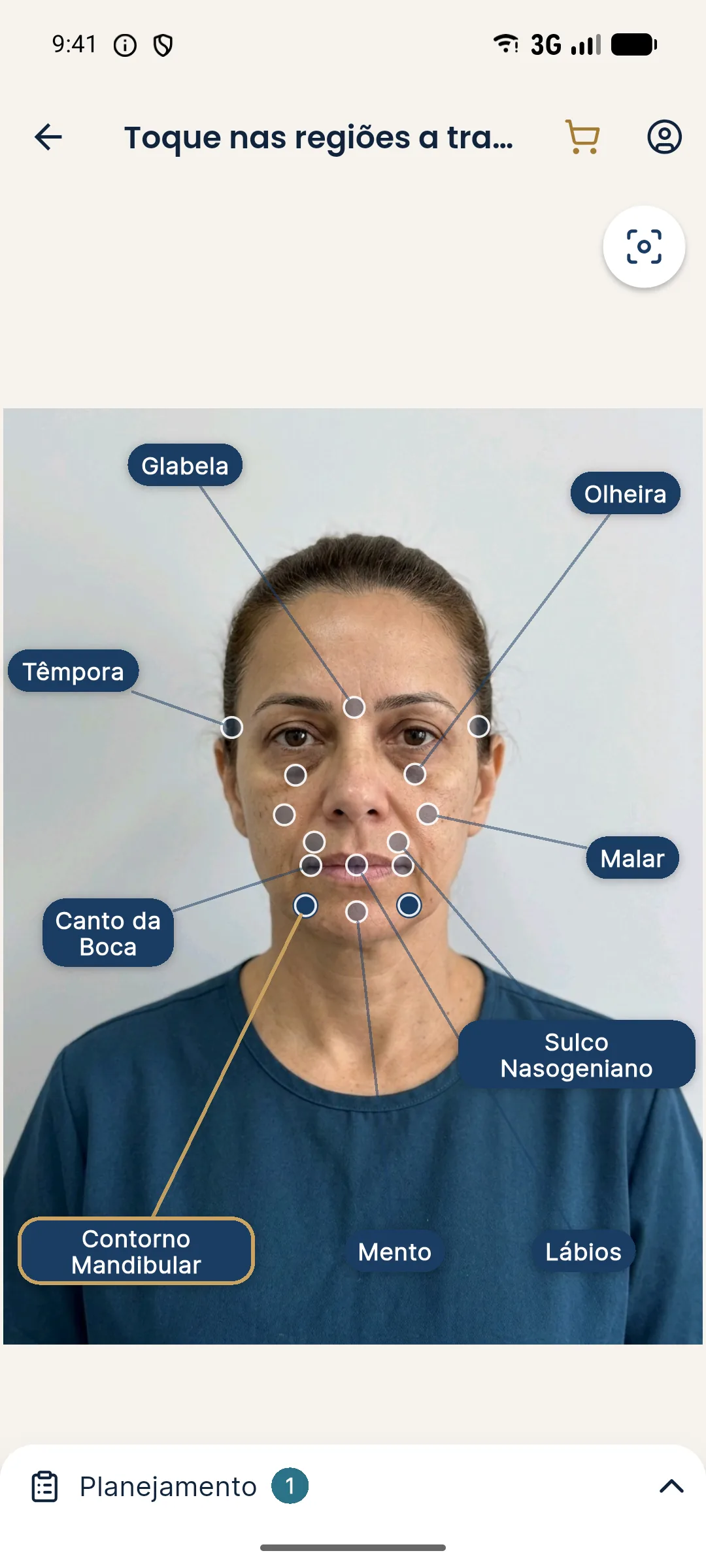
The simulation helps the patient see the whole, not just the area. In Harmy, from a frontal photo, the app detects the face on the device and shows labeled points, including Malar and Jawline. You tap both, enter the ml for each, and choose the intensity (Subtle, Moderate, or Pronounced, with Moderate as the default).
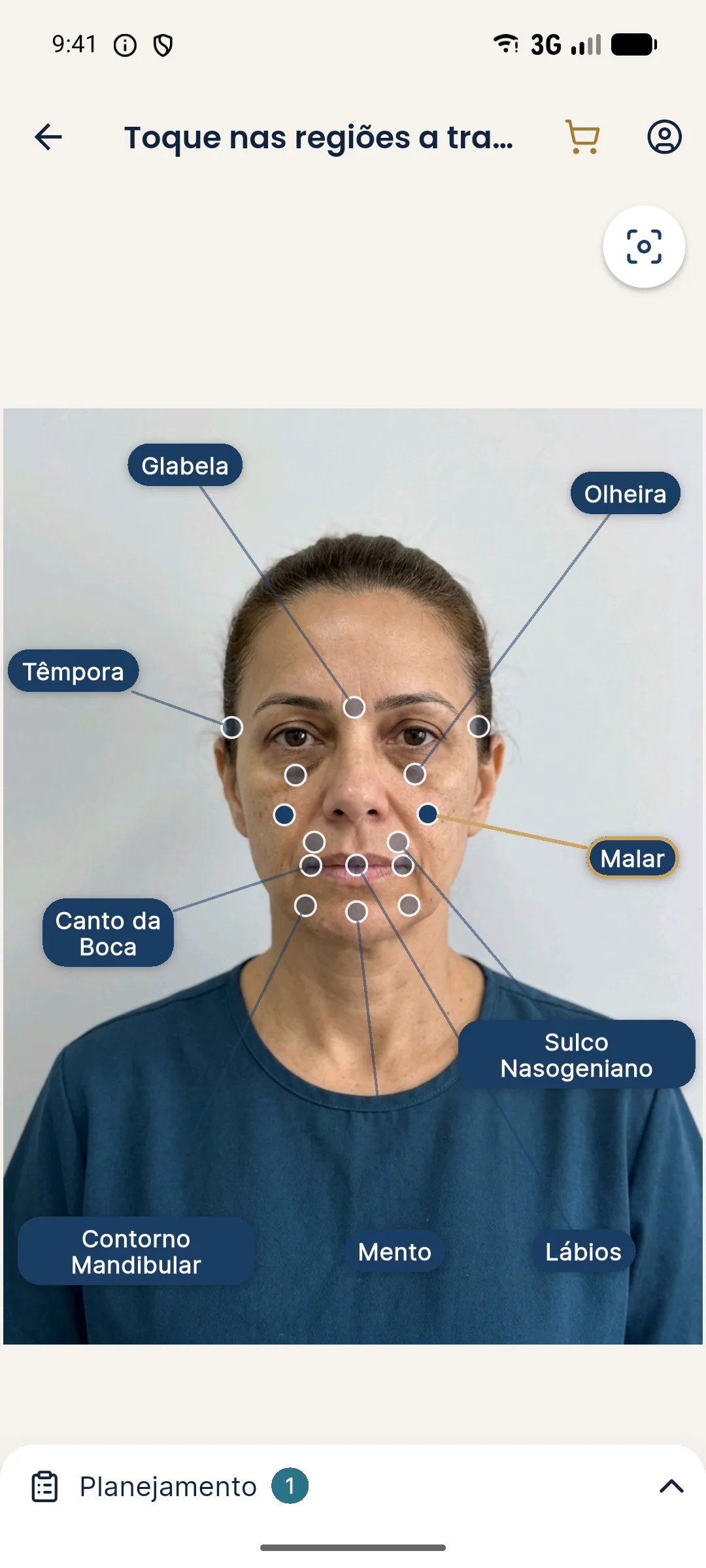
A good practice is to generate one projection with the cheekbone only and another with cheekbone and jaw, and show both to the patient. That way they see what each decision changes. The "Full harmonization" shortcut brings cheekbone 2 ml, jaw 2 ml, and chin 1.5 ml, all at Moderate, but it is a starting point, not a prescription. For comparing the effect between intensities, see comparing Subtle, Moderate, and Pronounced intensities.
When should you not combine cheekbone and jaw?
There are situations where the best plan is a single area, or neither for now:
- When the concern is a hypertrophic masseter and the jaw is already wide; the clinical path is different, as in jaw and masseter: filling and relaxing in the same plan.
- When the patient has significant laxity: volume does not replace support, and perhaps biostimulator and filler combined or another path is on the agenda.
- When the concern is the eyes: the cheekbone can help, as in cheekbone and under-eye area: why combine in the plan.
- When the patient's expectations exceed what the face can carry; see explaining that a simulation is not a guarantee.
Every volume, product, and technique is a decision for the qualified professional, according to the rules of their professional council, and the simulation is always illustrative.
Frequently asked questions
Should the cheekbone and jaw be treated together?
It depends on the proportion between the two widths. If the difference comes from one of them, treating only that one may be enough. The decision belongs to the professional, after assessing the whole.
What is the V-shaped contour?
It is the perception of a face that is wider in the midface and narrows continuously down to the chin. It is a description of perception, not a mandatory goal.
Which area is assessed first, cheekbone or jaw?
Generally, the relationship between the two is assessed first on the frontal photo and in profile, and the priority is decided afterward. The order of injection is a clinical choice.
Can I simulate cheekbone and jaw in the same projection?
Yes. In Harmy you mark both areas, enter the ml for each, and choose the intensity. The projection is illustrative and does not promise results.
Harmy images are illustrative simulations generated by AI from the patient's photo to support the conversation between practitioner and patient. They are not a promise of results. Indication, technique, product and volume are solely the decision of the licensed practitioner. This content is for information only and does not replace a clinical assessment.