
Biostimulator and Filler: How to Divide Treatment Areas

Quick facts
- Logic
- Biostimulator for gradual quality and support; hyaluronic acid for immediate volume and fine adjustment
- Sequence
- Set by the professional, based on assessment, product and the patient's tolerance
- Attention
- A biostimulator cannot be reversed with hyaluronidase; hyaluronic acid can
- Expectation
- The stimulation effect shows in weeks to months, while the filler effect shows right away
Planning with two types of product changes the reasoning. Hyaluronic acid delivers volume on the spot and can be adjusted. A collagen biostimulator works slowly, over months, and has no undo button. Mixing the two without logic produces expensive plans and results that are hard to read. Separating what each does best produces plans that are clearer and more honest with the patient.
This page proposes a way of reasoning about dividing areas, without an injection protocol or brand recommendations. The decision about product, dose and technique belongs to the licensed professional, following the product label and the rules of their professional council. For an overview of biostimulators, see biostimulators: overview.
What does each product do best?
| Feature | Collagen biostimulator | Hyaluronic acid |
|---|---|---|
| Main effect | Gradual collagen stimulation, better quality and support | Immediate volume and contour |
| Onset of effect | Weeks to months | Immediate, with initial swelling |
| Fine adjustment | Limited | Good |
| Reversibility | No specific enzyme | Reversible with hyaluronidase |
| Duration | Usually longer, varying with product and patient | Usually shorter, varying with product and area |
| Typical use in the plan | Support and quality over broad areas | Localized volume, contour and refinement |
Differences in how hyaluronic acid behaves, such as G prime and cohesivity, enter into the choice of product. Collagen stimulation is a biological process, and its intensity varies with the patient. See also calcium hydroxyapatite and volumization.
How do you think about dividing areas?
One question organizes the decision: is the problem in the area localized volume or loss of support and quality?
- Localized volume and contour: lips, chin, specific folds, adjusting asymmetries. They call for immediate delivery and the possibility of correction. Generally, hyaluronic acid makes more sense.
- Support and quality over broad areas: midface, jawline, neck, where the skin and its support have lost firmness. Gradual stimulation may make sense.
- High vascular risk areas: glabella, nose, temples, tear trough. The choice of product weighs the risk and the possibility of reversing it. See vascular danger zones of the face.
This is a line of reasoning, not an indication table. Product, plan and technique are the professional's decision, after assessment.
What sequence usually makes sense?
There is no single rule. Two lines of logic appear in practice:
- Stimulation first, volume later: start with the support base and leave the fine volume adjustment for later, when the result of the stimulation is already showing. This avoids overfilling what stimulation would have improved.
- Volume first, stimulation later: solve the immediate concern and bring in stimulation as maintenance of quality.
The choice depends on the concern, expectations, patient tolerance and routine. What matters is explaining the logic and agreeing on stages. See staged plans.
Which combinations deserve more care?
Some situations require extra attention, and the decision belongs to the professional.
- Overlap in the same area: adding different products in the same spot can make it harder to read what each one does, and complicate correction if something does not go as expected.
- Thin tissue: areas with little coverage, such as the under-eyes and temples in lean faces, call for careful selection. See biostimulator in the under-eye area and biostimulator in the temples.
- Neck and broad areas: require their own considerations. See biostimulator in the neck and full face biostimulator.
- History of previous products: requires a careful history of what has already been injected and where.
How do you explain the difference to the patient?
Patients often think these are "two ways of filling." The clearest explanation is by function: one gives volume now, the other improves support gradually.
Setting a time expectation is part of the conversation. If the patient expects an immediate change from a biostimulator, frustration is almost certain. See biostimulator: how long does it last.
How does Harmy fit into the combined plan?
In Harmy, you mark the areas and set ml and intensity per area. The projection illustrates the volume change without distinguishing the product. So when you use the simulation in a combined plan, make clear that it shows an idea of the volume result, not the gradual effect of the biostimulator.
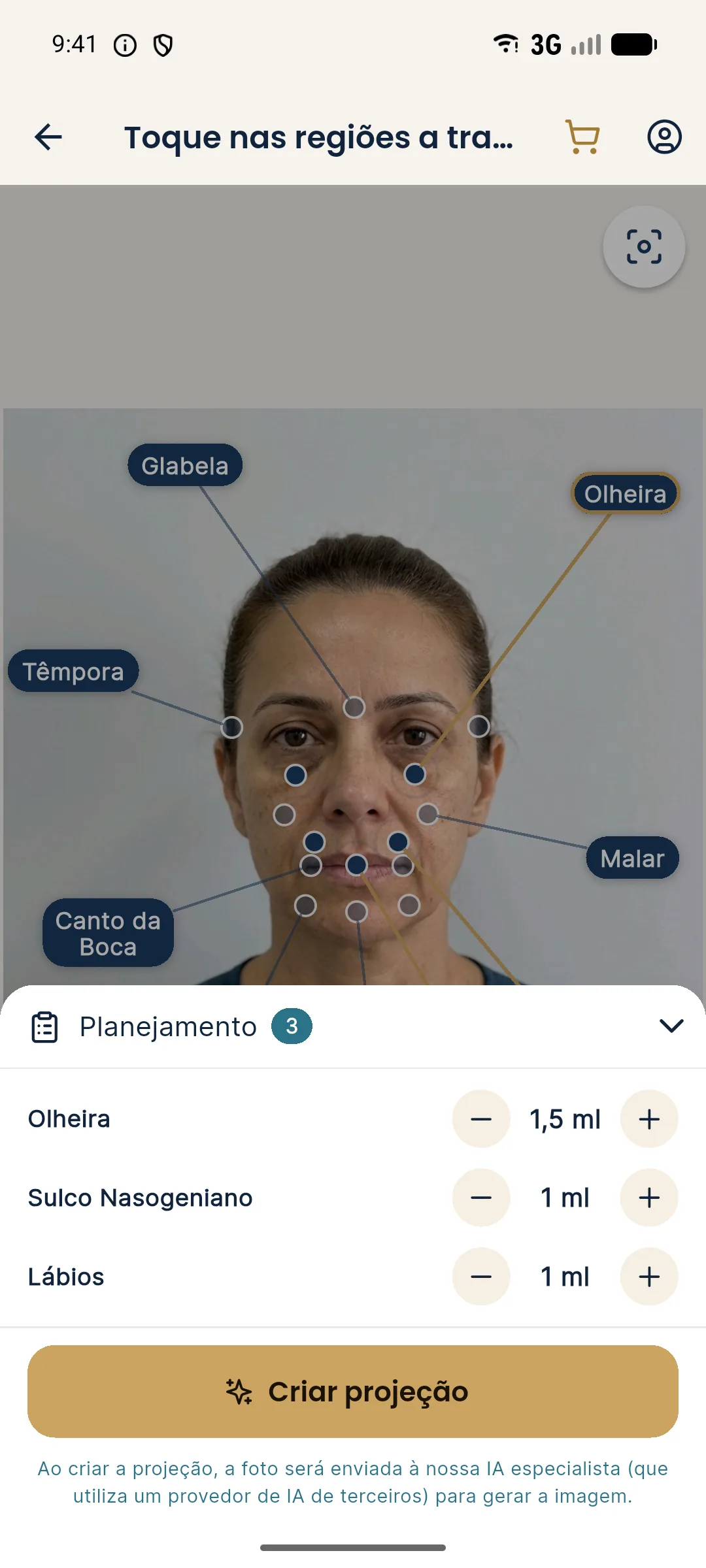
For the quote, the price per ml saved in My clinic serves as the basis for areas with hyaluronic acid. Products charged per vial or per session can be described in the quote notes. See pricing a collagen biostimulator.
Combined plan checklist
Quick quiz
Frequently asked questions
Can I combine a biostimulator and hyaluronic acid in the same plan?
Yes, and it is common. The biostimulator works on tissue quality and support over weeks, and hyaluronic acid delivers immediate volume and allows fine adjustment. The division of areas and the sequence are at the licensed professional's discretion.
Which area gets a biostimulator and which gets filler?
There is no single rule. A biostimulator is usually considered where the problem is loss of support and quality, and hyaluronic acid where the problem is localized volume or contour. The choice depends on the assessment.
Can a biostimulator be undone the way hyaluronic acid can?
No. Hyaluronic acid can be broken down with hyaluronidase, and a biostimulator has no equivalent enzyme. That is why deciding where and how much to inject calls for even more judgment.
Does Harmy simulate a biostimulator?
The projection works with areas and volume in ml, without distinguishing the product. It illustrates the volume change but does not represent the gradual stimulation effect of a biostimulator.
Harmy images are illustrative simulations generated by AI from the patient's photo to support the conversation between practitioner and patient. They are not a promise of results. Indication, technique, product and volume are solely the decision of the licensed practitioner. This content is for information only and does not replace a clinical assessment.