
Aging face: where it starts and how to plan treatment

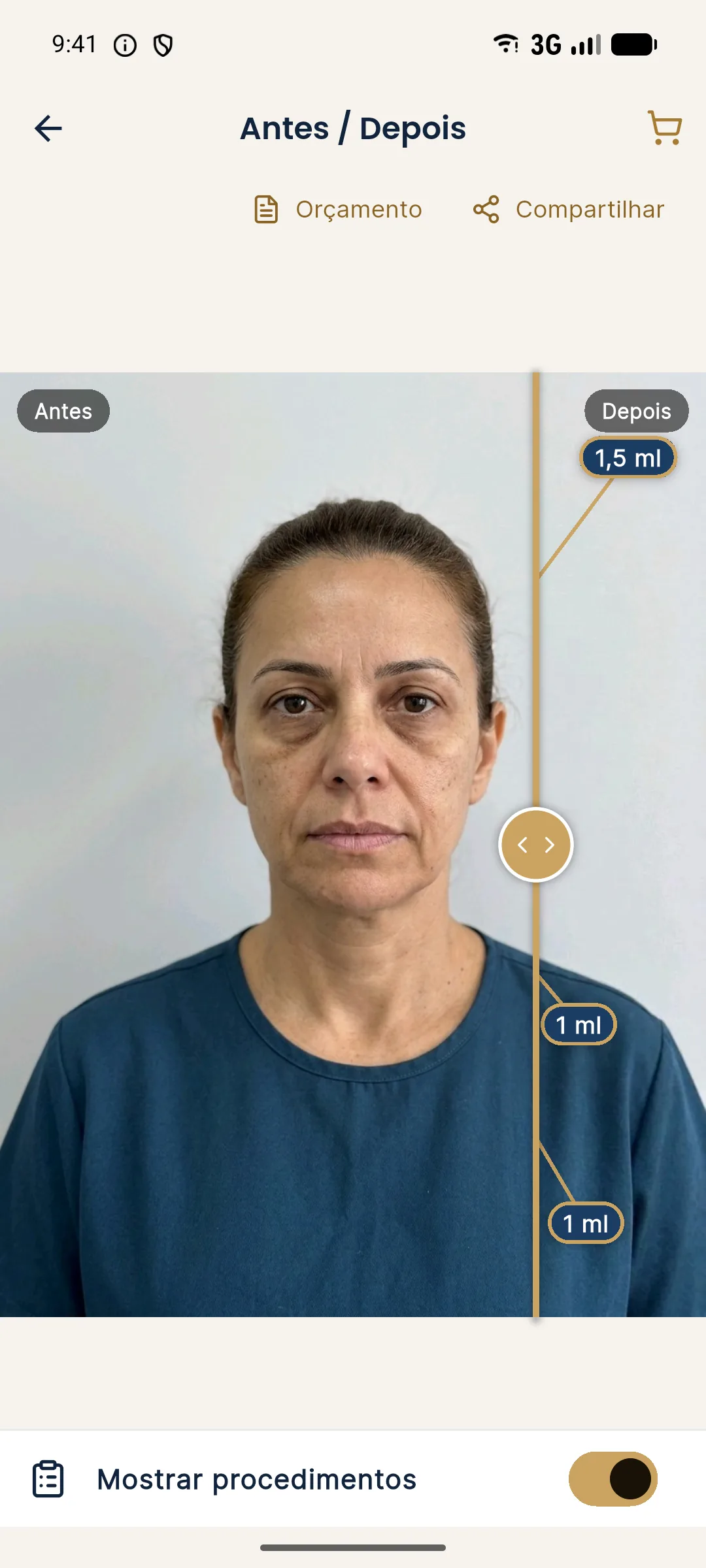
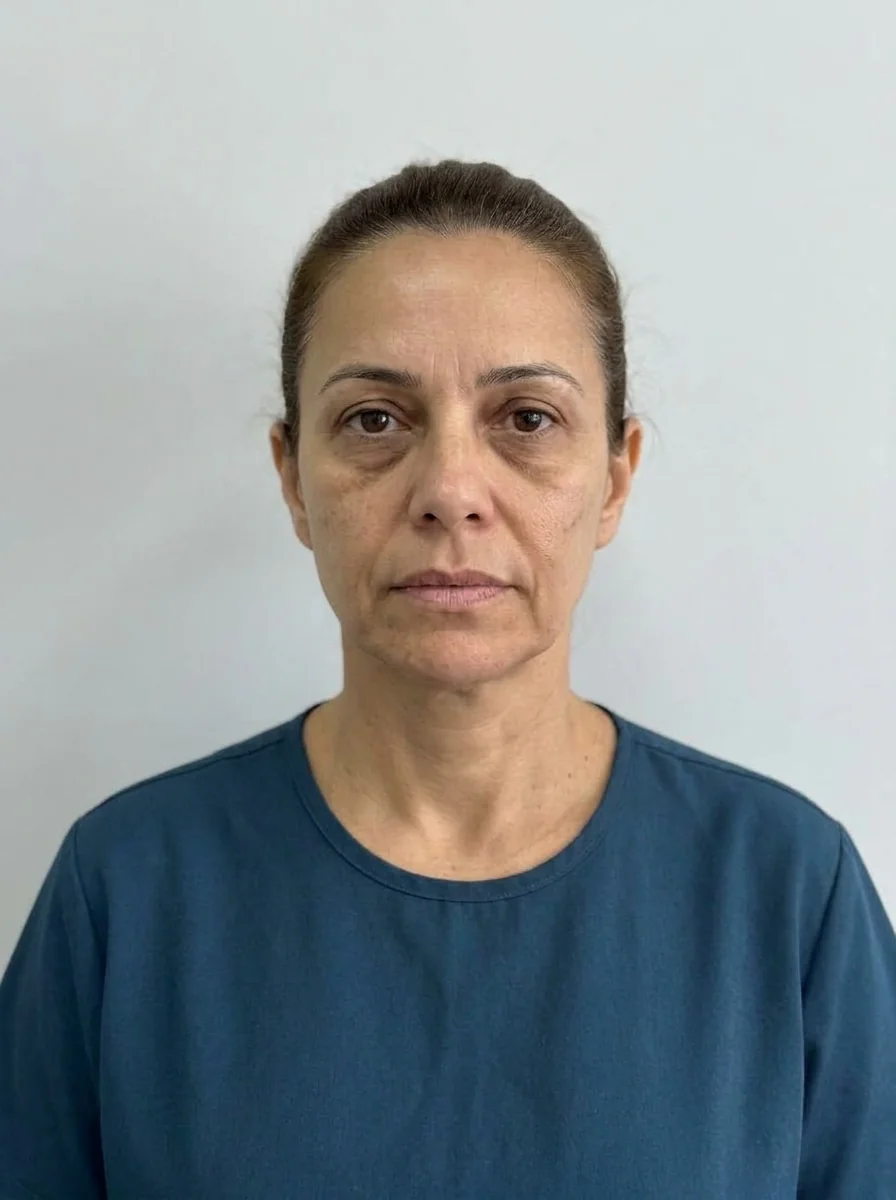 BeforeSimulation
- Nerve
- Highlighted area
Quick facts
- Concern
- A face that looks older than the patient's age, or that aged "all at once"
- Key insight
- Aging is multifactorial, with bone, fat, muscle and skin changing at different paces
- Supporting measure
- Layer map, standardized photos and comparison with an old photo
- Limit
- No procedure stops time, and the goal is to soften the signs naturally
"My face looks old" is a complaint too broad to act on directly. Behind it are dozens of small changes that add up: an eyebrow that dropped, a cheek that lost height, a jawline that blurred, skin that lost its glow. A professional who treats the phrase as a single request tends to place product in the wrong spot.
This page offers a map by layer and by area, so the complaint becomes a plan. It does not replace the pages for each specific area, and works as a starting point for deciding which of them to dig into. For narrower angles, see face at 40, face at 60: volume loss and aging face in profile.
Which layers age, and how?
The face ages in five layers, and each has its own pace. Understanding this dispels the idea that "wrinkles" sum up the whole process. Facial aging by layers describes the whole picture, and the layers of the face are the anatomical foundation.
- Bone: resorption of the orbit, maxilla and mandible over the years, which reduces support and changes the shape of the face.
- Fat: loss and displacement of the fat compartments, with hollowing of the cheek and temple and buildup in the jowls and under the chin.
- Muscle: repeated action that etches dynamic lines, and hypertonia that pulls on the brow and the corners of the mouth.
- Ligaments: loosening of the anchoring, which lets tissue descend.
- Skin: loss of collagen, elastin and hydration, with fine lines, laxity and spots.
External factors speed the process up: sun, smoking, weight changes, poor sleep and genetics. The patient assessment should include these habits, as in habits that change the plan: sun, smoking and sleep.
How does each area age?
The face does not age uniformly, and the plan follows that regional logic. Dividing it into thirds helps organize the assessment.
| Third | Common signs | Layer in focus |
|---|---|---|
| Upper | Forehead lines, glabellar frown line, low brow, hollow temple | Muscle, skin and temporal fat |
| Middle | Flat cheekbone, tear trough, nasolabial fold, descending cheek | Fat, ligaments and bone |
| Lower | Perioral lines, downturned mouth corner, jowl, recessed chin | Muscle, fat and bone |
Each third has its own pages: forehead and brow aging, midface aging, perioral aging and chin and jaw aging.
Which facial harmonization tools fit each layer?
No single tool does everything. The choice follows the predominant layer and the limits of each technique. Here is a summary, always at the discretion of the qualified professional and in line with the rules of their professional board in Brazil.
- Botulinum toxin for dynamic lines and to balance muscle action. See toxin in the glabella.
- Filler for volume and support in the cheekbone, temple, chin and jaw. See cheekbone filler.
- Collagen biostimulator for skin quality and firmness. See biostimulators: overview.
- Thread lift, in selected cases, with restricted indication.
- Complementary skin treatments, outside the scope of this page.
All of them carry risks. Fillers demand vascular attention, especially in the glabella, temple and nasolabial fold, with hyaluronidase on hand. Toxin can cause asymmetry and transient ptosis. A biostimulator can form nodules, and the technique requires rigor. Informed consent must cover all of this, as the glossary entry on informed consent reminds us.
What is the best order?
Start with structure. That means treating support (cheekbone and, when indicated, temples and jaw) before folds, lines and details. Toxin can go in parallel, because it acts on a different plane. The general logic is in structure before detail and in biostimulator and filler combined by area.
Avoid the mistake of treating the worst-looking third without looking at its neighbor. An empty midface makes the fold look worse than it is, and a blurred jawline makes the chin look smaller. The chain-effect reasoning appears in domino effect between facial areas.
How do you talk about what facial harmonization delivers?
The patient with an aging face often expects a change in age. The honest conversation is about softening and naturalness. A useful phrase is: "my goal is for the people who know you to still recognize you, just more rested". Avoid numbers of years and images of much younger models. The pages setting expectations for mature skin and how to talk about age in the consultation offer scripts.
How does Harmy help?
In Harmy, the patient sees the subtle projection of the marked areas. For the aging face, the most useful points are Cheekbone, Nasolabial Fold, Jawline and Glabella, and the "Full harmonization" shortcut can serve as a starting point, always adjusted to the case. The projection does not change skin, spots, fine lines or laxity, and that should be said out loud.
Frequently asked questions
Where does facial aging start?
There is no single starting point. Many early signs show up in the forehead and eyes, while midface volume loss and a descending jawline gain weight from about 35 to 45, with wide individual variation.
Filler or toxin for an aging face?
It depends on which layer predominates: toxin acts on dynamic lines, filler on volume and support, and a biostimulator on skin quality. The combination is defined by the qualified professional after an assessment.
Can the face be rejuvenated?
Signs of aging can be softened and harmony improved, without promising a specific age. The realistic goal is a rested, natural-looking face.
Should I treat everything at once?
Generally not. Working in stages with reassessment preserves naturalness and lets you adjust to the pace of the face.
Harmy images are illustrative simulations generated by AI from the patient's photo to support the conversation between practitioner and patient. They are not a promise of results. Indication, technique, product and volume are solely the decision of the licensed practitioner. This content is for information only and does not replace a clinical assessment.