
Facial Rejuvenation Plan in Harmonization: Areas and Order

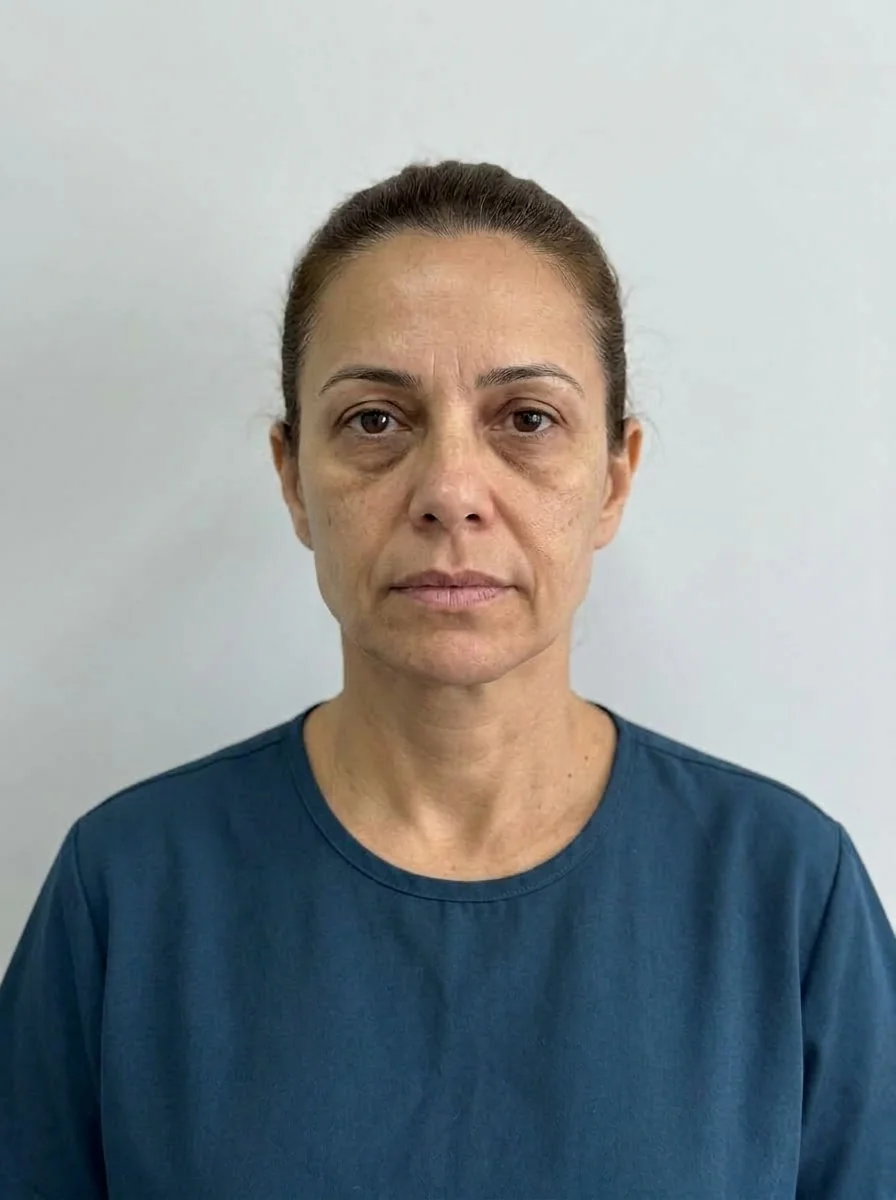 BeforeSimulation
- Nerve
- Highlighted area
Quick facts
- Topic
- Facial rejuvenation plan in harmonization
- Core logic
- Layers: skin, support, volume, contour and expression
- Usual order of reasoning
- Foundation and support before detail and folds
- Risk of the plan
- Adding everything and losing the identity of the face
- Language
- A more rested look, never "years younger"
Rejuvenating the face is not about one area, it is a conversation about layers. Skin, fat, ligaments, muscles and bone age in different ways, and facial harmonization can act on some of those layers, not all of them. This page proposes a layered plan structure, with an order of reasoning that protects naturalness, and shows where the simulation helps and where it falls short.
What does "rejuvenate" mean in the plan?
The term is the patient's, and your job is to translate it into findings. What usually lies behind it: shadows under the eyes, cheeks that have dropped, deeper folds, fixed expression lines, loss of contour definition and dull skin. Each finding belongs to a layer. See facial aging by layers and facial layers for the anatomical basis.
Avoid promising "years younger". Honest language speaks of a more rested, more balanced or better supported look, always with "may" and "in general". That protects the patient from an unrealistic expectation and protects you from complaints.
How do you organize the plan by layers?
A practical rule: when you think in layers, you reduce the risk of treating the symptom (the fold) and forgetting the cause (the loss of support). The logic complements structure before detail in the harmonization plan and treating from top to bottom or bottom to top.
Which tools act on each layer?
| Layer | Tools usually considered | Note |
|---|---|---|
| Skin | Skincare, skinbooster, biostimulator, peels | Prepare the skin before volume |
| Support | Volumizing filler, biostimulator, threads | The choice depends on the indication and the biotype |
| Folds | Superficial filler, reassessment after support | Beware of overload in risk areas |
| Contour | Filler, biostimulator, threads | Distinguish laxity from volume |
| Expression | Botulinum toxin | Balance between antagonist muscles |
The choice of product, volume and technique belongs to the qualified professional, in line with the rules of their professional council. Read more in threads and filler: order in the plan and biostimulator and filler: combining areas.
Which areas come first?
There is no single answer, but a common line of reasoning is: support first (cheekbone and temples), then contour, and only then folds and details. The reason is that restoring support changes how the folds and the contour read, and doing the detail first can force you to redo it. The plan for a tired face goes into this in facial harmonization plan for a tired face.
For the areas of highest vascular risk (temples, nasolabial fold, glabella, nose and tear trough), planning must include vascular anatomy, hyaluronidase available on site when hyaluronic acid is used, and a consent form explaining vascular occlusion. See vascular danger zones of the face.
How do you use the simulation without overdoing it?
In Harmy, the projection uses one frontal photo and simulates the effect of volume in specific areas, in a subtle way. That helps show that a rejuvenation plan is made of small changes. The projection does not alter skin, texture, spots, lines or color, because the prompt forbids retouching and makeup, so it should not be used as a "rejuvenating effect".
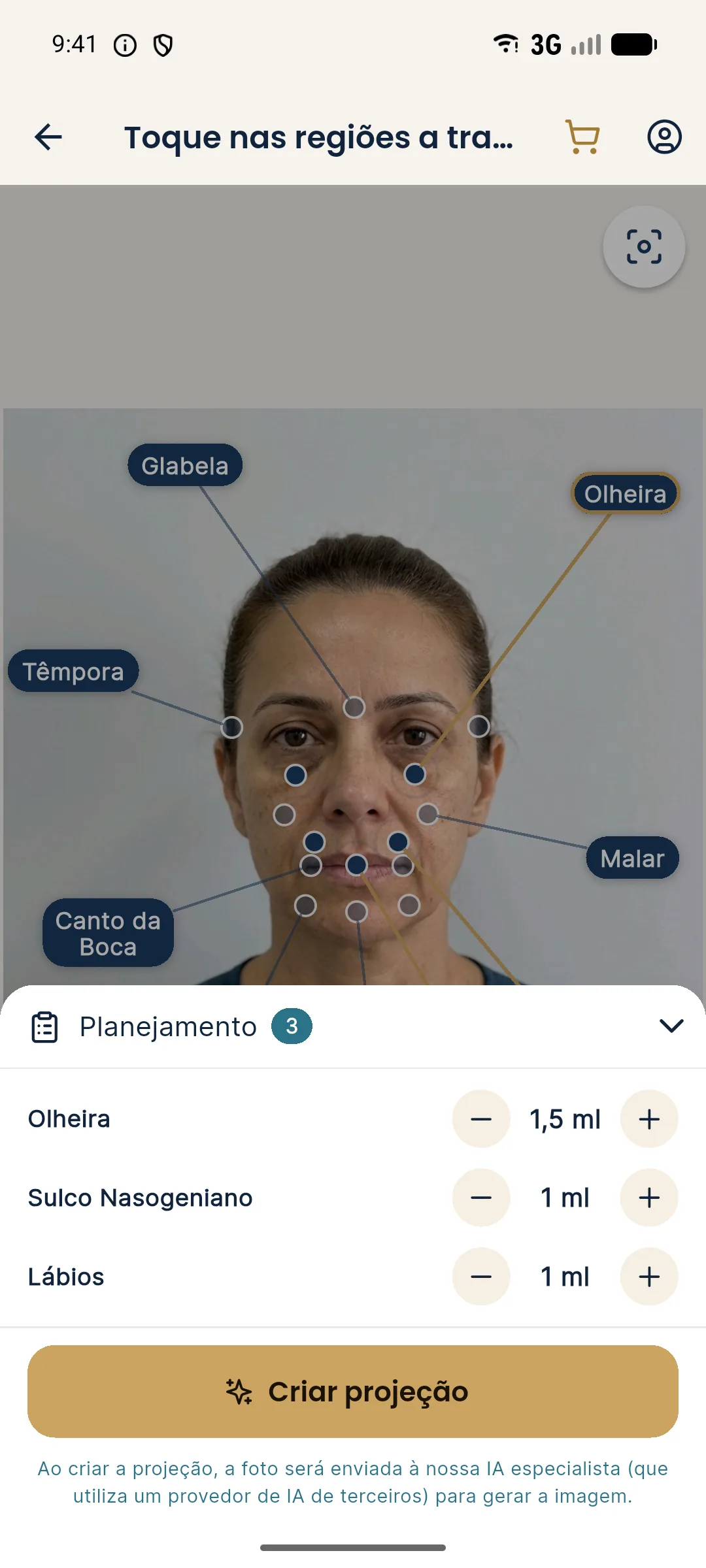
Use the "Show procedures" feature to display the ml of each area over the After, and discuss with the patient what they see and what they do not. The "Full harmonization" shortcut (cheekbone 2 ml, jaw 2 ml, chin 1.5 ml, lips 1 ml and fold 1 ml at Moderate; tear trough 1 ml at Subtle) can serve as a starting point for conversation, but it is not a volume recommendation.
For the conversation about limits, read limits of 2D simulation and AI simulation: what it changes and what it does not.
How do you avoid a "redone" face?
The biggest risk of a rejuvenation plan is accumulation. Each area on its own looks small, and the whole changes the identity. Three safeguards help: preserve inherited and family traits (see facial identity: how to preserve it), limit the total volume per stage and reassess with photos before continuing. See also when total volume becomes excess.
How do you organize time and budget?
A rejuvenation plan usually has more than one stage, and that should be clear in the quote. Show the price by area and by stage, the validity and what is included (touch-up, reassessment). Avoid closed packages that force the patient to buy everything. See linking plan and quote in facial harmonization, prioritizing by the patient's budget and harmonization plan in three sessions.
How do you handle skin within the plan?
Skin is the layer the patient sees most and the one most often left out of the plan. Texture, spots, pores and glow respond to daily care, to skin procedures and to habits, and volume solves none of that. Dry or photoaged skin can cancel out the effect of good support, and a plan that only treats volume leaves the patient feeling that "something is still missing".
That is why it is worth talking about skin at the very first visit and, when it makes sense, preparing the tissue before any injectable. The professional decides what to offer, what to refer and what to merely advise. See skin quality and skincare integrated into the harmonization plan.
How do you measure whether the plan worked?
Not by the patient's impression in the mirror, which shifts with mood, light and sleep. Measure with standardized photos in the same framing, with a short list of findings defined at the start (for example, shadow under the eye, depth of the fold, contour definition) and with the satisfaction the patient states in their own words. Define those findings at the visit and reread them at reassessment. That turns "rejuvenate" into observable goals, as described in plan goal measured in observable results.
Reasoning quiz
Summary
Think in layers, start with support, treat few areas per stage, preserve identity and use the simulation as a subtle aid. Rejuvenation, in facial harmonization, is a set of small, well-documented decisions, not a package.
Frequently asked questions
Where do you start a facial rejuvenation plan?
In general, with an assessment of the layers: skin, support and volume, contour and expression. Many plans start with support and leave folds and details for later.
Do I need to treat the whole face to rejuvenate?
No. Short plans focused on a few areas tend to look more natural. The whole face only comes into play when the assessment justifies it, in stages.
Can toxin, filler and biostimulator be combined?
They are often combined, because they act on different layers. The combination and the order depend on the finding, the patient and the professional.
Does Harmy's simulation show rejuvenation?
It shows the subtle effect of the marked volume in specific areas. It does not rejuvenate with a filter, does not alter skin and does not promise results.
Harmy images are illustrative simulations generated by AI from the patient's photo to support the conversation between practitioner and patient. They are not a promise of results. Indication, technique, product and volume are solely the decision of the licensed practitioner. This content is for information only and does not replace a clinical assessment.