
Facial Harmonization Plan for a Tired Face: Support First

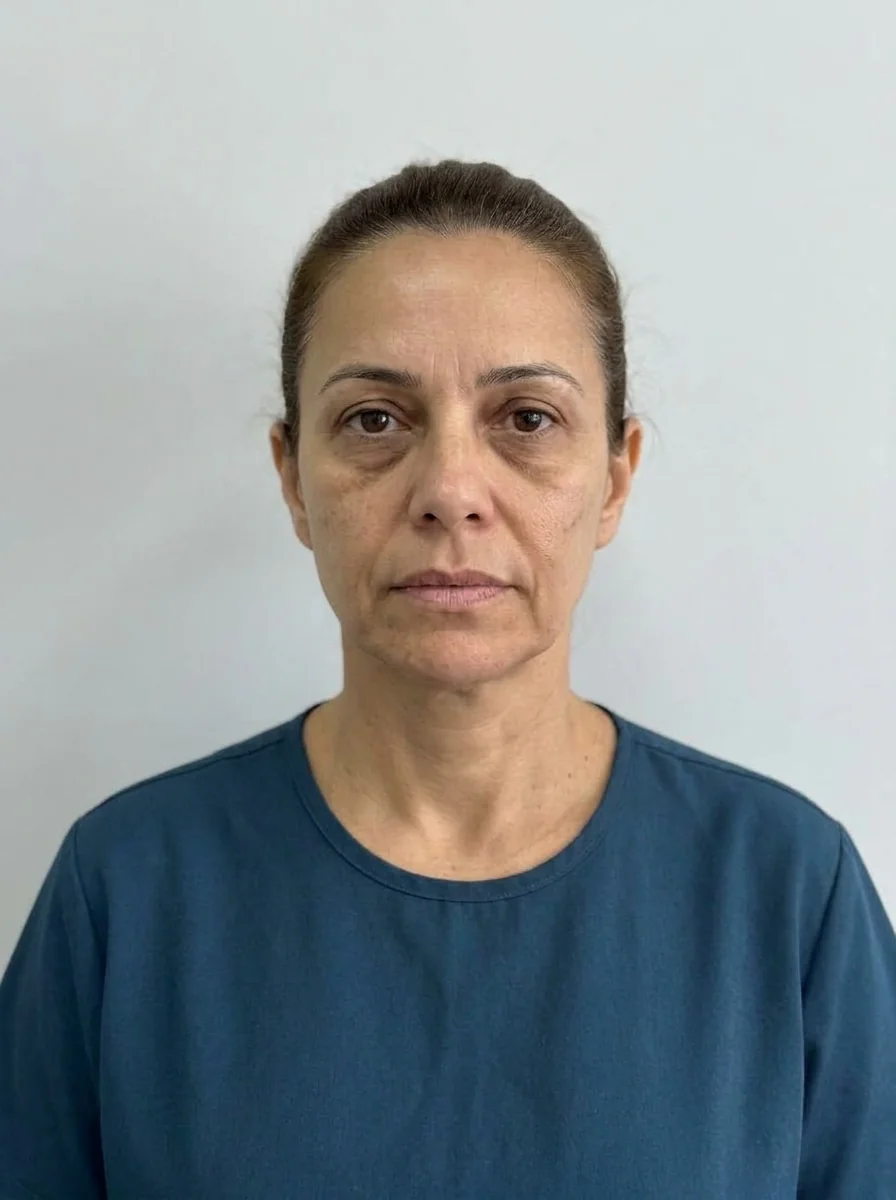 BeforeSimulation
- Highlighted area
Quick facts
- Topic
- Facial harmonization plan for a tired or sagging face
- Core principle
- Restore support before treating the fold it causes
- Usual order of reasoning
- Structure, midface, eyes, then folds
- Common mistake
- Filling the fold on its own and leaving the face heavy
- Caution
- Assess sleep, weight, skin and health before treating the appearance
"I look tired" is one of the most common concerns and, at the same time, one of the most misleading. A tired face can come from loss of support, thin skin, habits, poor sleep or a health condition, and only part of that has an answer in facial harmonization. This page organizes the reasoning behind the plan when the goal is a more rested look, built around one simple principle: restore support before treating the fold that the loss of support produces.
What does "tired face" mean in the assessment?
Patients tend to use the term to describe shadows under the eyes, cheeks that have lost their highest point, downturned mouth corners, deeper folds and dull-looking eyes. In the assessment, it helps to break the concern down into concrete findings: where the shadow is, where it comes from and what happens when smiling and at rest. See tired eyes: assessment, tired face and the patient's question in tired face: what to do.
Why does support come before the fold?
The nasolabial fold (smile line) is often the result of a midface that has lost projection and descended. When the professional fills the fold without restoring support, the volume sits in the lower face, which already tends to descend, and the result can look heavy or "overfilled". By restoring support, the fold may improve through traction and surface replacement, and sometimes little is left to treat. Read more in treating the fold or the cause of the fold and nasolabial fold and cheekbone: combining them in the plan.
What is the order of reasoning in the plan?
The sequence below is a way of organizing your thinking, not a rule of application. The decision on product, volume, plan and technique belongs to the qualified professional, in line with the rules of their professional council in Brazil.
The logic of treating from top to bottom is in treating from top to bottom or bottom to top, and the layered view is in facial aging by layers.
Which areas usually come into play?
| Area | Role in the tired look | Caution |
|---|---|---|
| Temples | Hollowing that accentuates a sunken look | Vascular area; conservative volume |
| Cheekbone | Midface support | Avoid excessive width |
| Under-eye area | Shadow under the eye | High risk of Tyndall effect and swelling; thin skin |
| Nasolabial fold | Sign of lost support | Reassess after support |
| Mouth corners and chin | Sad or tired expression | Assess the muscular and support causes |
See the page for each area: temples, cheekbone, under-eye area and nasolabial fold. For the effect of drooping eyes, read heavy-looking eyes and sad-looking eyes.
How do you simulate a support plan in Harmy?
The projection helps show that a rested look often comes from small changes. In Harmy, mark the Cheekbone and, if it fits, the Temple or the Tear Trough, set the ml and the intensity, and compare the Before and the After on the slider. A good consultation exercise is to make two projections: one with support only and another with the fold included, so the patient can see the difference in how heavy the face looks.
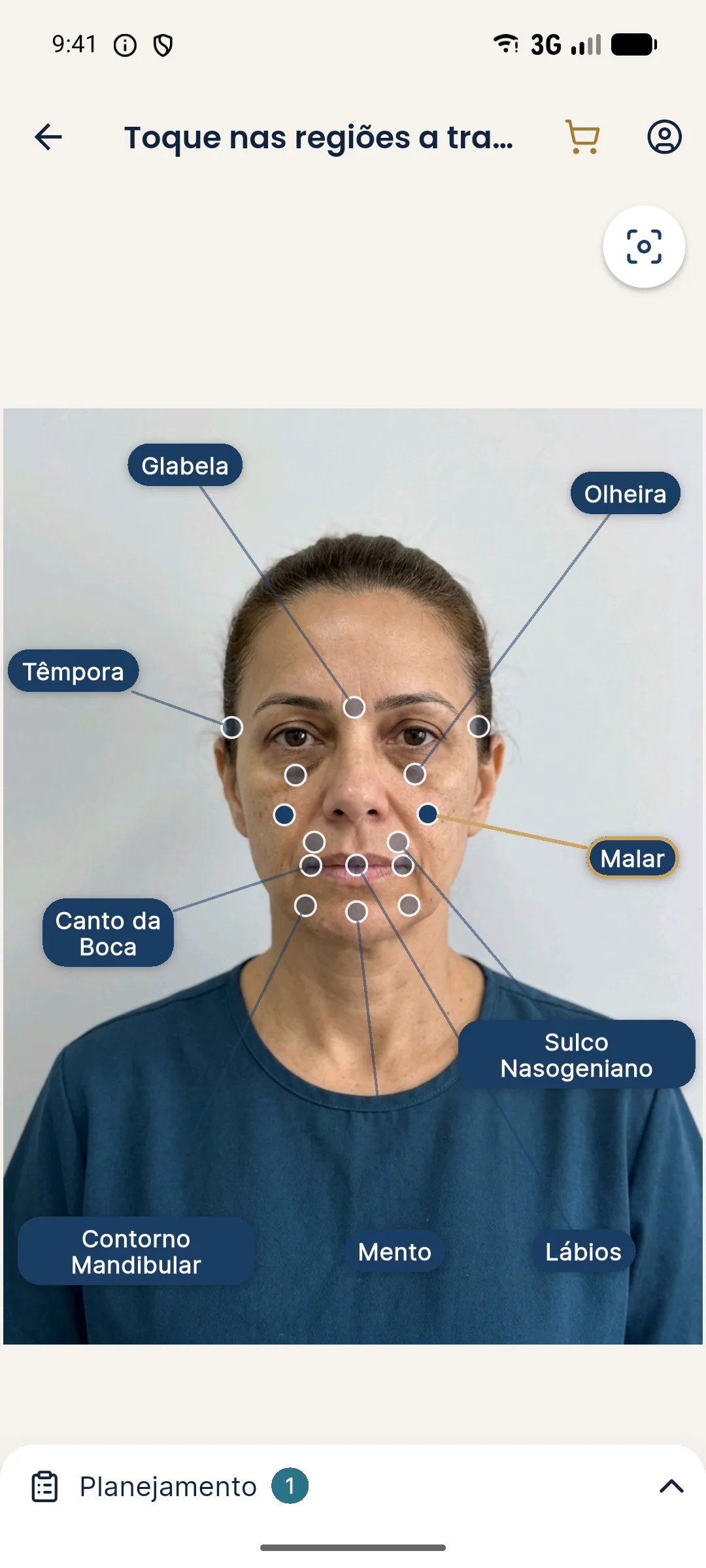
The AI respects the volume you enter and does not change skin, makeup, expression, hair or lighting. That is why it does not "rest" the eyes with a filter: it shows only what the marked volume could change. See simulation with more than one scenario and comparing Subtle, Moderate and Pronounced intensities.
What to do when the cause is not related to facial harmonization?
Anemia, thyroid changes, medication use, sleep deprivation or mental health conditions can sit behind a "tired face". If the patient reports real fatigue, refer her for medical evaluation before any procedure. And if the concern is about appearance but the exam shows healthy skin and preserved support, a frank conversation is worth more than a procedure. The approach is described in when to say no to an aesthetic plan and findings the patient did not ask about in the plan.
How do you talk to the patient?
Use the language of function, not of flaws. Instead of "you are sagging", say "the support under the cheek has dropped and that accentuates the fold". Focusing on structure helps the patient understand why you suggest treating the cheekbone to improve the fold, rather than treating the fold directly.
How do you avoid a heavy-looking face?
A heavy face comes from volume added in the lower areas, from excess product and from a lack of reassessment. To avoid it, work in stages, preserve mobility and expression, and always compare with the initial photos. See pillow face: how planning avoids it and heavy face from old filler.
Reasoning quiz
Summary
For a tired face, start with support, treat few areas, reassess the folds afterward and separate a tired appearance from tiredness caused by health. The simulation works as a visual aid and does not replace the exam or the explanation of risks.
Frequently asked questions
What comes first in a tired face: the fold or the cheekbone?
In general, the reasoning tends to start with support (midface and temples) and only then asks whether the fold still bothers the patient. Treating only the fold can leave the face heavy.
Does a tired face always need filler?
No. Poor sleep, weight, sun, tobacco, dehydration and health conditions also play a part. The assessment should separate a tired appearance from causes that are not related to facial harmonization.
How many areas go into a plan for a sagging face?
It depends on the face, but short plans tend to work better to begin with. In general, one or two support areas and a reassessment, before adding others.
Does the simulation help with this kind of plan?
It helps show that the expected change is subtle and that the fold may improve without being treated directly. It is illustrative and does not promise results.
Harmy images are illustrative simulations generated by AI from the patient's photo to support the conversation between practitioner and patient. They are not a promise of results. Indication, technique, product and volume are solely the decision of the licensed practitioner. This content is for information only and does not replace a clinical assessment.