
Tired-looking face: what can facial harmonization do?

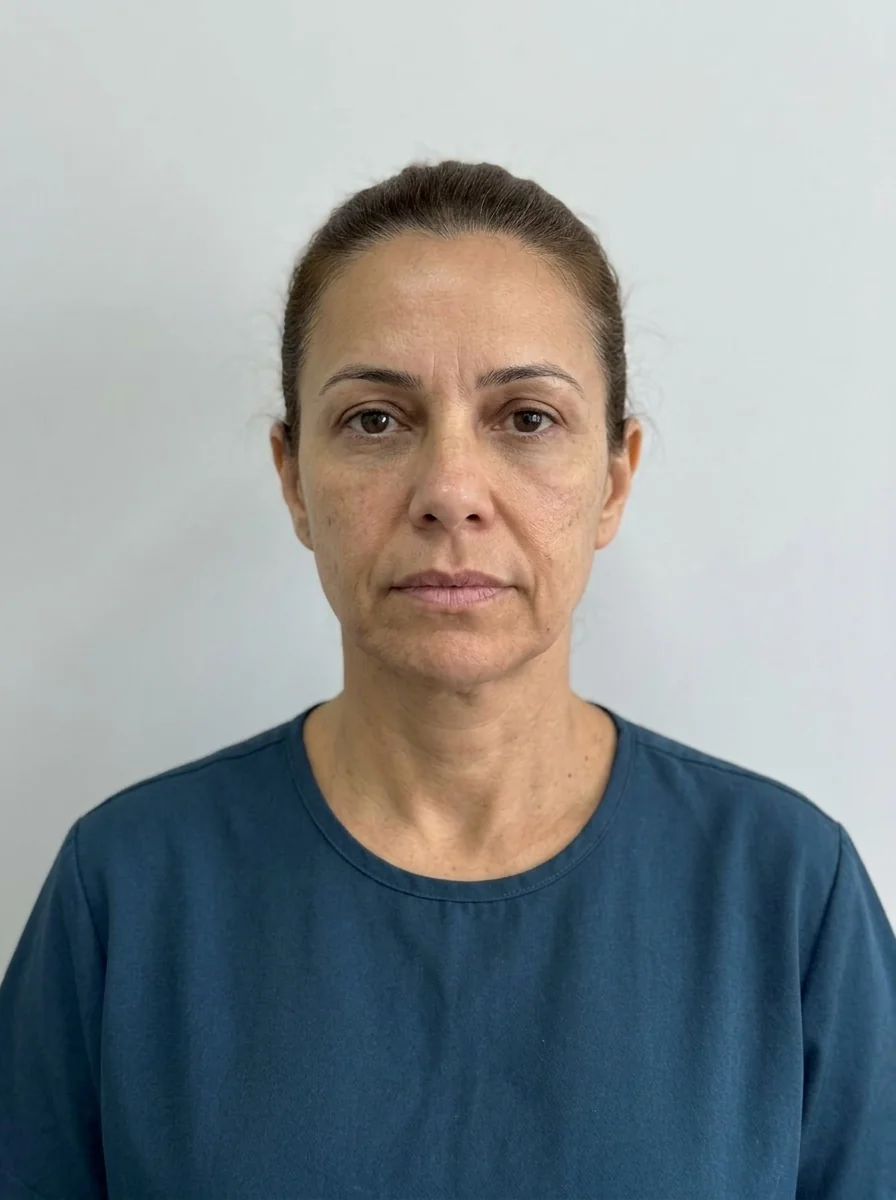 BeforeSimulation
Quick facts
- Question
- What to do about a tired-looking face
- Common causes
- Under-eye hollows, volume loss, and shadows
- Starting point
- Understand the cause before choosing the area
- Who decides
- Qualified professional, after assessment
The short answer: harmonization can help with a tired-looking face when it comes from volume loss, shadows, and under-eye hollows, by adjusting areas such as the tear trough and the cheekbone. But "tired" is an impression, not a diagnosis, and not every cause is solved with an injectable. This page helps you break down the concern and choose the starting point.
What the patient means by "tired"
When someone says "I look tired," they may be talking about different things, and each one calls for a different path:
| What the patient sees | Possible cause | Path to consider |
|---|---|---|
| Dark shadow under the eyes | Groove (tear trough) or pigmentation | Assess groove versus pigment |
| "Sunken" cheek | Midface volume loss | Cheekbone support |
| Downturned mouth corners | Volume loss and sagging | Plan for the area |
| Dull skin | Skin quality | Skincare and other procedures |
| Heavy-looking eyes | Brow, eyelid, sleep | Assessment beyond injectables |
The question "what do you see in the mirror?" settles more than any test. Often the under-eye complaint is really about a cheek that has descended, and treating the cheek softens the shadow.
Tear trough, cheekbone, and the order of the plan
The tear trough and the cheekbone are connected. When the midface has lost support, the transition between the lower eyelid and the cheek becomes obvious, and the shadow appears. In general, treating cheekbone support before touching the tear trough can reduce the amount of product needed in the most delicate area. For this logic, see under-eye hollows: filler or biostimulator and cheekbone filler.
When the problem is not volume
Not every tired look can be treated with an injectable. Pigmentation, eyelid sagging, fat pads, poor sleep, and habits all count. A good assessment includes saying when a procedure is not the answer, a topic also covered in eye bags and filler.
How to simulate with the patient in Harmy
In Harmy you mark the Tear Trough and Cheekbone points, choose the ml (from 0.5 to 5 ml, in 0.5 steps) and the intensity (Subtle, Moderate, or Pronounced). The "First time" shortcut brings the tear trough at 1 ml in Subtle; "Full harmonization" brings cheekbone 2 ml and tear trough 1 ml in Subtle, as starting points.
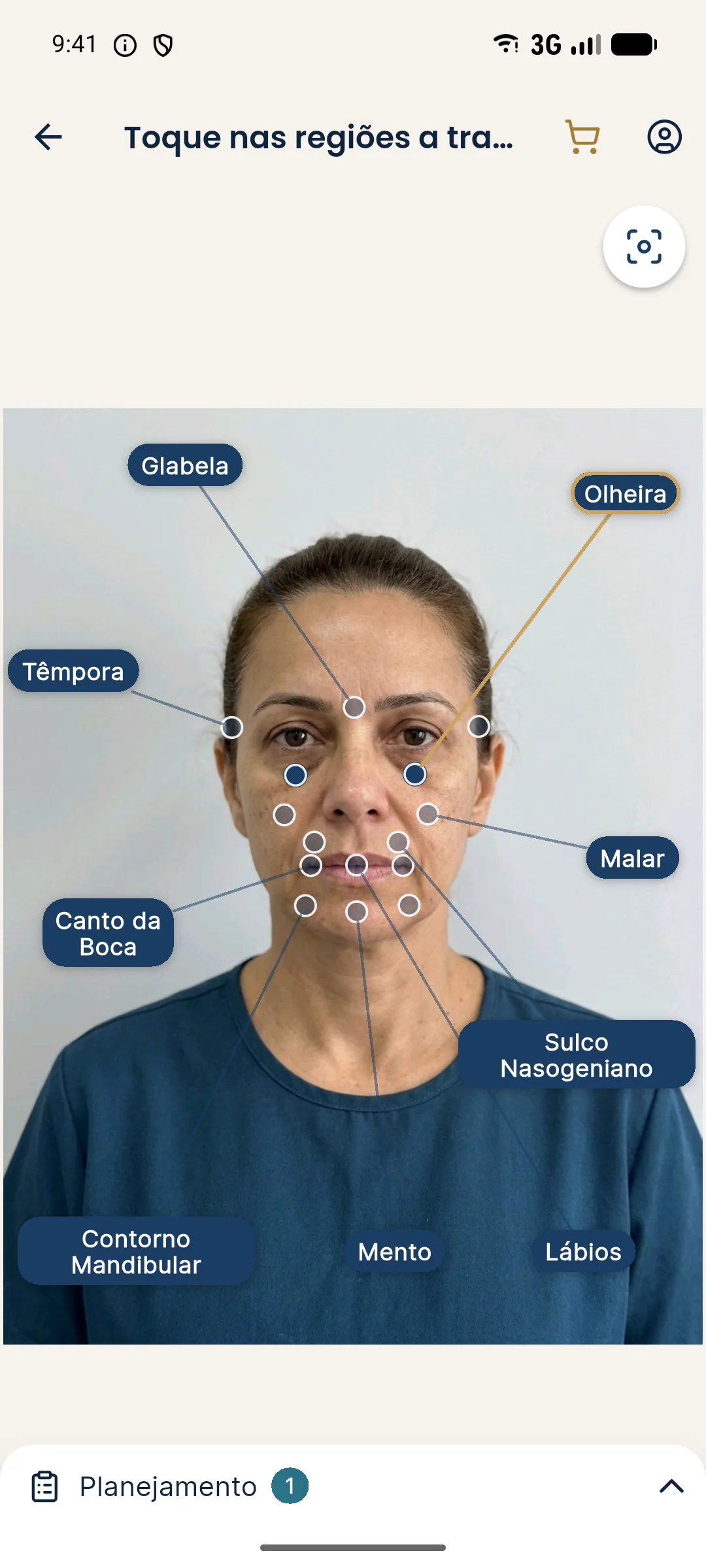
A useful practice is to generate two projections of the same patient: cheekbone only, and cheekbone plus tear trough. Showing both helps people see how much the cheek does on its own. Learn about the feature in mark fewer areas, get better projections.
Questions that help locate the cause
See also the planning view in HOF plan for a tired-looking face.
Timeline of a gradual plan
Testing your reasoning
Summary
- "Tired" is an impression: break the concern down.
- Cheekbone support can soften the shadow before treating the tear trough.
- Not every concern responds to an injectable.
- The simulation helps with conversation, but does not promise.
- Indication and volumes are at the discretion of the qualified professional, following the rules of their professional council (in Brazil, CFM, CFO, CFBM, COFEN, depending on the profession).
For the areas, see tear trough and cheekbone.
Frequently asked questions
What can facial harmonization do for a tired-looking face?
It can help when the tired look comes from volume loss, shadows, and under-eye hollows, by adjusting areas such as the tear trough and the cheekbone. It depends on the cause, and not every tired look is about volume.
Is a tired-looking face always about the under-eye area?
No. It can come from volume loss in the midface, sagging, shadows, skin quality, sleep, and habits. That is why the assessment separates the causes before the plan.
Does under-eye filler fix the tired look?
It can help when the cause is the groove or shadow in that area, but it is a high vascular risk area and not always the first choice. In some cases the cheekbone solves part of the problem.
Does Harmy simulate the tear trough and the cheekbone?
Yes. The Tear Trough and Cheekbone points let you choose ml and intensity and generate an illustrative simulation to talk through with the patient.
Harmy images are illustrative simulations generated by AI from the patient's photo to support the conversation between practitioner and patient. They are not a promise of results. Indication, technique, product and volume are solely the decision of the licensed practitioner. This content is for information only and does not replace a clinical assessment.