
Cheekbone (Malar) Filler with Hyaluronic Acid

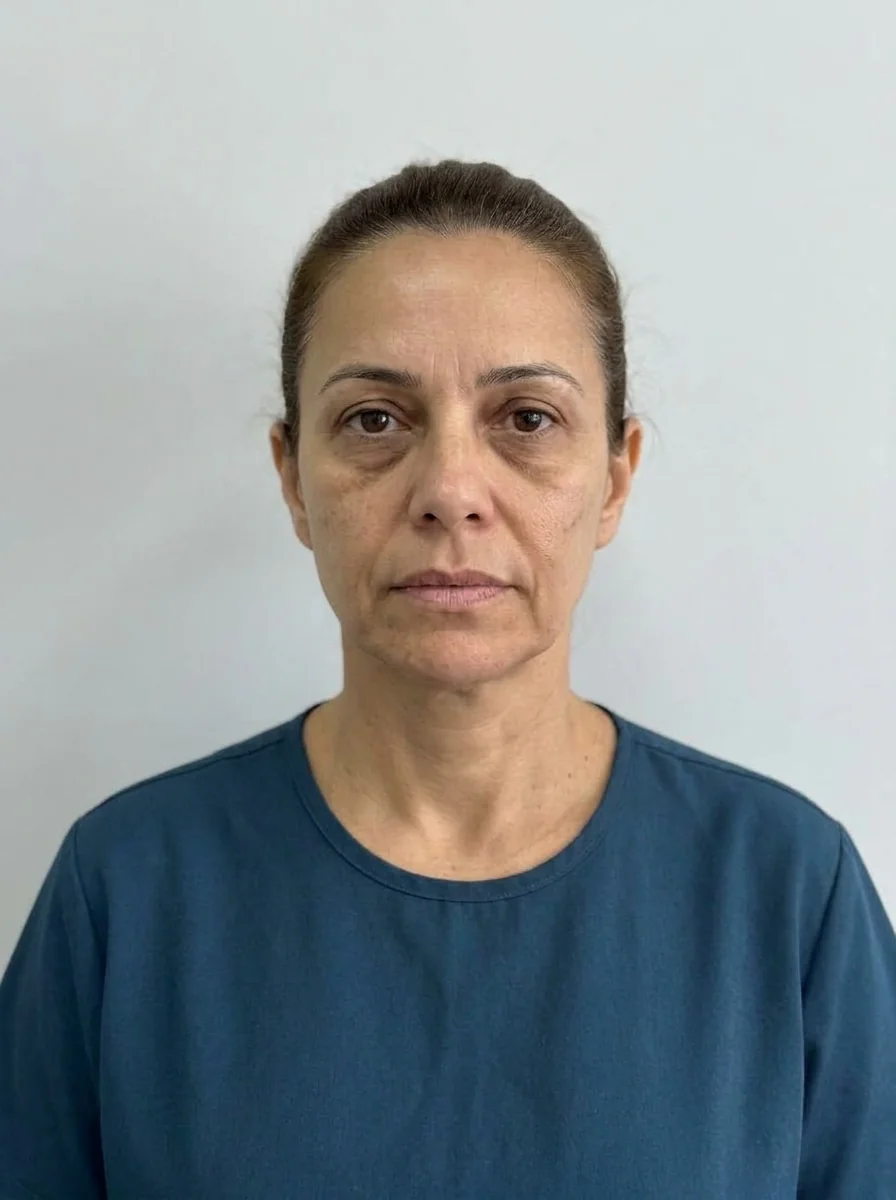 BeforeSimulation
Malar filler restores volume and projection in the cheekbone area. It is a foundation procedure for the midface: besides its effect on the cheek, malar support influences the tear trough, the nasolabial fold and the facial contour in frontal and oblique views. The patient's concern is usually "my face has dropped," "I look tired" or "I lost my cheekbones."
On this page you will find the indication, usual volumes, durability, risks and how to simulate it in Harmy.
What is malar filler?
It is the placement of hyaluronic acid or another supportive dermal filler in the malar area, to restore volume and projection to the malar eminence. With age, bone resorption and displacement of the fat compartments flatten this area, and the midface loses convexity.
Restoring this support can soften the transition to the lower eyelid and, in some patients, reduce the weight on the nasolabial fold. These indirect effects are possible, not certain.
Who is malar filler usually indicated for?
Generally, for patients with:
- volume loss in the midface, with a flattened cheek;
- a pronounced tear trough due to lack of support beneath it;
- mild malar asymmetry;
- a wish for more cheekbone definition, within the proportions of the face.
Patients with an already wide face or a naturally projected malar usually benefit little and run a higher risk of an artificial look. General contraindications include active infection, active autoimmune disease, pregnancy, breastfeeding and allergy to the product. The decision belongs to the qualified professional, in line with the rules of their professional council in Brazil.
Which areas are involved?
The main area is the malar area. It sits next to the more lateral zygomatic area and influences the tear trough and the nasolabial fold. That is why planning the malar before these areas is a common sequence in practice.
Which product is used?
Generally, hyaluronic acid with a higher G', with good projection capacity. Some professionals use calcium hydroxyapatite or other biostimulators, alone or combined. The advantage of hyaluronic acid is reversibility with hyaluronidase. Choice of product, instrument and plan is a technical decision for the professional.
What volumes are usual?
The ranges below are general references. The final volume is set by the qualified professional after assessment, and can be done in stages.
| Degree of loss | Usual range per side | Usual total range |
|---|---|---|
| Mild | 0.5 to 1 ml | 1 to 2 ml |
| Moderate | 1 to 1.5 ml | 2 to 3 ml |
| Pronounced | 1.5 to 2 ml, in stages | 3 to 4 ml or more |
Excess in the malar area is a frequent cause of an artificial look. Starting conservative and topping up is usually safer than correcting later.
How long does malar filler last?
With supportive hyaluronic acid, usual durability is generally between 12 and 18 months. Product, volume, metabolism, exercise and weight loss influence this time. Biostimulators work on a different logic, tied to collagen production over weeks.
What are the risks and complications?
The most frequent complications are swelling, bruising, local pain, asymmetry and nodules. With excessive volumes, a "puffy" or disproportionate face can appear. The product can also migrate or accentuate malar swelling in predisposed patients.
The area has branches of the infraorbital, zygomaticofacial and transverse facial arteries, and the proximity to the orbit in the medial portion calls for extra care. An intravascular injection can cause vascular occlusion. Hyaluronidase must be available whenever hyaluronic acid is used, with a known management protocol. See also safety and complications in facial harmonization.
What care is needed before and after malar filler?
Beforehand, the medical history should record use of anticoagulants and antiplatelet drugs, history of herpes, previous procedures in the area (including permanent products, which change the indication), autoimmune disease and important upcoming events, since swelling and bruising can last a few days. The standardized before photo is part of the patient record, and the informed consent should mention the risks described above.
Afterward, usual instructions include avoiding massage and strong pressure on the area, intense heat and heavy exercise in the first 24 to 48 hours, and contacting the professional immediately in case of disproportionate pain, pallor, purplish patches or visual changes. A follow-up at about 15 to 30 days allows symmetry to be assessed and a top-up to be decided.
How does the malar fit into the midface plan?
In assessment by thirds, the malar is usually the first midface point to be considered, because it supports the areas below and beside it. A common sequence is to treat the support (malar and, if indicated, zygomatic) and reassess the tear trough and nasolabial fold afterward, when part of the concern may have changed. This order is not a rule: it depends on anatomy and on the patient's budget. For an overview, see facial assessment by thirds.
What is not promised to the patient
- A "lifting" or surgical effect.
- Correction of smile lines or the tear trough as a certain consequence.
- Absolute symmetry.
- An exact duration.
- That more volume means a more attractive result.
Simulation in Harmy
The image at the top of this page was generated by Harmy itself, using the fictional person we use across all our pages, marking only the Cheekbone point with 2 ml. Drag the line to compare. The change is subtle on purpose: the AI alters only the marked area, respecting the volume, and does not apply blush, retouch the skin or change lighting, expression or background. It is an honest projection, consistent with what 2 ml usually does on a face like this. It is an illustrative simulation, not a promise of results.
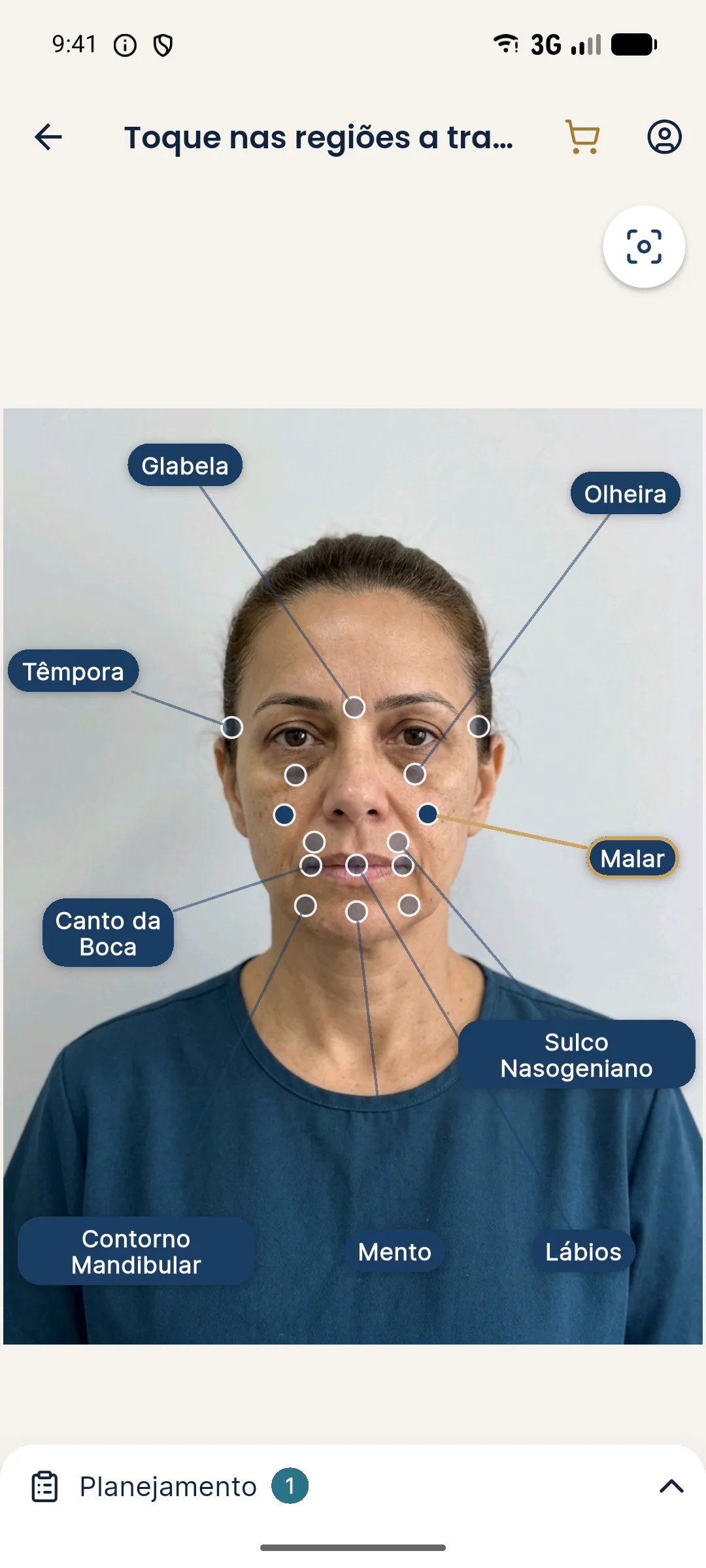
In the app, malar filler and zygomatic filler share the same point, Cheekbone. The simulation shows the effect of the point as a whole. The ml is the total for the bilateral area: with 2 ml, about 1 ml on each side.
How to simulate in 3 steps
- In New projection, enter the patient's name and use a frontal photo with the face straight and even lighting.
- In the marking screen, tap the Cheekbone point and set the total volume in the Plan (from 0.5 to 5 ml, in 0.5 steps).
- Tap Create projection and show the Before / After. If the plan includes the tear trough or nasolabial fold, mark those points together.
Details and screenshots in how to mark areas and volumes. The PDF quote uses the same total volume, multiplied by the price per ml of the area.
Frequently asked questions
How long does malar filler last?
Generally 12 to 18 months with hyaluronic acid, depending on the product, the volume and the patient's metabolism.
How many ml are used in malar filler?
Generally 0.5 to 2 ml per side, or 1 to 4 ml in total, at the discretion of the qualified professional after assessment.
Does malar filler help with smile lines?
It can help indirectly in some patients by restoring support in the midface. It should not be promised as a correction of the nasolabial fold.
Does malar filler make the face look puffy?
Swelling in the first days is expected. A lasting puffy look is usually linked to excess volume, which is why a conservative dose is the rule.
Harmy images are illustrative simulations generated by AI from the patient's photo to support the conversation between practitioner and patient. They are not a promise of results. Indication, technique, product and volume are solely the decision of the licensed practitioner. This content is for information only and does not replace a clinical assessment.