
Zygomatic Arch Filler with Hyaluronic Acid

 BeforeSimulation
Zygomatic filler works the lateral portion of the midface, over the zygomatic arch. It gives contour to the line that runs from the cheekbone toward the ear and helps define the transition between the midface and the temple. The patient's concern is usually "I want a more defined face" or "my face looks flat from the side."
On this page you will find the indication, usual volumes, durability, risks and how to simulate it in Harmy.
What is zygomatic filler?
It is the placement of hyaluronic acid for support over the zygomatic arch to create or restore lateral projection. The effect sought is a more defined line in the midface, which can give a more structured look in frontal and oblique views.
While malar filler works anterior volume, zygomatic filler works lateral contour. The two can be planned together, but the logic of indication is different.
Who is zygomatic filler usually indicated for?
Generally, for patients with:
- a barely apparent zygomatic arch, with a midface that looks "flat" from the side;
- loss of lateral contour associated with age or weight loss;
- a wish for more facial definition, within proportion;
- a poorly marked transition between the temple and the midface.
The indication requires care with facial balance. In faces that are already wide in the midface, projecting the zygomatic area can widen the face. In some patients, excessive lateral projection changes how feminine or masculine the face reads, which needs to be discussed beforehand.
General contraindications include active infection, active autoimmune disease, pregnancy, breastfeeding and allergy to the product. The decision belongs to the qualified professional, in line with the rules of their professional council in Brazil.
Which areas are involved?
The main area is the zygomatic area. It sits between the more anterior malar area and the temples, above and behind. A very sunken temple can make the zygomatic arch look too prominent, so assessing the three areas together usually gives a more balanced plan.
Which product is used?
Generally, high-G' hyaluronic acid, with good projection capacity and little tendency to spread. Some professionals use calcium hydroxyapatite in this area. The reversibility of hyaluronic acid with hyaluronidase is a relevant advantage. Product, instrument and plan are technical decisions for the professional.
What volumes are usual?
The ranges below are general references; the final volume is set by the qualified professional after assessment.
| Goal | Usual range per side | Usual total range |
|---|---|---|
| Discreet contour | 0.3 to 0.5 ml | 0.6 to 1 ml |
| Moderate definition | 0.5 to 1 ml | 1 to 2 ml |
| Combined with malar | Adjust to the total midface volume | At the professional's discretion |
How long does zygomatic filler last?
Usual durability with supportive hyaluronic acid is generally between 12 and 18 months. The area has little mobility, which tends to favor how long the product lasts. Product, volume, metabolism and weight changes influence the duration.
What are the risks and complications?
The most frequent complications are swelling, bruising, pain when chewing in the first days, asymmetry and palpable nodules. Excess volume can widen the face disproportionately or leave a visible ridge in people with thin skin.
Branches of the transverse facial artery and the zygomatico-orbital artery run through the area, as well as branches of the facial nerve in nearby planes. An intravascular injection can cause vascular occlusion. Hyaluronidase must be available whenever hyaluronic acid is used, with a known management protocol. See also safety and complications in facial harmonization.
What care is needed before and after zygomatic filler?
Beforehand, the medical history should record use of anticoagulants and antiplatelet drugs, previous procedures in the area (including permanent products), bruxism or temporomandibular joint pain, autoimmune disease and upcoming events, since swelling and bruising can last a few days. The standardized before photo goes into the patient record, and the informed consent should mention the risks described above.
Afterward, usual instructions include avoiding pressure on the area (such as sleeping on that side or wearing heavy glasses resting on the arch in the first days, where applicable), intense heat and heavy exercise in the first 24 to 48 hours. Disproportionate pain, pallor, purplish patches or visual changes call for immediate contact with the professional. A follow-up at about 15 to 30 days allows symmetry to be assessed.
How do you assess whether the zygomatic area is the right one?
A good question for the consultation is where the face loses definition: at the front, in the cheekbone, or at the side, in the line that runs toward the ear. Anterior loss points more to the malar. Lateral loss, with a "straight" midface in oblique view, points more to the zygomatic. The bizygomatic width relative to the width of the jaw and forehead also guides: increasing midface width in an already wide face rarely harmonizes. For an overview, see facial assessment by thirds.
What is not promised to the patient
- A "model" face or a specific shape.
- A "lifting" or surgical effect.
- Absolute symmetry between the sides.
- An exact duration.
- That more projection always means more harmony.
Simulation in Harmy
The image at the top of this page was generated by Harmy itself, using the fictional person we use across all our pages, marking only the Cheekbone point with 2 ml. Drag the line to compare. The change is subtle on purpose: the AI alters only the marked area, respecting the volume, and does not apply contouring makeup, retouch the skin or change lighting or expression. It is an honest projection. It is an illustrative simulation, not a promise of results.
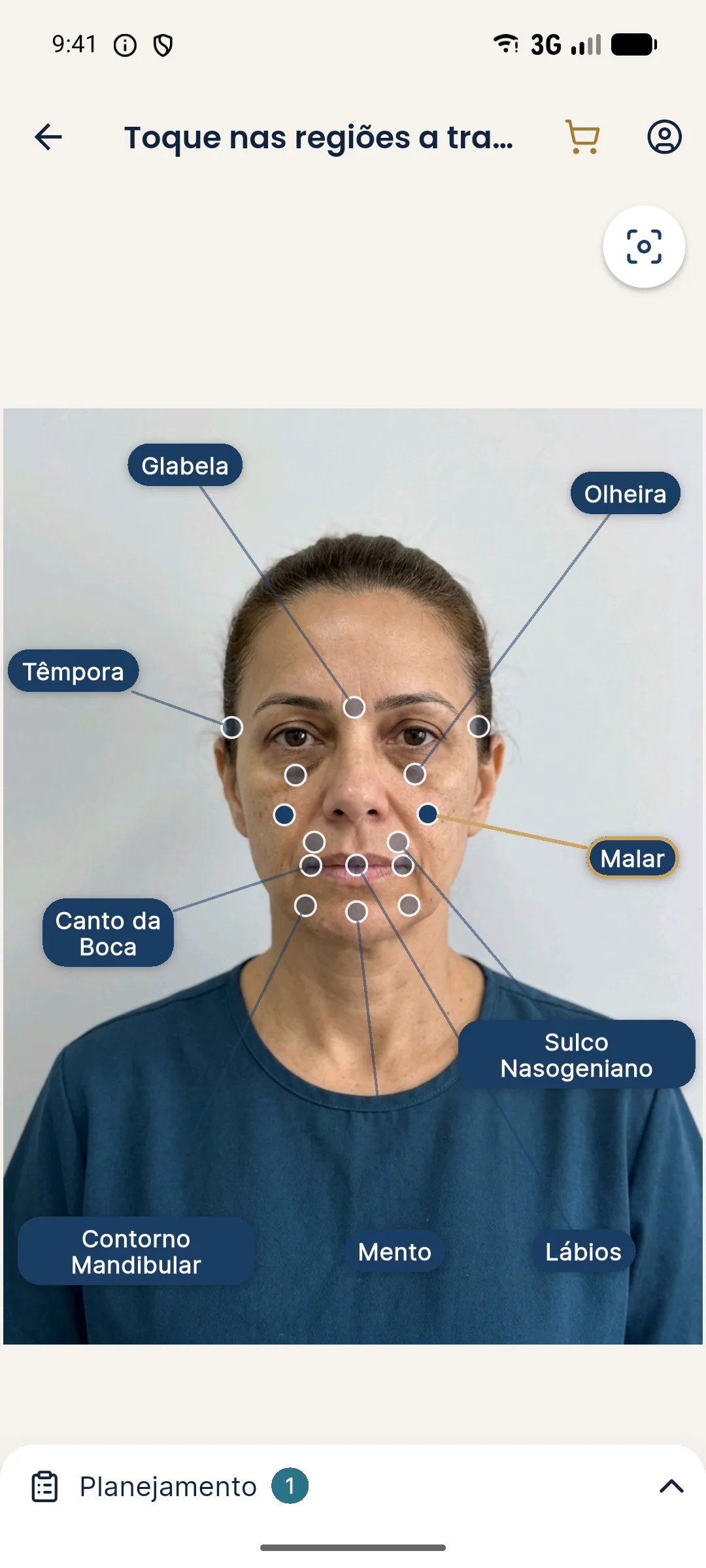
In the app, zygomatic filler and malar filler share the same point, Cheekbone. The simulation shows the effect of the point as a whole, without separating anterior from lateral projection. The ml is the total for the bilateral area: with 2 ml, about 1 ml on each side. If your plan is zygomatic only, with a smaller volume, adjust the value in the Plan to reflect that total.
How to simulate in 3 steps
- In New projection, enter the patient's name and use a frontal photo with the face straight and even lighting, without strong side shadow.
- In the marking screen, tap the Cheekbone point and set the total volume in the Plan (from 0.5 to 5 ml, in 0.5 steps).
- Tap Create projection and compare on the Before / After slider.
Details and screenshots in how to mark areas and volumes. Because the photo is frontal, the lateral contour shows less than it would in an oblique view: it is worth telling the patient when showing the image.
Frequently asked questions
What is the difference between malar and zygomatic filler?
The malar works the cheekbone, which is more anterior. The zygomatic works the zygomatic arch, which is more lateral, and gives contour to the lateral line of the midface.
How long does zygomatic filler last?
Generally 12 to 18 months with hyaluronic acid, depending on the product, the volume and the patient's metabolism.
How many ml are used in zygomatic filler?
Generally 0.3 to 1 ml per side, at the discretion of the qualified professional after assessment.
Does zygomatic filler widen the face?
It can, if the volume is excessive or if the face is already wide in the midface. That is why the indication depends on each patient's proportions.
Harmy images are illustrative simulations generated by AI from the patient's photo to support the conversation between practitioner and patient. They are not a promise of results. Indication, technique, product and volume are solely the decision of the licensed practitioner. This content is for information only and does not replace a clinical assessment.