
Flat face seen from the front: lack of projection

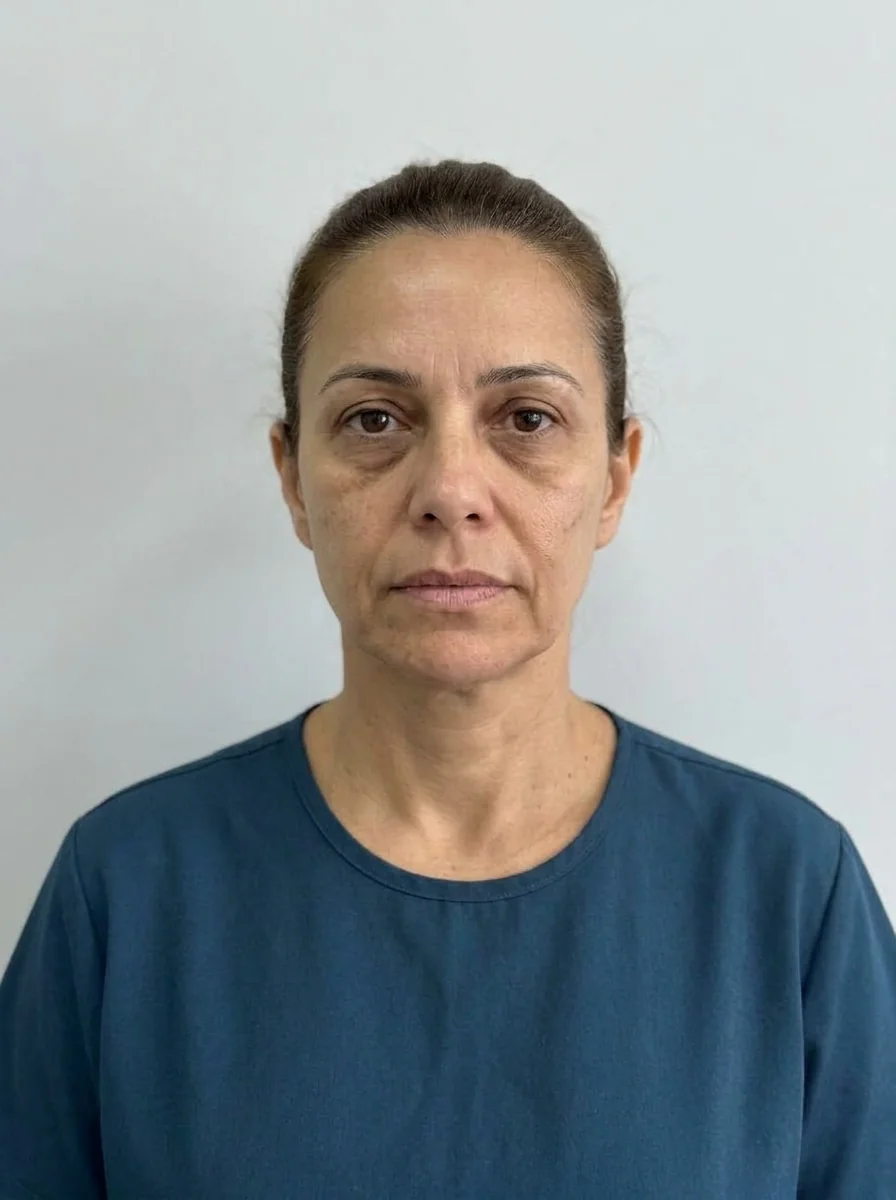 BeforeSimulation
- Highlighted area
Quick facts
- Concern
- A face that looks flat in the frontal photo, with no shadows or relief, even without excess weight
- Key reading
- The flat look comes from a lack of projection in the zygoma, the maxilla and the temples
- Supporting measurement
- Frontal photo with side lighting and an oblique photo, which reveal the relief that frontal light hides
- Limit
- Volume creates apparent relief but does not change the bony base, and excess rounds the face
The patient arrives with a photo and says the face "has no relief," "is a pancake," "looks flat." Often it is not a matter of weight: thin people complain too. What is missing is projection, that is, planes that catch light and create shadow. Without it, the frontal photo looks flattened.
The phenomenon has to do with bone, soft tissue and photography. This text explains the three layers and what facial harmonization can do, with limits. For the area that most often carries the weight, see flat cheekbone and ideal cheekbone projection. For assessment through lighting, read lighting for the planning photo.
What does "flat" mean in the frontal photo?
The face is three-dimensional, but the photo is two-dimensional. Shape is perceived through the distribution of light and shadow: a projecting zygoma catches light on top and leaves a soft shadow below, and the contour of the jaw creates a line. When these projections are subtle, frontal light illuminates everything evenly, and the face looks flat.
This makes the concern highly dependent on photography. In selfies with frontal light, the flatness is greater. In photos with side lighting, the same face gains relief. That is why, before proposing volume, it is worth testing the photo in two conditions and showing the patient the difference. That test can "solve" the concern with no procedure at all.
Which structures create relief?
Facial relief depends on several elements. Reading it in layers helps locate what is missing:
- Bone: the zygomatic bone, the maxilla and the zygomatic arch define the base projection. Patients with little zygomatic projection and a recessed maxilla have less natural relief.
- Deep fat: the compartments that support the cheek. Over time, they lose volume.
- Temples: when hollow, they break the continuity of the lateral curve of the face.
- Jaw and chin: they frame the face from below and create the border.
- Skin and superficial tissue: they modulate, but do not create projection.
One useful idea is "layered projection": an attractive face usually has a continuous curve from the temple to the zygoma, the cheekbone and the jaw. When one of these links is missing, the curve breaks, and the face looks flat. See maxillary projection and midface in profile and facial skeleton before injecting.
How does a flat face differ from a round or full face?
They are often confused. A round face has a width close to its height and a rounded contour, but it can have plenty of relief. A full face has excess volume, and flatness in it is rare. A flat face is, above all, a lack of planes. Each calls for a different approach.
| Picture | What predominates | Approach discussed |
|---|---|---|
| Flat face | Lack of projection and shadows | Conservative cheekbone and zygomatic projection |
| Round face | Similar widths and a soft contour | Contour definition and lengthening |
| Full face | Excess volume or fat | Assess reduction, avoid adding volume |
| Tired face | Volume loss with shadows | Restoring support |
For the round face, see planning a round face, and for thin patients with a similar concern, thin face vs full face in planning.
What can harmonization do?
The goal is to create apparent relief through projection. The approaches that usually come up in the conversation, always at the discretion of the qualified professional and after an assessment, are:
- Cheekbone projection, which creates the light point and the shadow below it. See cheekbone filler.
- Lateral zygomatic projection, which widens the curve of the face and avoids an "apple cheek" effect. See zygomatic filler.
- Temples, to give continuity to the lateral curve. See temple filler.
- Chin and jaw, to complete the frame. See chin filler.
- Biostimulator, when there is a loss of tissue quality.
In the temples, cheekbone and zygoma there are important vascular structures, and possible complications include swelling, bruising, asymmetry, nodules and, rarely, vascular occlusion. Hyaluronidase must be available when hyaluronic acid is used. The patient must be informed of the risks. See safety and complications.
How do you talk to the patient?
Avoid validating the idea of a "dull face." Work with the vocabulary of light and relief: "a little projection is missing for the light to define the cheek." That describes the phenomenon without belittling the face. And make it clear that the result depends on lighting, and that no face has relief in every photo.
See also the conversation about naturalness in aligning expectations of naturalness.
What does Harmy show?
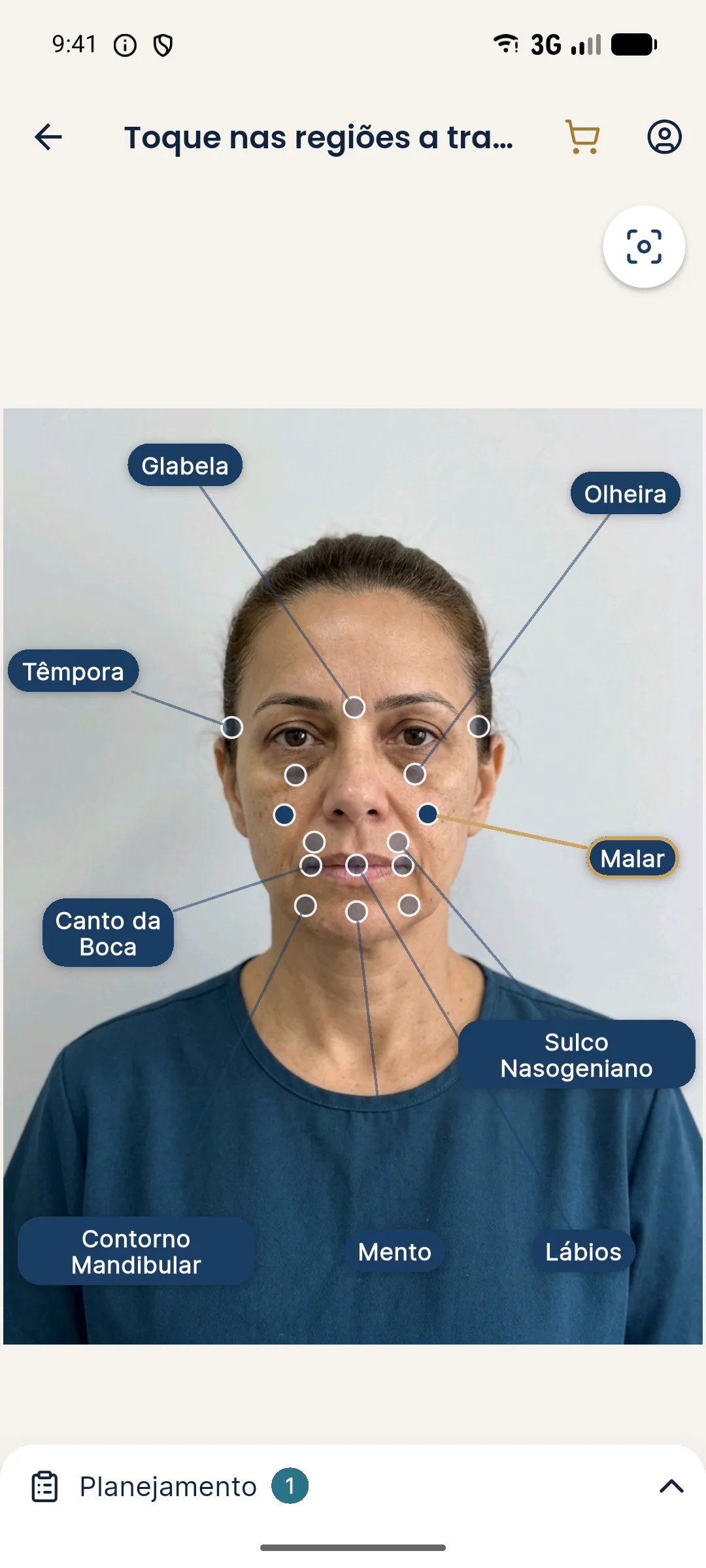
Harmy uses the frontal photo, and that is exactly where the flatness shows. The projection shows the volume effect at the Cheekbone and, if marked, at the Temple and Chin, with a subtle gain in light and shadow. It is a good way to show the patient that the change is gradual. The app does not simulate the profile, and the lighting of the original photo influences the result.
When to avoid or refer?
Avoid adding volume if the concern is entirely about lighting, if the patient has a full face and wants to "slim" it, or if dysmorphia is suspected. Refer when the lack of projection comes from significant maxillary hypoplasia, with an impact on the bite or breathing. See patient referral in HOF.
Record keeping
Save the photos in frontal and side light and in three-quarter view, the planned range, the awareness of risks and what was explained about lighting. At follow-up, repeat both lighting conditions. Standardized clinical photography and the history per patient help keep the comparison fair.
Frequently asked questions
Why does my face look flat in front-facing photos?
Because frontal light removes shadows, and a lack of projection in the zygoma and maxilla leaves the face without relief. In three-quarter photos or with side lighting, the relief shows.
Does cheekbone filler fix a flat face?
It can improve apparent projection and create shadows and relief, when what is missing is volume in the cheekbone area. If the flatness comes from the bone, the effect is partial, and the decision is up to the qualified professional.
Is a flat face the same as a round face?
No. A round face is a shape, with similar widths across the thirds. A flat face is a lack of relief, and it can occur in any shape.
Do I need more than one area to add projection?
Generally yes, because facial projection involves the zygoma, the maxilla, the temples and, sometimes, the chin. The plan is usually conservative and in stages.
Harmy images are illustrative simulations generated by AI from the patient's photo to support the conversation between practitioner and patient. They are not a promise of results. Indication, technique, product and volume are solely the decision of the licensed practitioner. This content is for information only and does not replace a clinical assessment.