
Planning Facial Harmonization for a Round Face: Areas and Limits

 BeforeSimulation
Quick facts
- Characteristic
- Similar width and height, full cheeks, soft angles, little contour definition
- Usual goal
- Add definition and projection, not width
- Avoid
- Lateral volume in the cheekbone and cheek area
- Areas in focus
- Chin (projection), jaw (definition), cheekbone (support, without widening)
On a round face, width and height are similar, the cheeks are full and the angles of the contour are soft. The patient often describes it as a "moon face", "no contour" or a "full face". The planning question is: what gives the look of definition without adding width?
How do you recognize the shape?
When photographing from the front, the width at the level of the cheekbones and the width at the level of the jaw are similar, and the chin is rounded. The jawline barely shows. The glossary entry on round face explains the characteristics; the patient's concern is in round face and face without definition.
An important point: not every full face is a problem. Some people like the face they have. The plan comes from a concern, and many concerns in this category are about weight, not facial harmonization.
What is the general strategy?
The logic is to add contour, not lateral volume. In other words, work where the look of definition comes from: chin and jawline, with care in the cheekbone.
| Area | Possible role | Caution on a round face |
|---|---|---|
| Chin | Projection to balance the profile and visually lengthen | Project, do not widen |
| Jawline | Give line and definition to the angle | Avoid a heavy, square jaw |
| Cheekbone | Support and lift | Avoid lateral volume that widens |
| Lips | Proportion of the lower third | Keep balance with the chin |
Chin and jaw: how do you think about them together?
The chin helps lengthen how the face reads, and the jaw helps draw the contour. But they need to talk to each other. A strongly projected chin with a flat jaw looks displaced; a defined jaw with a recessed chin creates a step. Assessment in profile and three-quarter view is essential. See chin and jaw: combining them in the plan and jawline filler.
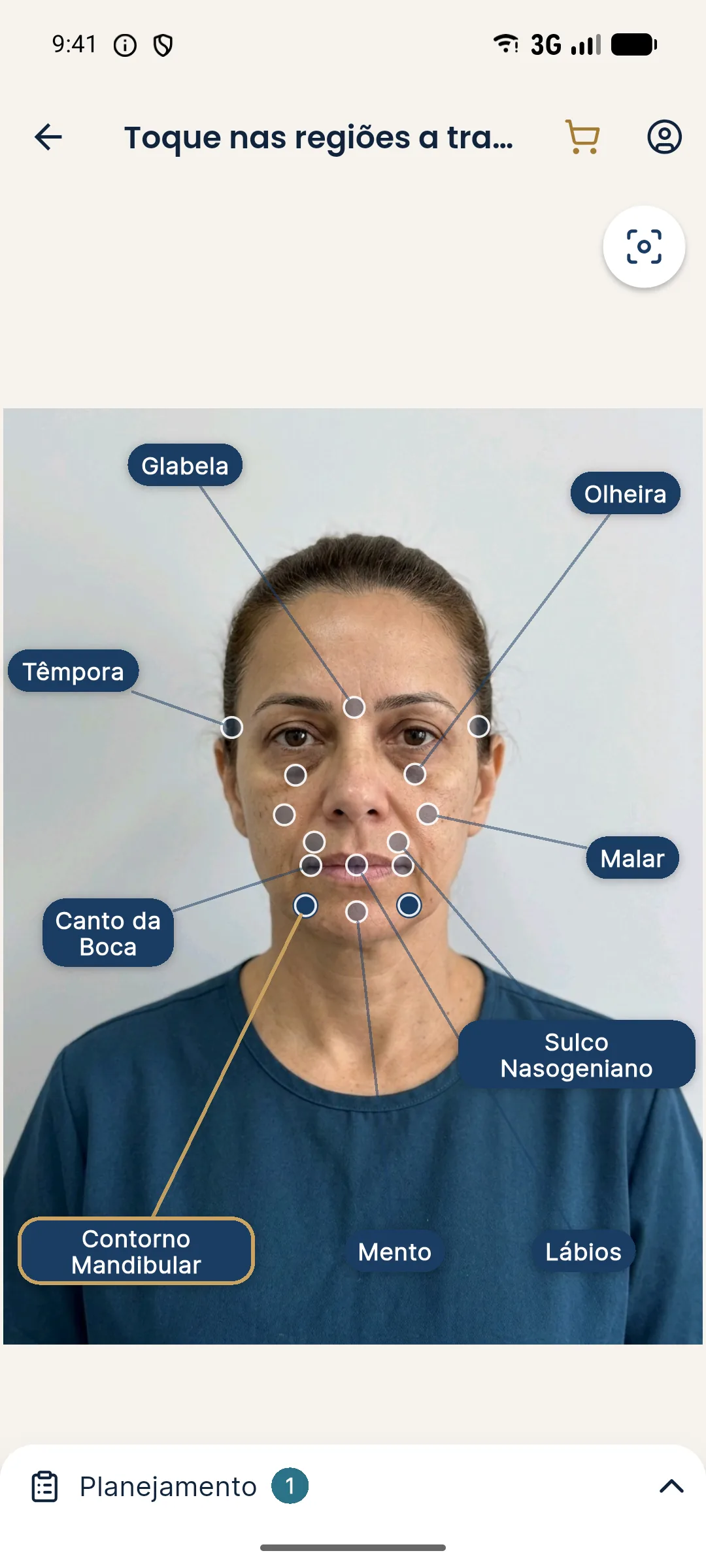
Before that, it is worth checking whether the jaw is hidden by fat or soft tissue. If the problem is excess soft tissue in the area, hyaluronic acid does not solve it; another path may be needed, such as biostimulation or a referral, and the conversation should be honest about this. See collagen biostimulator.
What does the patient usually ask for, and how do you translate it?
Request: "I want to slim my face." Clinical translation: they want more contour definition and a sense of less width. The honest answer is that injectables can help with definition, but they do not remove fat or change bone.
How does the simulation help?
The jawline simulation is especially useful with this shape, because it illustratively shows the effect of volume along the jawline. Compare a version with chin only and another with chin and jaw, and see whether the face gains definition without looking heavy.
Be critical of the result: the projection uses only the frontal photo, and contour definition depends on angle and light. Compare with comparing intensities and check the limits of 2D simulation.
The time between sessions is covered in interval between sessions.
What limits should you set with the patient?
Three points need to be clear in writing:
- The bone structure and fat of the face do not change with filler;
- The result is perceived definition, not a reduction in width;
- If what bothers them is body weight, that is a different conversation and the patient should be guided to appropriate care.
What else affects how a round face is perceived?
Besides structure, three factors change how the face reads: hair and hairstyle (which can lengthen or round), beard, when present, and head posture in the photo. So the assessment photo should have hair pulled away from the face and the head straight. See hair, earrings and glasses in the assessment photo.
Body weight also matters. In many patients with a round face, part of the full look comes from fat that varies with weight. That is not a reason to turn the patient away, but it is a reason to be clear: the injectable does not remove fat, and the facial harmonization plan does not replace health follow-up.
How do you measure definition before and after?
Photograph from the front and in three-quarter view with the same light and distance. Look at the jawline, the angle and the transition between cheek and chin. Compare the photos side by side, with no swelling. Definition is perceived in the transition between shadow and light; that is why the lighting of the photo changes the reading so much. See lighting for the planning photo.
What communication traps exist?
Avoid words like "slim the face", "thin out" or "sculpt". They create an expectation of reduction that the injectable does not deliver. Prefer "add definition", "organize the contour" and "balance". The implicit promise is usually the most common cause of dissatisfaction in this type of patient.
Practical summary
On a round face, work on definition and projection, never lateral width. Assess the cause (bone, fat, weight), photograph with controlled light, compare versions in the simulation and use honest words. Remind the patient that an injectable does not really slim the face.
Frequently asked questions
Does filler make a round face look rounder?
It can, if the volume is placed laterally, especially in the cheekbone and cheeks. On a round face, the discussion is usually about projection and definition, not width.
What gives definition to a round face?
A proportionally projected chin and a more defined jawline can help create the look of a contour, at the professional's discretion and after assessment.
Can I slim a round face with facial harmonization?
Procedures can influence the perception of definition, but they do not change bone structure or remove fat. The expectation should be balance, with no promises.
Does the simulation show the effect of definition?
It shows an illustration of the volume marked on the jaw and chin. The real effect depends on the structure and on the patient's response.
Harmy images are illustrative simulations generated by AI from the patient's photo to support the conversation between practitioner and patient. They are not a promise of results. Indication, technique, product and volume are solely the decision of the licensed practitioner. This content is for information only and does not replace a clinical assessment.