
Undefined Face: Where Structure Is Missing

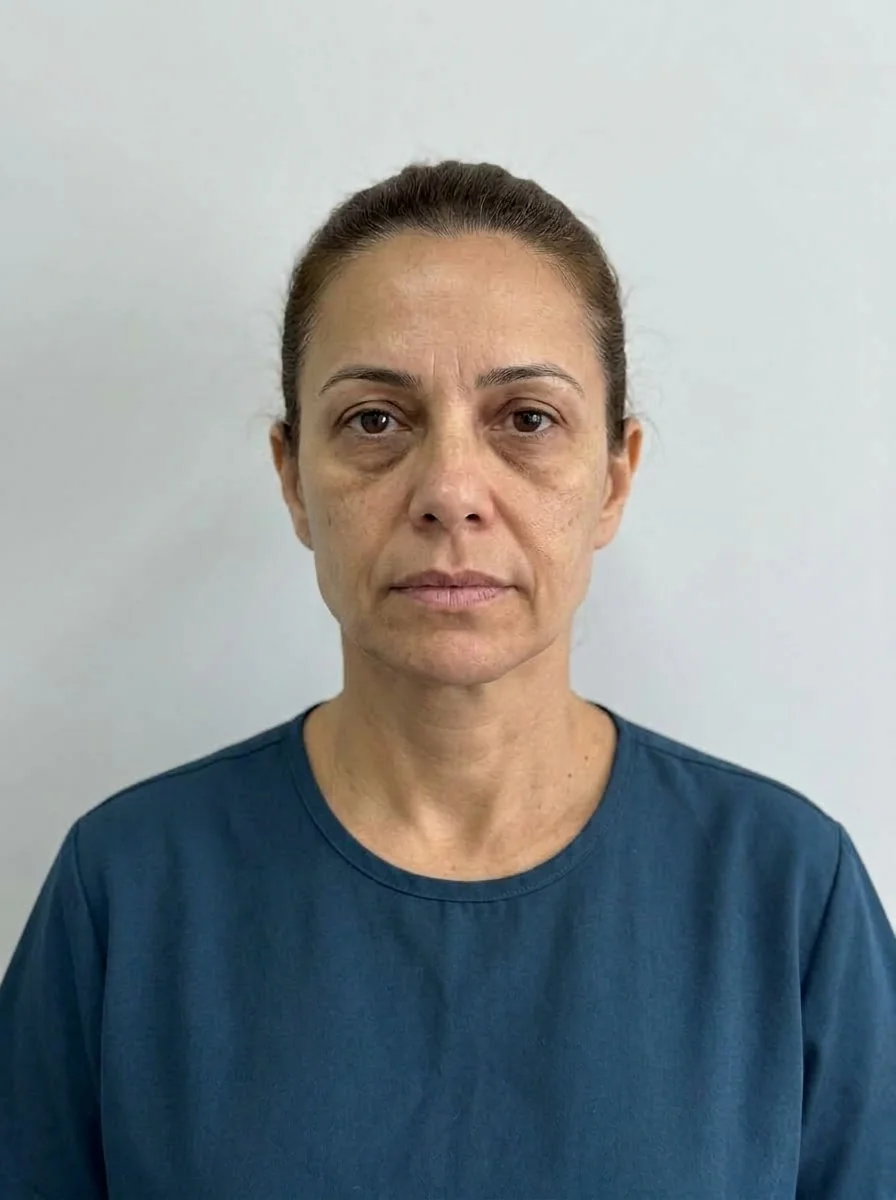 BeforeSimulation
- Nerve
- Highlighted area
Quick facts
- Concern
- The face looks flat, with no contour or points of light
- Pillars of definition
- Cheekbone projection, jawline and chin projection
- Method
- Identify which pillar is missing and treat in the order of what supports the others
- Risk
- Trying to define everything at once produces a full, unnatural-looking face
"Something is missing from my face, but I can't say what." This is the most common way the complaint shows up. The face is not swollen, not hollow, not sagging. It is diffuse. The cheeks fade into the jaw, the jaw fades into the neck, the chin doesn't end anywhere. Light moves across the face without finding any relief.
Definition is an idea of structure. The assessment is about finding which pillar is weak, and the approach is about reinforcing what supports the rest without losing naturalness.
What facial definition is
A defined face has three anchors that the eye recognizes easily:
- Cheekbone: the projection of the apple of the cheek, which creates the high point of light and the lateral curve of the midface (the so-called ogee curve).
- Jawline: the crisp transition between face and neck, with a recognizable jaw angle.
- Chin: the projection point of the lower third, which closes the contour.
When all three are present, the face looks "drawn." When one or more are missing, the read is of a diffuse face. The approach is to identify the gap and work on it, not to add product across the whole face. The reasoning on proportion appears in facial assessment by thirds and in sagging jawline.
Why a face loses definition
The picture has several origins, and the difference between them decides the plan.
| Origin | What happens | Clue on exam |
|---|---|---|
| Constitution | The face always had soft contours | Old photos look similar |
| Aging | Loss of volume and bony support | Associated folds and laxity |
| Weight gain | Fat blurs the transitions | Full double chin and cheeks |
| Weight loss | Loss of support | Gaunt face without projection |
| Habits | Little muscle activity or posture | Forward neck, closed lips |
| Previous procedures | Volume in the wrong place | Product outside the pillars |
In every case, it is worth asking the patient since when the face has seemed undefined, and comparing with old photos. A face that has always been this way calls for a different plan than a face that lost its contour in recent years. See beautiful face without harmony and disproportionate face.
How to assess each pillar
Light is essential. Flat frontal light erases relief and misleads. Side light, slightly from above, shows where transition shadows exist and where they are missing. See shadows on the face in the photo and lighting for the planning photo.
Prioritizing the plan
The order makes a difference. In general, what is higher up supports what is below, so the assessment usually points to:
Cheekbone first. Cheekbone filler restores the high point of light and the support of the midface. In a flat face, it is usually what changes the read of the whole the most, with conservative volumes. See ideal cheekbone projection.
Jawline next. Jawline filler can mark the angle and the lower line. If midface descent is active, the contour should wait. See ideal jaw angle by sex.
Chin to close. Chin filler completes the contour and improves the relation with the lip. See ideal chin projection by sex.
The whole. After each stage, reassess the entire face. Volumization should not become filling an empty space, but drawing relief. For the logic of combining, see cheekbone and jawline: combining in the plan and chin and jawline: combining in the plan.
Timeline of a plan
The reassessment stage is what separates a definition plan from a string of sessions. Without it, the professional cannot know which area changed how the face reads.
Risks
The areas involved have known risks: swelling, bruising, asymmetry, irregularities, nodules and, more rarely, serious vascular complications, for example in branches of the facial artery and the transverse facial artery. Hyaluronidase must be available whenever hyaluronic acid is used. In thin skin, the risk of irregularity and visible product rises. See safety and complications: overview.
How to show definition in Harmy
Harmy projects the effect of volume on the Cheekbone, Jawline and Chin points, from a front-facing photo. It is a useful resource for discussing which anchor changes that patient's face the most.
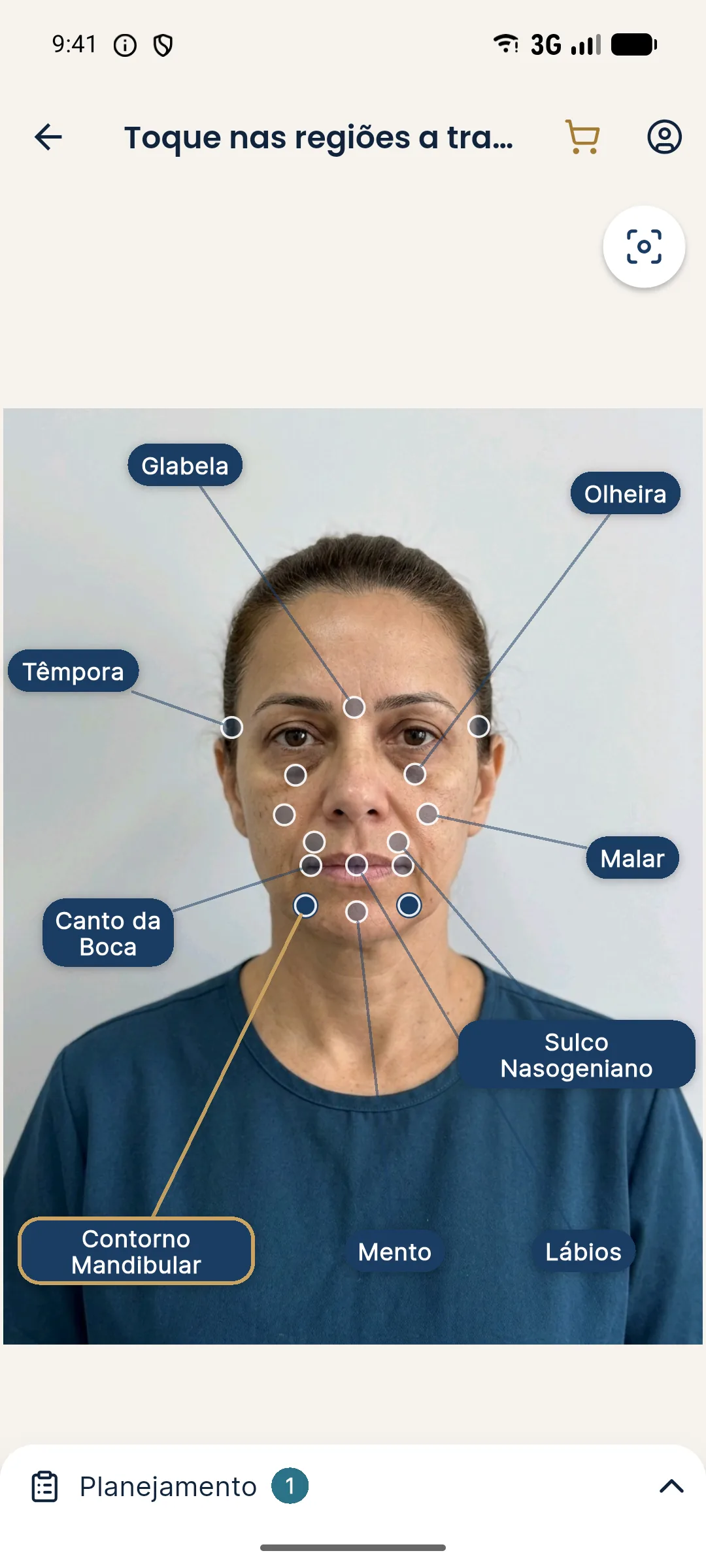
The side-by-side comparison often shows that a single area already changes how the whole reads, which helps the patient accept a leaner plan. For more ideas, see digital visual planning in facial harmonization.
Record keeping
Note the pillar identified as weakest, the photos with the lighting used and the staged plan. Record the explanations about limits. Volumes and techniques are at the discretion of the qualified professional, after assessment and in line with the rules of their professional council in Brazil.
Frequently asked questions
What does a face without definition mean?
It is the absence of clear contours, with transitions that are too soft between cheekbone, jawline and chin. The face looks diffuse, without points of light or supporting lines.
Where should I start to define the face?
With the structure that supports the others, generally the cheekbone, followed by the contour and chin, according to the assessment. The order depends on what is most deficient in each patient.
Does definition depend only on filler?
No. Weight, skin, muscle and fat all enter the picture. In some cases, the approach involves reducing volume, treating the masseter or referring to other areas.
Can you lose naturalness by defining too much?
Yes. Exaggerated or overly symmetrical contours give an artificial look. Defining a little and reassessing is usually safer.
Harmy images are illustrative simulations generated by AI from the patient's photo to support the conversation between practitioner and patient. They are not a promise of results. Indication, technique, product and volume are solely the decision of the licensed practitioner. This content is for information only and does not replace a clinical assessment.