
Shadows on the face: what the photo reveals about structure

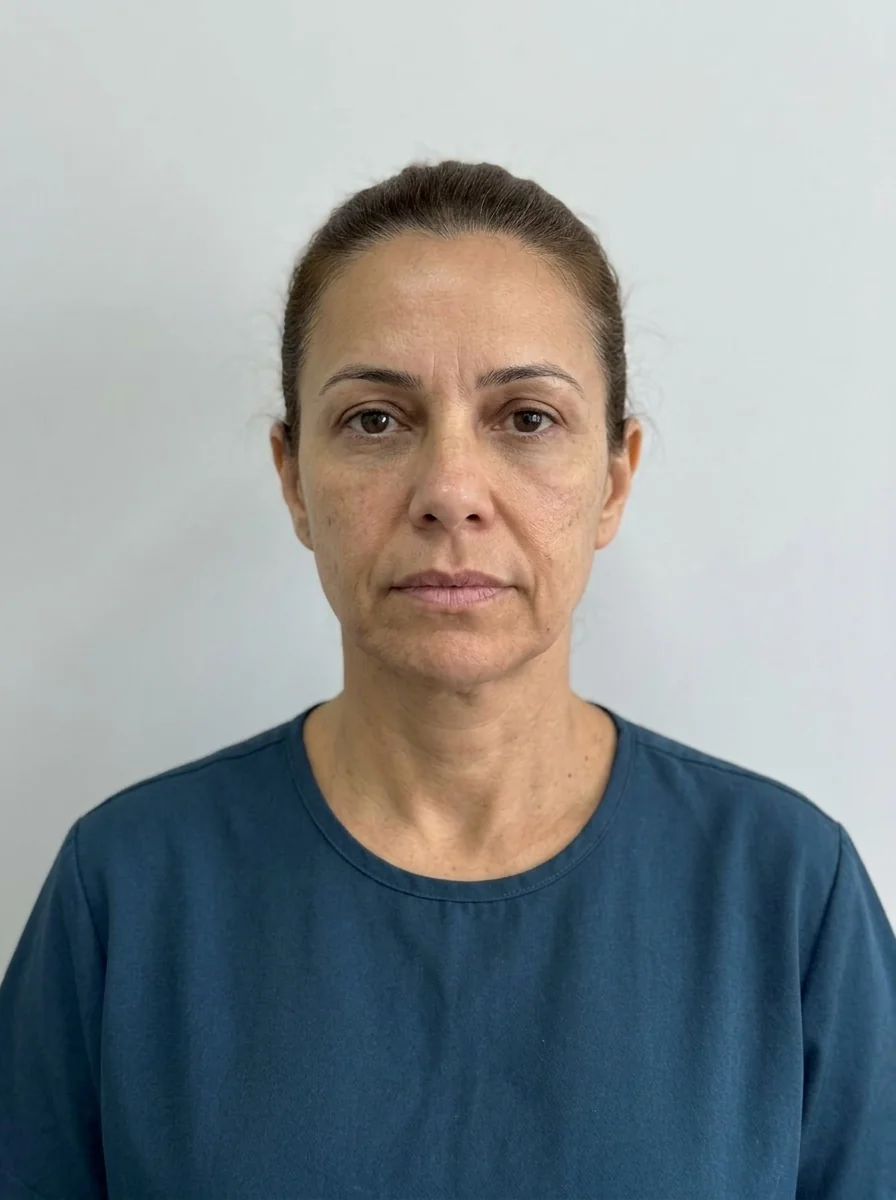 BeforeSimulation
- Nerve
Quick facts
- Concern
- Shadows on the face that the patient sees in photos and wants removed
- Core idea
- A shadow is information: it marks where volume, projection or support is missing
- Caution
- Part of a shadow comes from the light, not the structure; treating light as a flaw leads to excess
- Method
- Photograph under controlled light, map the shadows and link each one to a structure
The patient shows three photos and asks why their face "has so many shadows". Under the eyes, beside the nose, under the lip, on the side of the chin. In every photo the shadow changes place and intensity, but it is always there. The closing line is: "can this be removed?"
The honest answer starts with another question: what is this shadow telling me? A shadow is the absence of light, and light disappears where the relief changes. Learning to read that map is one of the most useful skills in facial assessment, and this page shows how.
A shadow is information
A young face has soft, well-distributed, symmetrical shadows that draw the relief and give a healthy look. A tired or aged face has deep shadows in places that "pull" the expression downward. The difference is not in having or not having shadows, but in where they are and how deep they are.
This changes the clinical question: the point is not to eliminate shadows, but to understand what they reveal. A shadow under the eye may point to loss of support in the tear trough. A shadow beside the nose may point to midface descent. A shadow under the lip may point to a recessed chin. Each one points to a different structure.
The shadow map and what each one suggests
| Shadow | Related structure | Possible reading |
|---|---|---|
| Under the eye | Tear trough, palpebromalar groove | Loss of support or infraorbital volume |
| Beside the nose | Nasolabial fold, cheekbone | Midface descent |
| Under the cheekbone | Ogee curve, SOOF | Loss of cheek projection |
| Under the lip | Mentolabial fold | Chin and lip projection |
| Under the nose | Nasal base, philtrum | Overhead light and tip projection |
| Along the jaw | Jowl, jawline | Descent of the contour |
| At the temple | Temporal fossa | Loss of lateral volume |
This map does not replace the exam, but it guides the eye. The details of each area are on specific pages: bags under the eyes, shadow beside the nose, shadow under the lip and shadow under the nose.
Light shadow or structural shadow?
The costliest mistake in this area is treating light as if it were anatomy. The same person, photographed under four different lighting setups, looks like four different faces.
- Ceiling light: accentuates shadows under the nose, under the brows, under the eyes and under the cheekbone.
- Soft frontal light: softens every shadow and flattens the face.
- Side light: shows relief and volume asymmetries.
- Backlight: erases detail and creates silhouettes.
For this reason, the assessment photo needs standardized lighting. The most reliable test is to photograph the same face under two lights: soft frontal and side. A shadow that remains in both is structural. One that disappears with frontal light is from the lighting. See lighting for the planning photo and standardized clinical photography.
How to map the shadows during the consultation
The last item is decisive. Natural shadows give the face its identity. A professional who preserves them delivers a more natural result.
From the map to the plan
With the map ready, the order of treatment becomes more logical. In general, shadows of upper origin (cheekbone, temple) are treated before lower ones (fold, chin), because the midface supports the rest. See the logic in midface fat compartments in the plan and cheekbone and tear trough: combining them in the plan.
Under-eye area. When the infraorbital shadow is structural, tear trough filler may be considered in suitable cases, in a high-risk area. See under-eye circles: types and assessment.
Cheekbone. Projecting the cheekbone restores the high point of light and reduces the shadows below it.
Folds. Folds tend to soften with upper support. See treating the fold or the cause of the fold.
Chin. Chin projection can reduce the shadow under the lip. See ideal chin projection by sex.
Timeline of a shadow reading
Risks of treating a shadow without a diagnosis
Whoever treats a shadow without understanding its cause risks piling product into areas that were not the problem. There are also area-specific risks: under-eye and nasolabial areas carry high vascular risk; chin and cheekbone require anatomical knowledge; and any area can show swelling, bruising, asymmetry and nodules. Hyaluronidase must always be available when hyaluronic acid is used. See safety and complications: overview.
How Harmy helps read the shadows
Harmy lets you see, on the frontal photo, how the marked volume changes the shadows in an area. It is a teaching resource: the patient sees that a small amount in the Cheekbone softens the shadow under the eyes, for example, without having to touch the under-eye area.
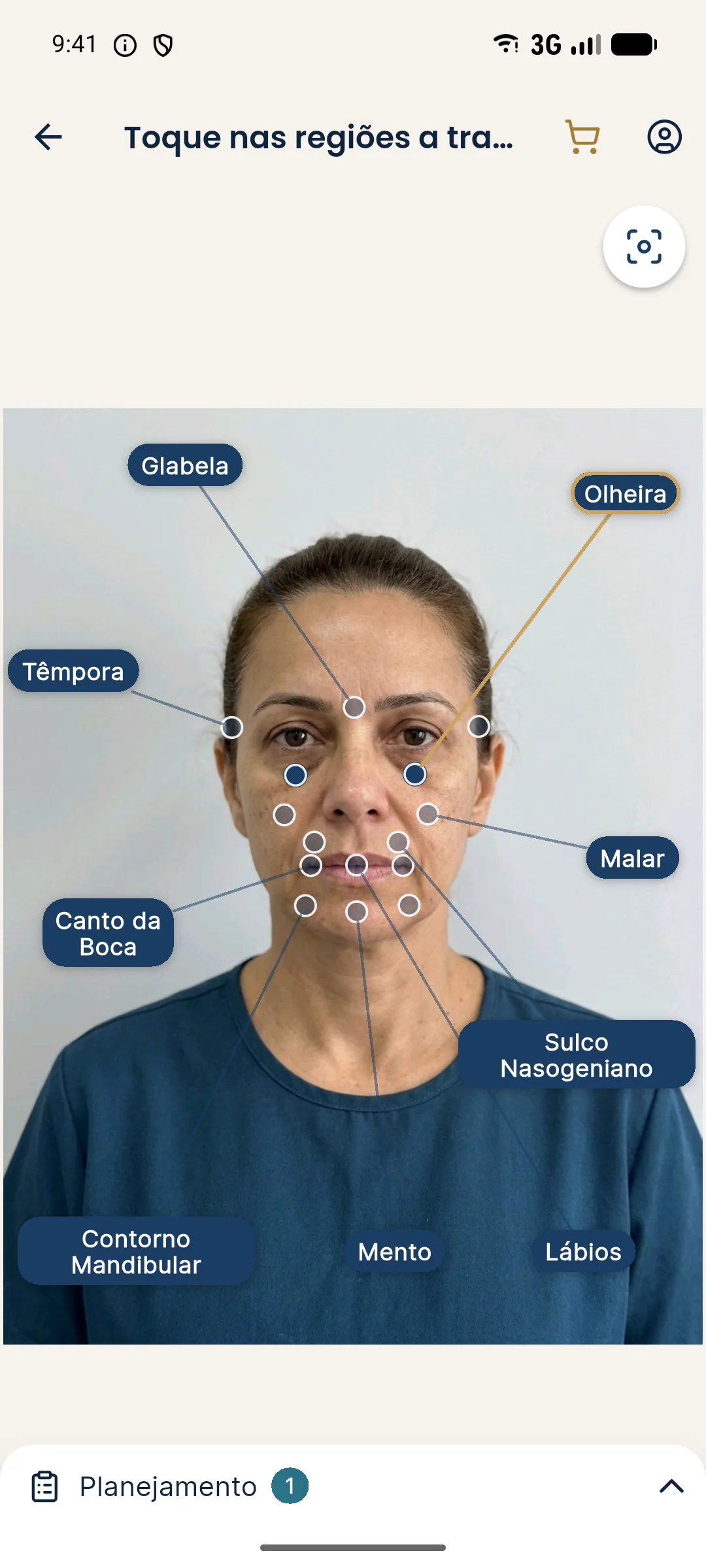
For the comparison to be valid, the input photo must have soft frontal light, with no ceiling shadows. A photo with harsh light produces a projection that inherits the problem. See standardized frontal photo and simulation on dark skin and lighting.
Record keeping
Keep the shadow map together with the photos, the classification and the decisions. Also record what was left untreated because it is natural. Volumes and techniques are at the discretion of the qualified professional, after assessment and in line with the rules of their professional council in Brazil.
Frequently asked questions
Does every shadow on the face need treatment?
No. A young face has natural shadows that give relief and identity. What gets assessed are deep or disproportionate shadows, or ones the patient experiences as looking tired.
How can I tell whether a shadow comes from light or from structure?
By photographing again with soft frontal light and with side light. A structural shadow persists and changes shape. A lighting shadow disappears or moves with the light.
Which shadows bother patients the most?
Usually those under the eyes, beside the nose, under the lower lip and under the cheekbone. Each one points to a different structure.
Does removing every shadow make the face more attractive?
Not necessarily. Without shadows, the face loses relief and looks flat and artificial. The goal is usually to balance, not to erase.
Harmy images are illustrative simulations generated by AI from the patient's photo to support the conversation between practitioner and patient. They are not a promise of results. Indication, technique, product and volume are solely the decision of the licensed practitioner. This content is for information only and does not replace a clinical assessment.