
Treat the nasolabial fold or its cause in the plan

 BeforeSimulation
- Highlighted area
Quick facts
- Core idea
- The fold is the visible crease, and the cause is usually in the surrounding support
- Common causes
- Cheekbone volume loss, midface descent, ligaments, teeth and bone
- Risk
- The nasolabial fold is a high vascular risk area
- Simulation in Harmy
- Nasolabial Fold and Cheekbone points, with ml and intensity
- Who decides
- Qualified professional, after assessment
The nasolabial fold (smile lines) is the patient pointing at the mirror and saying: "here". The gesture invites an immediate answer: fill where the patient points. But the crease is only the visible part of a larger process, in which midface support descends and tissue builds up around the fold. This page helps you decide whether the plan should treat the crease, the cause or both, and how to explain that logic to the patient. It is a map of reasoning, not a protocol.
What is the fold and why does it appear?
The nasolabial fold is the crease running from the side of the nose to the corner of the mouth. It exists in almost all adults and is part of expression, especially when smiling. What changes from face to face is the depth at rest, and it depends on several factors: volume loss in the cheekbone and premaxillary region, descent of the midface fat compartments, ligament laxity, bone and dental changes, and even facial habits.
That is why "treating the fold" is an imprecise phrase. What you want to treat is the combination of causes that deepens the crease. The definition of the term is in smile lines, and the logic of compartments in midface fat compartments in the plan.
Which causes are usually behind it?
| Possible cause | What you see | Direction of the plan |
|---|---|---|
| Loss of cheekbone support | Flat cheek, "dropped" midface | Assess midface support |
| Local volume loss | Deep crease with adequate cheekbone | Plan focused on the fold, with conservative ml |
| Excess tissue in the area | Heavy crease, wide cheek | Caution; more volume can make it worse |
| Bone or dental factor | Retruded premaxillary area | Limit of harmonization; consider referral |
| Expression habit | Crease marked when smiling | Talk about what is natural expression |
This reading also applies, with adaptations, to marionette lines and the lateral chin. See mouth corners, marionette lines and chin: combining.
Treat the crease, the cause or both?
There are three paths, each with its arguments:
- Treat the cause first. When the cheekbone is flat, restoring support can improve how the crease reads and reduce the volume needed in the fold. It is the most common reasoning and is detailed in nasolabial fold and cheekbone: treating together or separately.
- Treat the crease directly. When support is adequate and the crease is local, the plan can focus on the fold, with conservative ml and attention to risk.
- Treat both in stages. Often the most prudent path: support first, reassessment, and only then the local adjustment.
A frequent mistake is treating the crease with more volume each time the patient returns complaining. The fold "eats" product, and the face keeps filling up in the area without the cause being treated. If that happens, pause and reassess the cause. See when the total volume becomes excess.
Which risks call for attention in the fold?
The nasolabial fold is an important vascular risk area, because of the proximity of the facial artery and its branches. Vascular occlusion is rare and serious. Bruising and swelling are common; nodules, irregularities and the Tyndall effect (a bluish look when the product is superficial) can also occur. When hyaluronic acid is used, hyaluronidase must be available on site, and the team must recognize warning signs.
The anatomical review is in vascular danger zones of the face and safety and complications, overview. For whoever is planning, the point is that the risk is an additional reason to treat the cause when possible, instead of repeating volume in the crease.
How does the simulation help explain the cause?
In Harmy, you mark Cheekbone and Nasolabial Fold on the same frontal photo and generate comparable projections. For example: one projection with only the cheekbone (conservative ml, Subtle or Moderate intensity) and another with cheekbone plus fold. For a bilateral area, the ml entered is the total, split between both sides.
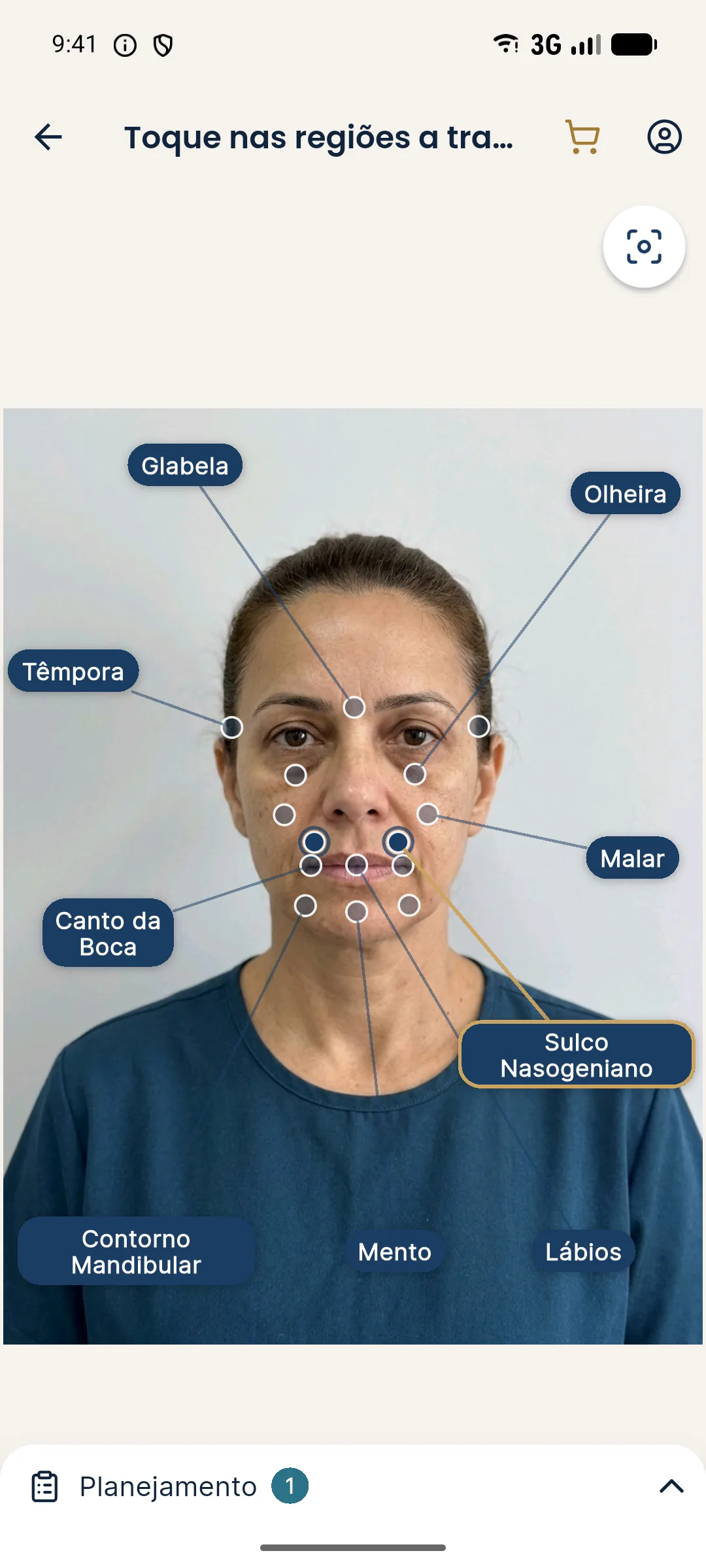
The comparison shows the patient that the change in the crease may come, in part, from support. The AI respects the volume and changes only what was marked, without simulating muscle action or altering expression. That is why the difference is subtle. In faces with a very deep fold, the simulation does not promise that it disappears; it shows a direction.
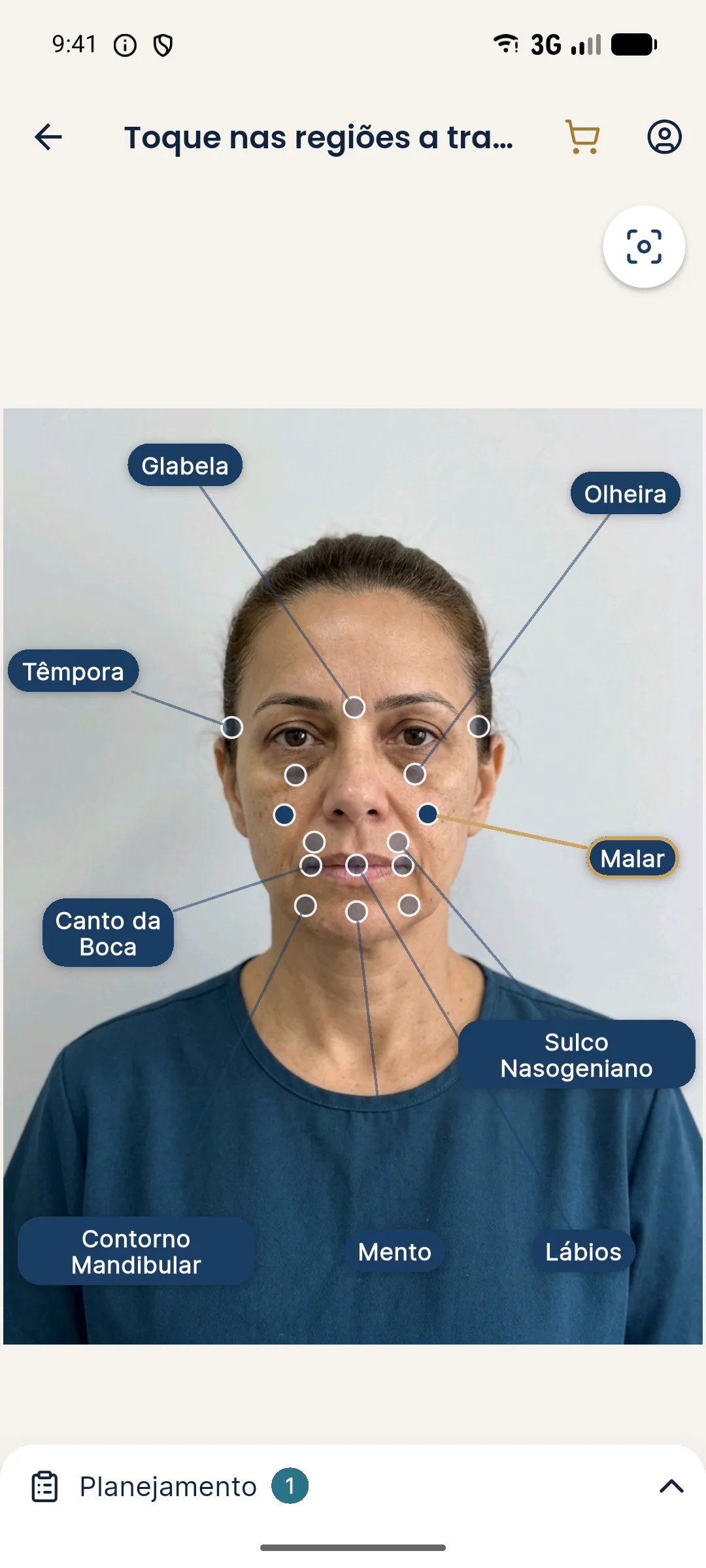
The limitation is the usual one: the projection uses a frontal photo at rest. It does not show the crease when smiling or the bone structure. It is an illustrative simulation, not a promise of results. See limits of 2D simulation.
How do you organize the plan in stages?
The logic of splitting is in when to split the volume across sessions, and that of viewing the face as a whole in the domino effect between areas of the face.
And when the patient wants only the fold?
It happens. They have already researched it, seen someone's photo and arrived with the request ready. Respect the concern, but explain the logic of cause and consequence with the simulation and with the lift test, if the patient agrees. If, after the conversation, they choose to treat only the fold, record the decision and propose conservative volume and reassessment.
When the patient's decision goes against what you consider prudent, you are not obliged to accept. See when to say no to the aesthetic plan.
Check before the plan
Quick review
Summary
The fold is the visible crease; the cause usually lies in the surrounding support. Assess the cheekbone, local volume, bone and teeth, split into stages, respect the vascular risk and use Harmy's simulation to show the logic, always as an illustrative simulation from a frontal photo.
Frequently asked questions
Does filling the nasolabial fold solve smile lines?
It can soften the fold in some faces, but if the cause is loss of midface support, treating only the fold is usually less effective and can weigh down the area.
How do you know if the cause of the fold is the cheekbone?
On exam, gently lift the cheek skin up and outward. If the fold softens a lot, support is part of the cause. The full assessment belongs to the professional.
Do marionette lines follow the same logic?
In part. Marionette lines can also come from loss of support in the lower third and the lateral chin, but each face has its own causes.
Is the fold always an indication for treatment?
No. The fold exists in almost all adult faces and is part of expression. The indication depends on the patient's concern and on the assessment.
Harmy images are illustrative simulations generated by AI from the patient's photo to support the conversation between practitioner and patient. They are not a promise of results. Indication, technique, product and volume are solely the decision of the licensed practitioner. This content is for information only and does not replace a clinical assessment.