
Does Nasolabial Fold Filler Change Your Smile?

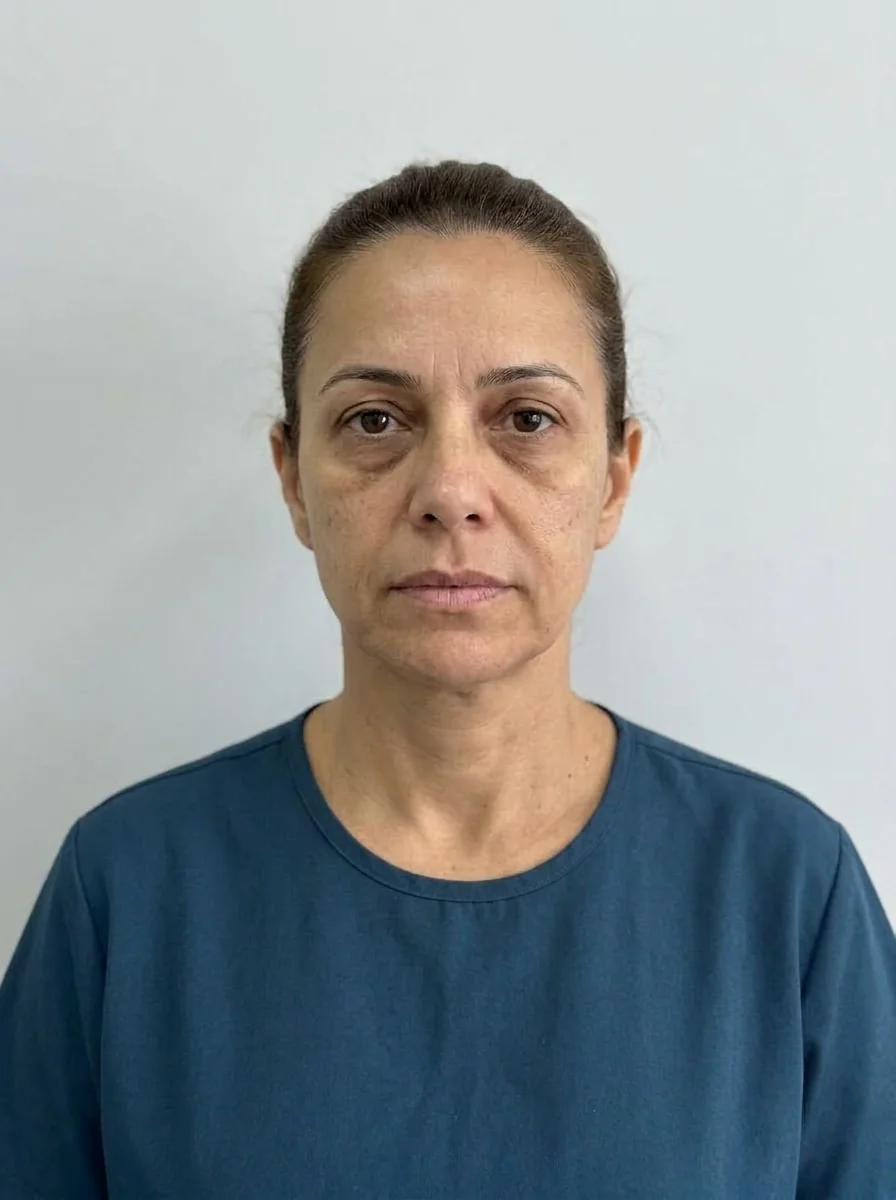 BeforeSimulation
Quick facts
- Question
- Does nasolabial fold filler change the smile
- Usual range
- It can change it subtly if the volume is excessive or poorly distributed
- Point of attention
- Stiffness when smiling, heavy upper lip, artificial look
- Who decides
- The professional, after a dynamic assessment of the smile
Patients and professionals share the same fear: treating the "smile lines" and ending up with a different smile, a stiff one or one with the cheek pushed upward. The question is legitimate, because the nasolabial fold follows the movement of the smile. This page explains why the smile can change, when that happens and how to run the consultation so that the expression stays the patient's own.
Why are the fold and the smile connected?
The nasolabial fold (smile lines) is the crease running from the side of the nose toward the corner of the mouth. When we smile, the zygomaticus major muscle pulls the corner of the mouth up and outward, the cheek fat rises and the crease deepens. In other words, the fold is part of the mechanics of the smile, not an isolated flaw.
For that reason, any volume placed in or around the fold affects how the tissue folds, glides and returns. A small, well-distributed addition goes unnoticed. An addition that is too large creates a "bar" under the cheek that does not follow the movement.
In which situations does the smile change in an unwanted way?
| Situation | What the patient notices | Likely cause |
|---|---|---|
| Excess volume in the fold | Rigid block when smiling, mask-like look | Filler in a quantity above what was needed |
| Product firmer than the tissue | Contour that does not follow movement | A product unsuitable for the area |
| Volume asymmetry | One side rises more than the other | Uneven distribution or pre-existing asymmetry |
| Heavier upper lip | Smile with a short or projected lip | Volume advancing onto the perioral region |
| Fold treated, cheek sagging | Tired-looking smile | The cause was in the midface support |
Several of these situations come from the same root: treating the symptom (the fold) and not the cause (loss of support). The comparison between the two strategies is in nasolabial fold: filling the fold or the cheekbone.
How to keep the smile natural?
Some principles that are usually considered in the assessment, at the licensed professional's discretion:
- Examine the cause: loss of cheekbone volume, midface ptosis, excess skin or displaced deep fat. The anatomy of the nasolabial compartment helps in understanding what supports the fold.
- Think as a whole: fold, cheekbone, mouth corner and lip influence one another. In some patients, the fold improves on its own after the cheek support is restored.
- Conservative volumes and reassessment: it is easier to add in a second session than to remove. Usual ranges vary a lot and depend on each face.
- Reassess the smile during the session itself, keeping the initial swelling in mind, since swelling can mask the result in the first hours.
The role of the mouth corner and the lip
Not every impression of a "changed smile" comes from the fold. A downturned mouth corner (marionette line) and a thinner or longer upper lip also alter the smile. See the difference between areas in mouth corners and lips. When the patient complains about the smile after the fold treatment, ask what exactly changed: the fold, the lip or the height of the corner.
What if the smile looks odd?
When the product used was hyaluronic acid, hyaluronidase is the adjustment tool, used at the professional's discretion. It is common to wait for the swelling to go down before deciding, because part of the initial impression disappears. Arrange a follow-up to reassess calmly, rather than reacting on the first day.
How does the projection help align expectations?
In Harmy, you mark the Nasolabial Fold area, set the volume in ml and the intensity (Subtle, Moderate or Pronounced) and generate the projection, which shows the planned change over the patient's frontal photo. Because the AI respects the volume, a small value produces a discreet change, which helps show that the proposal is to soften, not to stretch.
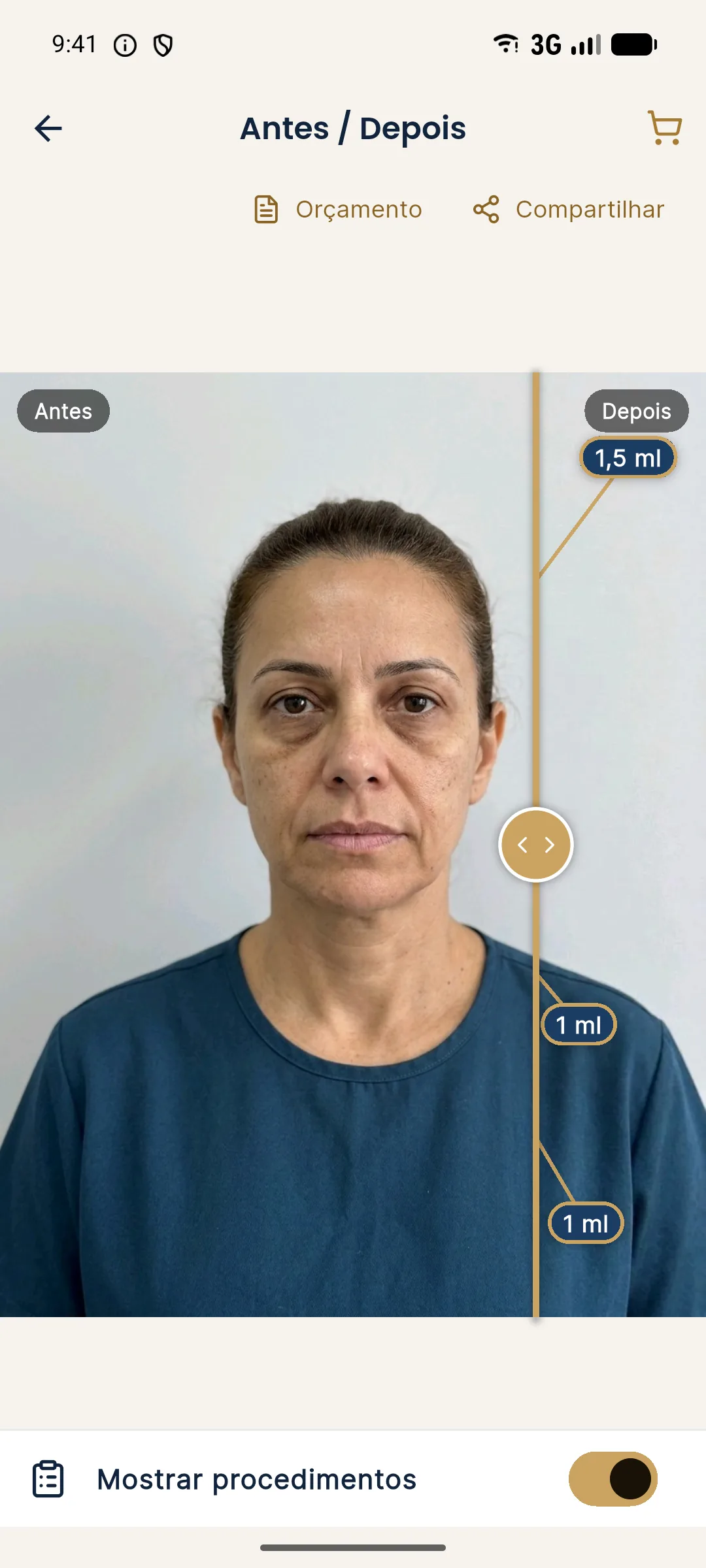
Mind the limits: the projection starts from a frontal photo, at rest. It does not reproduce the movement of the smile or how the product behaves in the tissue, so it is an illustrative simulation, not a promise of results. Combine the slider with the dynamic assessment that only you can do.
What to record in the patient record
Note how the smile looked before, with a photo at rest and smiling, what the patient asked for and what you agreed on. This record protects the patient and you, and allows comparison at the follow-up. Photo standardization is covered in standardized clinical photography, and consent for images in consent and LGPD for photos. (LGPD is Brazil's data protection law.)
In short: the smile can change when the fold is filled, but unwanted changes usually come from too much volume, an unsuitable product or the decision to treat only the crease. Assessing in motion, thinking about the whole midface and leaving the volume decision until after reassessment are the safest ways to preserve the patient's smile.
Frequently asked questions
Does nasolabial fold filler change the smile?
It can alter how the cheek rises and how the fold looks when smiling, especially if the volume is excessive. With planning and conservative volumes, the smile tends to stay natural.
Why does the face look artificial after the fold is filled?
Usually because of too much volume in the fold, which creates a rigid block under the smile, or because only the fold was treated when the cause is lack of support in the midface.
Does the fold disappear when I smile?
No. The fold is a natural crease that deepens when you smile. The goal is usually to soften the fold at rest, not to erase it.
Can it be corrected if the smile looks odd?
When hyaluronic acid was used, hyaluronidase can reduce the excess, at the professional's discretion. Ideally the patient is assessed smiling during the session itself.
Harmy images are illustrative simulations generated by AI from the patient's photo to support the conversation between practitioner and patient. They are not a promise of results. Indication, technique, product and volume are solely the decision of the licensed practitioner. This content is for information only and does not replace a clinical assessment.