
Nasolabial Fold: Fill the Fold or the Cheekbone?

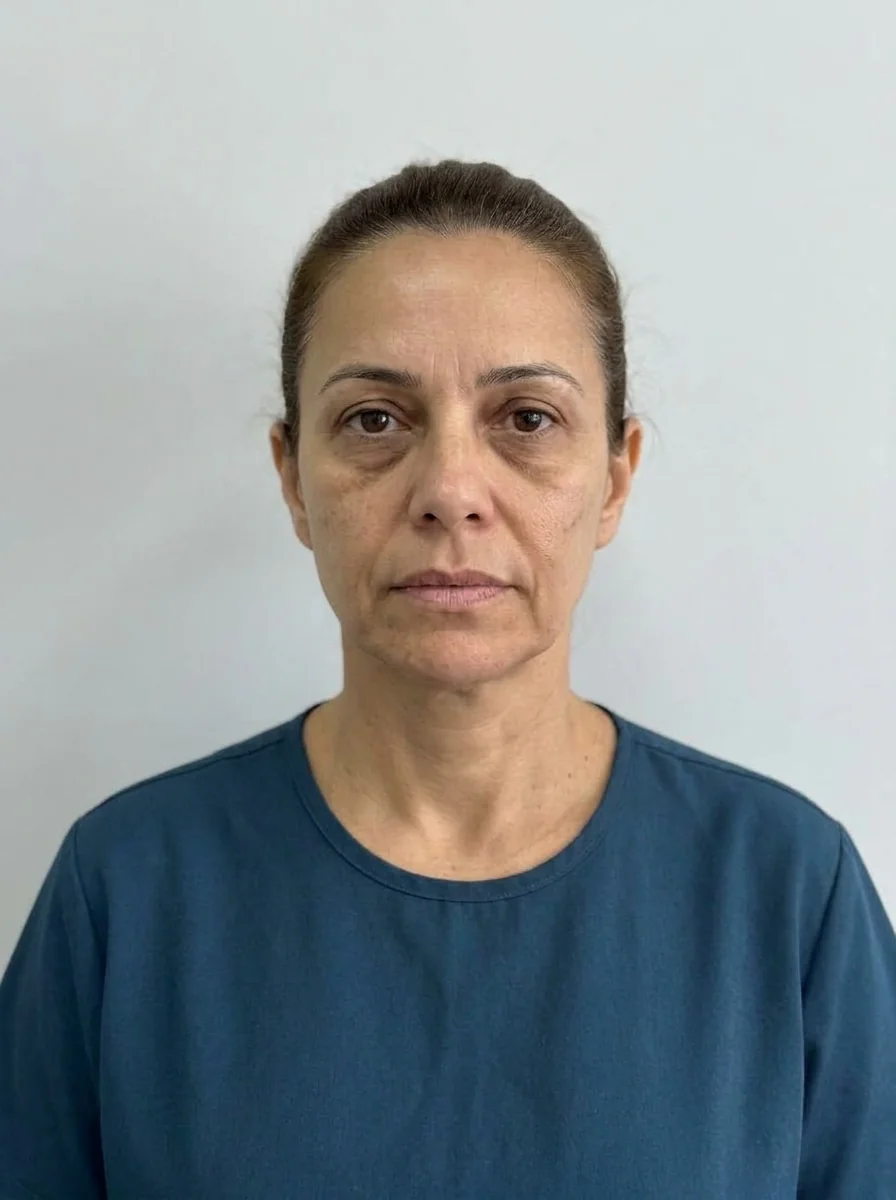 BeforeSimulation
- Highlighted area
Quick facts
- Question
- Treat the fold or the cheek to soften smile lines
- Reasoning
- The fold is usually a consequence of lost midface support
- Decision
- Depends on the cause, age, bone anatomy and the patient's wishes
- Who decides
- The professional, after a complete facial assessment
"Doctor, I want to get rid of my smile lines." The crease is visible and the complaint is clear, but the cause is rarely only there. In most mature faces, the nasolabial fold deepens because the midface loses support and the cheek descends over the crease. That is why the question "fold or cheekbone?" is central to planning, and the answer changes the conversation about cost, volume and expectations.
Why does the fold deepen?
The nasolabial fold is the line where two territories meet: the cheek, which sits above and lateral, and the upper lip, which sits medial. Over time, the volume of the cheekbone region decreases, deep fat loses its support, the retaining ligaments give way and the cheek slides down and forward, stacking tissue over the crease. The visual result is deeper smile lines, even though the crease itself has not changed.
Factors that also contribute: facial fat loss from weight loss, smoking, bone loss in the upper jaw, skin laxity and genetics (faces with less cheekbone projection tend to show the fold earlier).
How to tell the two causes apart at the consultation?
| Finding | Points to the cheekbone | Points to the fold |
|---|---|---|
| Cheek | Flattened, little cheekbone projection | Volume preserved |
| Crease when the cheek is lifted | Clearly improves | Little change |
| Shadow under the eye and transition to the cheek | Present, with a marked groove | Absent |
| Three-quarter view | Recessed midface | Harmonious midface |
| Crease at rest | Deep, but appears as the cheek descends | Deep and fixed, even in a younger patient |
| Skin over the crease | Excess resting on the fold | Firm skin, crease from its own groove |
The manual test is simple: ask the patient to relax, lift the cheek with your fingertips toward the cheekbone and watch the fold in the mirror. If the crease softens a lot, support is the main factor. If it changes little, the fold may be a groove of its own, which responds better to direct treatment.
When is the cheekbone usually the basis of the plan?
Generally, when there is volume and projection loss in the cheek, with shadows under the eyes and a fold that appears as the midface descends. In these cases, treating the cheekbone or the zygomatic area restores support, and the fold is often reassessed afterward instead of being treated at the start. Cheek volume loss is discussed in malar hypoplasia and in the medial deep cheek fat.
When does the fold need direct treatment?
When the midface is well supported and the crease is marked, for example in younger patients with a constitutional fold, or when support has already been restored and a residual line remains. In that case fold filler is the focus, with conservative volume and special attention: the area is high vascular risk, and hyaluronidase must be available whenever hyaluronic acid is used. The risks are covered in nasolabial fold: risks and vessels.
There are also patients for whom neither option solves the essential problem, because the issue is excess skin or marked laxity. In those cases, other technologies or even surgery may enter the conversation, and honesty is worth more than the sale.
How to explain to the patient that the path goes through the cheek?
Many patients become suspicious when the professional suggests treating a different place from the one they pointed to. The explanation that works is about the mechanism, not the product.
How does the projection help with the decision?
In Harmy, you can mark the Cheekbone area and the Nasolabial Fold area in the same session, set the volume of each in ml and compare the effect. The AI respects the volume: small values generate a discreet change. A practical strategy is to generate one projection with the cheekbone only and another with the fold only, and show both in the slider.
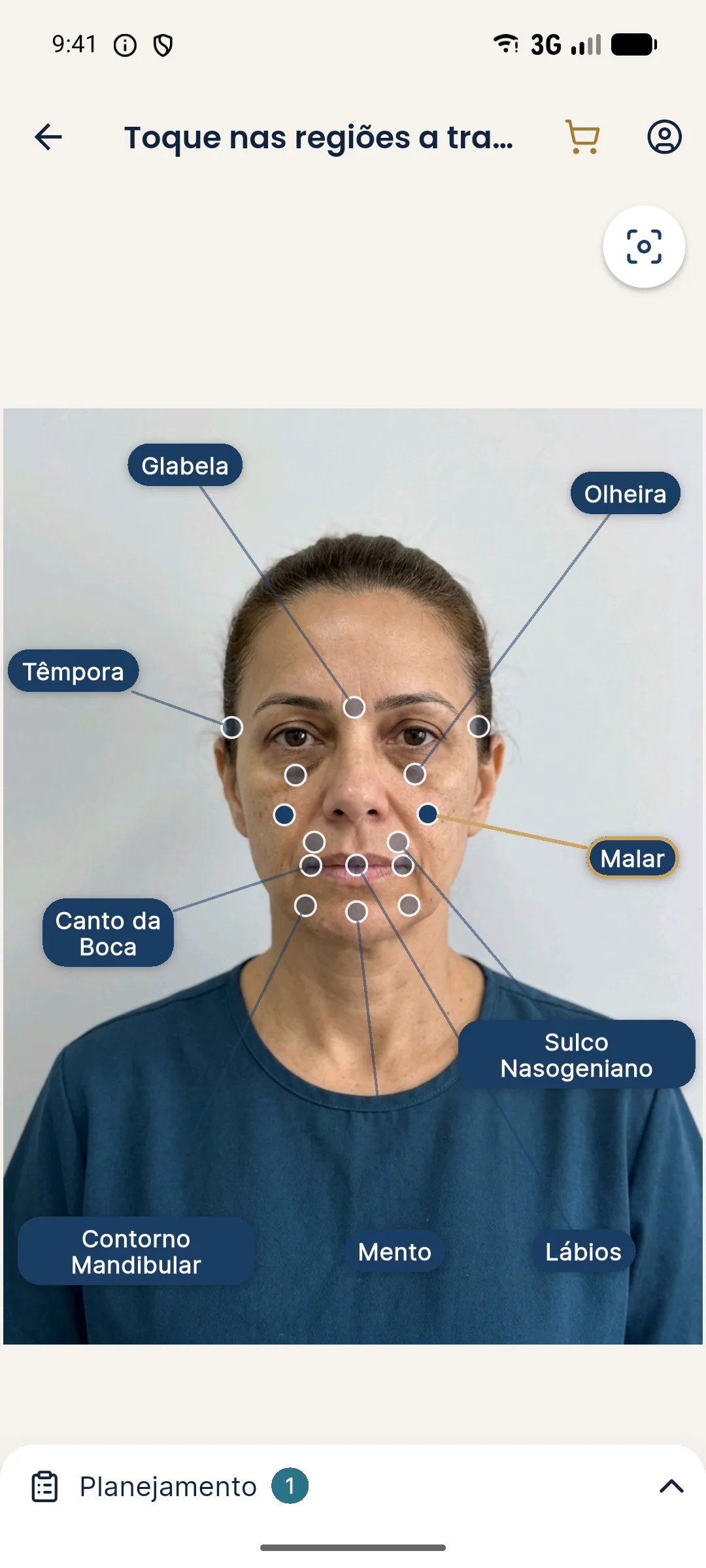
Remember that this is an illustrative simulation from a frontal photo, not a promise of results, and that it does not show the crease in motion or how the tissue behaves. It serves to align expectations and open the conversation about a staged plan.
Quick reasoning quiz
Record the plan in stages
Planning in two stages is usually safer: first the support, then reassessment of the fold once the swelling has resolved. Put it in the written treatment plan and schedule the follow-up. That way the patient understands the fold was not "forgotten", and you avoid overcorrecting in a single session.
In short: the fold is the most visible symptom, and the cheekbone is often the least noticed cause. Examine, show the difference with the cheek lifted, choose the smallest volume that meets the goal and leave room to reassess.
Frequently asked questions
To soften smile lines, is it better to fill the fold or the cheekbone?
It depends on the cause. When the fold deepens because the cheek lost volume and support, treating the cheekbone is usually the foundation, and the fold comes in as a complement, at the professional's discretion.
Does filling only the fold solve it?
It may soften the crease, but if the cause is lack of midface support, the result tends to be limited and the area can look heavy. The assessment decides.
How do I know if the cause is the cheekbone?
Common signs are a flattened cheek, loss of cheekbone projection, shadows under the eye and a crease that improves when the examiner lifts the cheek upward.
Can I treat both in the same session?
It is possible, and it is often planned in stages, starting with support and reassessing the fold afterward. The strategy is at the professional's discretion.
Harmy images are illustrative simulations generated by AI from the patient's photo to support the conversation between practitioner and patient. They are not a promise of results. Indication, technique, product and volume are solely the decision of the licensed practitioner. This content is for information only and does not replace a clinical assessment.