
Hollow cheeks: causes and layer-by-layer options

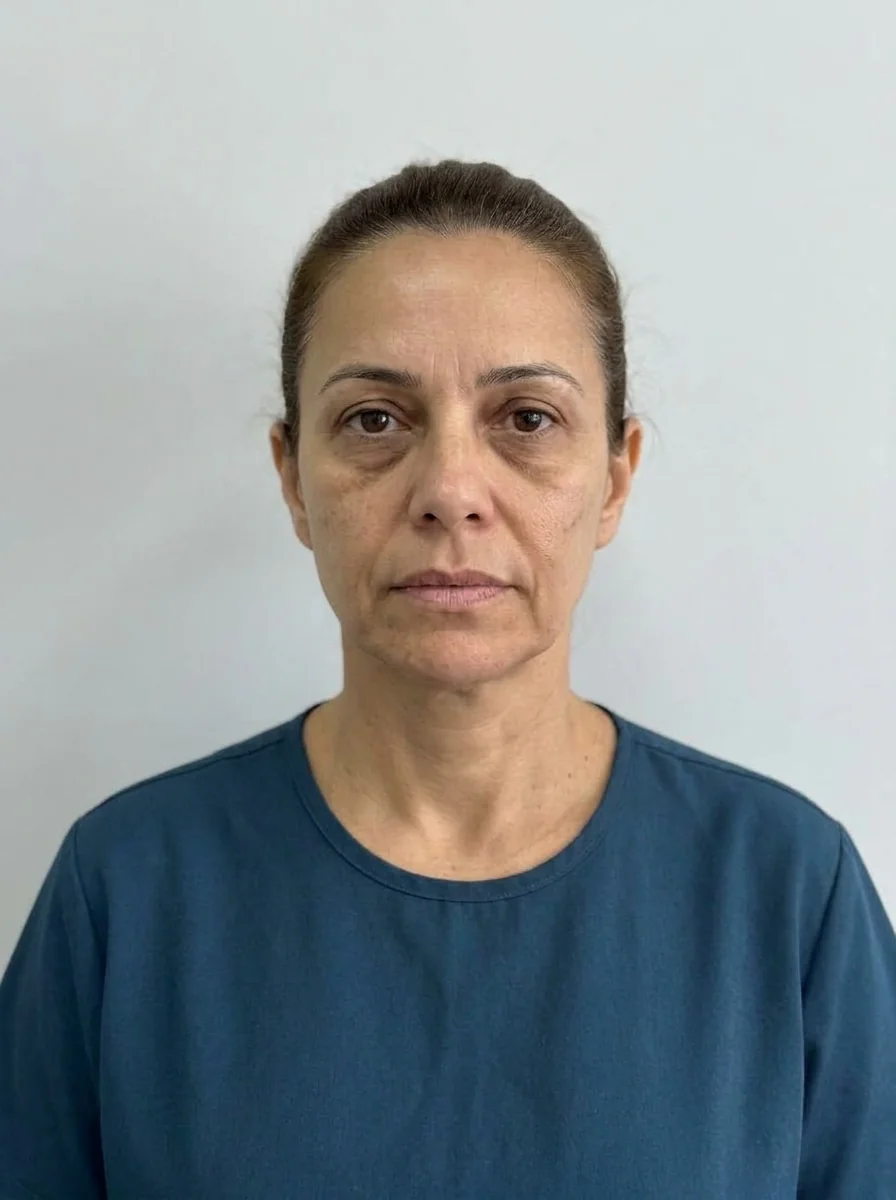 BeforeSimulation
- Highlighted area
Quick facts
- Concern
- Sunken cheeks, gaunt or drawn face, especially in profile and three-quarter view
- Causes
- Age, weight loss, genetics, sport, medications and specific diseases
- Strategy
- Layered replacement, with order and reassessment
- Caution
- Too much volume in thin skin or a lean face looks artificial
Hollow cheeks are one of the concerns that ages the face the most. Patients complain of a "tired face," a "sickly look" or "looking older," and the mirror shows a sunken cheekbone, a shadow beneath the apple of the cheek and skin that seems to lack support. Unlike sagging cheeks (descent), hollow cheeks are volume loss.
This page offers the layered reasoning and the order of the plan. It links to gaunt face, gaunt face after weight loss, deep facial fat loss and facial volume loss after weight loss.
What makes the cheek hollow?
Facial fat is compartmentalized: each compartment behaves in its own way, and they do not age together. The deep medial cheek fat, the SOOF and the prezygomatic space tend to lose volume with age, which leads to flattening of the cheekbone and deepening of the folds.
| Cause | Mechanism | Clue |
|---|---|---|
| Age | Gradual atrophy of deep fat and bone resorption | Progressive loss, especially after 40 |
| Weight loss | Overall reduction of facial volume | Obvious change within months |
| Genetics and facial type | Face with little facial fat since youth | Lean profile, low cheekbone |
| Sport and restrictive diet | Very low facial fat | Defined face, hollow under-eyes |
| Medications and diseases | Effect on facial fat | Specific medical history |
| Prior buccal fat removal | Removal of buccal fat | Hollow face over time |
For significant facial lipodystrophy, associated with diseases or medications, there is a specific clinical assessment before any injectable. See facial lipodystrophy.
How to assess
The assessment looks to understand how much and where volume was lost, and whether the skin can still support the replacement.
Layer-by-layer options
Replacement usually follows a layered logic, at the discretion of the qualified practitioner.
Structure and projection. Malar filler restores projection and is the usual starting point. In significant loss, zygomatic filler comes in as a complement, taking care not to widen the face.
Quality and support. The collagen biostimulator and calcium hydroxyapatite are considered in some cases, for their gradual action on skin quality and support. See biostimulator or filler and full face biostimulator.
Folds and tear trough. As the cheekbone gains support, it indirectly improves the tear trough and the nasolabial fold. The specific procedures come afterward: tear trough filler and nasolabial fold.
Skin. In thin skin, injectable hydration can improve quality. See do skinboosters work?.
Very lean face. The plan tends to be more conservative, because thin skin and little tissue leave the product visible. The conversation about expectations is central. See harmonization plan for a patient with little facial fat.
Risks
Risks include swelling, bruising, asymmetry, nodules and irregularities, more visible in thin skin. The Tyndall effect is more likely when the product sits superficially in thin skin, and vascular complications are less frequent but serious. The area has branches of the transverse facial artery and the infraorbital nerve deserves attention. Hyaluronidase should be on hand when hyaluronic acid is used.
How to show it in Harmy
In Harmy, the Cheekbone area simulates the restoration of cheekbone projection, and the Tear Trough area shows the indirect effect on the shadow under the eye. The projection uses the frontal photo and changes only what was marked, with no skin or lighting retouching. A photo with even light works best for the app.
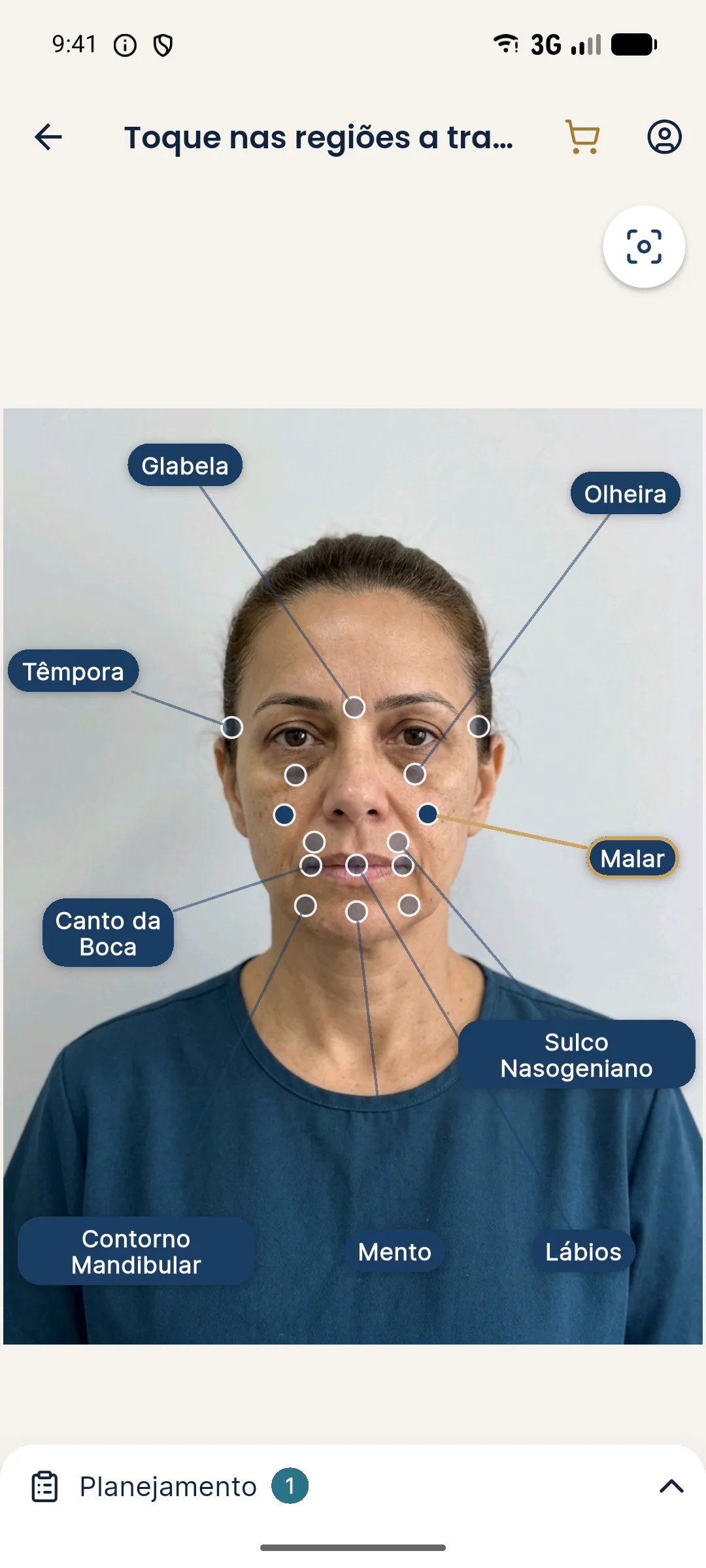
The Maintenance shortcut marks cheekbone 1 ml Subtle, a good base for a lean face. In a bilateral area, the ml is the total, split between both sides. Make two projections (Subtle and Moderate) and compare them on the slider so the patient can choose the degree of change.
Recent weight loss and medications
Weight-loss medications have made rapid facial volume loss a frequent concern. The face "empties" along with the body, and the patient arrives asking for replacement. In these cases, it is worth asking about the weight plan: restoring volume while the patient is still losing weight may require adjustments, and the volume that looks right today may be too much or too little after stabilization.
The practical recommendation is to wait for some weight stability before defining a full plan, and make only conservative adjustments in the meantime, at the discretion of the qualified practitioner. Record the weight and the speed of loss, and agree on reassessments. It is also worth investigating protein intake and hydration, which affect skin quality, and advising the patient to keep up medical follow-up. The page facial volume loss after weight loss covers the topic in more detail.
Wrap-up
Record the photos with side lighting, the suspected cause and the staged plan. For older patients, see face at 60: volume loss and skeletal face. Volumes and techniques are at the discretion of the qualified practitioner, according to the rules of their professional board.
Frequently asked questions
Why did my cheeks become hollow?
The most frequent causes are natural loss of facial fat with age, weight loss, genetics and excessive physical activity. Some diseases and medications can also contribute and deserve assessment.
Filler or biostimulator for hollow cheeks?
It depends on the layer and the skin. Filler restores volume immediately, and the biostimulator works gradually on quality and support. Many plans combine the two, at the discretion of the qualified practitioner.
Do hollow cheeks improve with weight gain?
They may improve, but facial fat redistributes differently from body fat, and does not always return the same way. The assessment defines what to do.
How can I avoid an artificial look when restoring volume in the cheeks?
In stages, with little product per session, respecting the anatomy, the proportions and the skin. Reassess at each follow-up and avoid adding volume only to the cheekbones without considering the whole.
Harmy images are illustrative simulations generated by AI from the patient's photo to support the conversation between practitioner and patient. They are not a promise of results. Indication, technique, product and volume are solely the decision of the licensed practitioner. This content is for information only and does not replace a clinical assessment.