
Gaunt face: causes and options for restoring volume

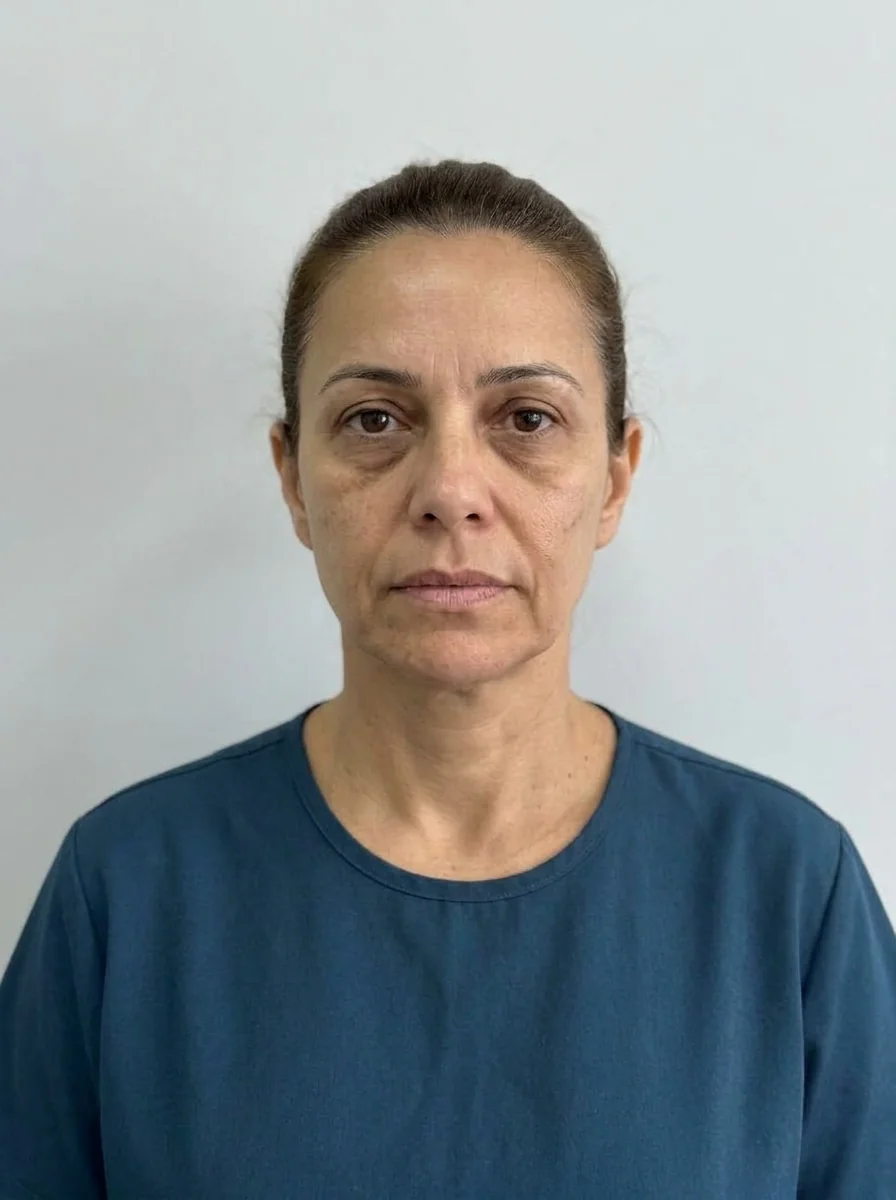 BeforeSimulation
- Highlighted area
Quick facts
- Concern
- Sunken cheeks, hollow temples and a tired look, giving the face a "gaunt" appearance
- Key insight
- The cause may be deep fat, bone or thin skin, and restoration changes depending on which it is
- Supporting measure
- Frontal and oblique photos, the shadow under the cheekbone and the temple profile
- Limit
- Restoration brings back support, but a very thin face calls for caution to avoid looking artificial
The concern of a gaunt face is common in people over 40, in people who have lost weight and in people who train hard. It describes sunken cheeks, hollow temples, a deeper-set look and a face that seems "pulled inward." Patients often sum it up like this: "I look sick" or "I look older than I am."
This page helps you identify what is missing (deep fat, bone or skin), see where volume should come back and plan without weighing the face down. For cases with their own mechanism, see gaunt face after weight loss, skeletal-looking face and deep facial fat loss.
What makes a face look gaunt?
The "gaunt" look comes from three losses acting together. The first is deep fat, which gives projection to the cheek and temple. The second is bone: the facial skeleton resorbs over time, which increases the space the soft tissues have to fill. The third is the skin, which thins and lets shadows show through. Together they create a face in which the bone seems closer to the surface.
The deep medial cheek fat is a key structure: it supports the projection of the cheekbone and fills the transition to the fold. The temporal fat pad keeps the lateral volume of the forehead. When both shrink, the face takes on the typical hollowed contour.
How to identify the predominant cause?
Each cause leaves different clues. The patient's history is as important as the exam, and the question "when did you notice it?" is often decisive.
| Clue | Most likely cause | Note |
|---|---|---|
| Rapid change after a diet or illness | Fat loss from weight loss | See the weight loss page |
| Always a narrow face, prominent bone | Constitutional bone structure | Volume has an aesthetic limit |
| Slow, symmetrical change after 40 | Layered aging | Sum of bone, fat and skin |
| Thin, translucent skin | Skin thinning | Skin care and biostimulation |
| Intense training and restrictive diet | Low body fat percentage | Be careful with the plan |
For the layer-by-layer reasoning, see facial aging by layers and facial bone loss. For the temple, see temple aging and temporal anatomy for injectables.
Where should volume come back first?
The practical rule is to restore structure before treating detail. In a gaunt face, this usually means starting with the cheekbone and, in many cases, the temples, which support the side of the face and influence how the whole face reads. The cheekbone and temples pages cover these areas, and temple filler describes the procedure's context.
The tear trough comes later, when the transition between eye and cheek is still marked. In many patients, the shadow under the eye partly reduces with cheekbone support. Avoid starting there, because the area is delicate and the cause is often lower down.
Fill or stimulate?
They are different logics. Hyaluronic acid restores volume right away and is reversible with hyaluronidase, which is why it is usually the choice for structure. The biostimulator induces collagen gradually and is meant for tissue quality and thickness, not immediate restoration. In very thin faces, a combination may make sense, at the discretion of the qualified professional, but the plan must be conservative. The pages biostimulator in the cheeks and biostimulator in the temples describe the indications, and explaining the difference between filling and stimulating helps with the conversation.
In patients with little fat, the risk is that excess volume contrasts with the rest of the face. A very projected cheekbone on a thin face can look artificial. For the logic of caution, see artificial-looking face.
How to plan in stages?
A gaunt face responds better to small stages. Each session adjusts the support, and the reassessment decides the next step. Many patients are satisfied sooner than they expected, and others ask for refinements. In both cases, the pace is set by the face, not by the schedule.
Ask the patient to track changes in weight and routine, because they alter the plan. Someone who keeps losing weight or training hard will lose volume again, and hyaluronic acid does not replace the fat that is gone. The page planning HOF for someone losing weight fast covers this dynamic.
How to show it to the patient?
Harmy illustrates the Cheekbone point with a volume of 0.5 to 5 ml, and the patient sees the change in support on a frontal photo. The projection is discreet and honest, and the temple has its own marking point, which lets you show the two areas separately.
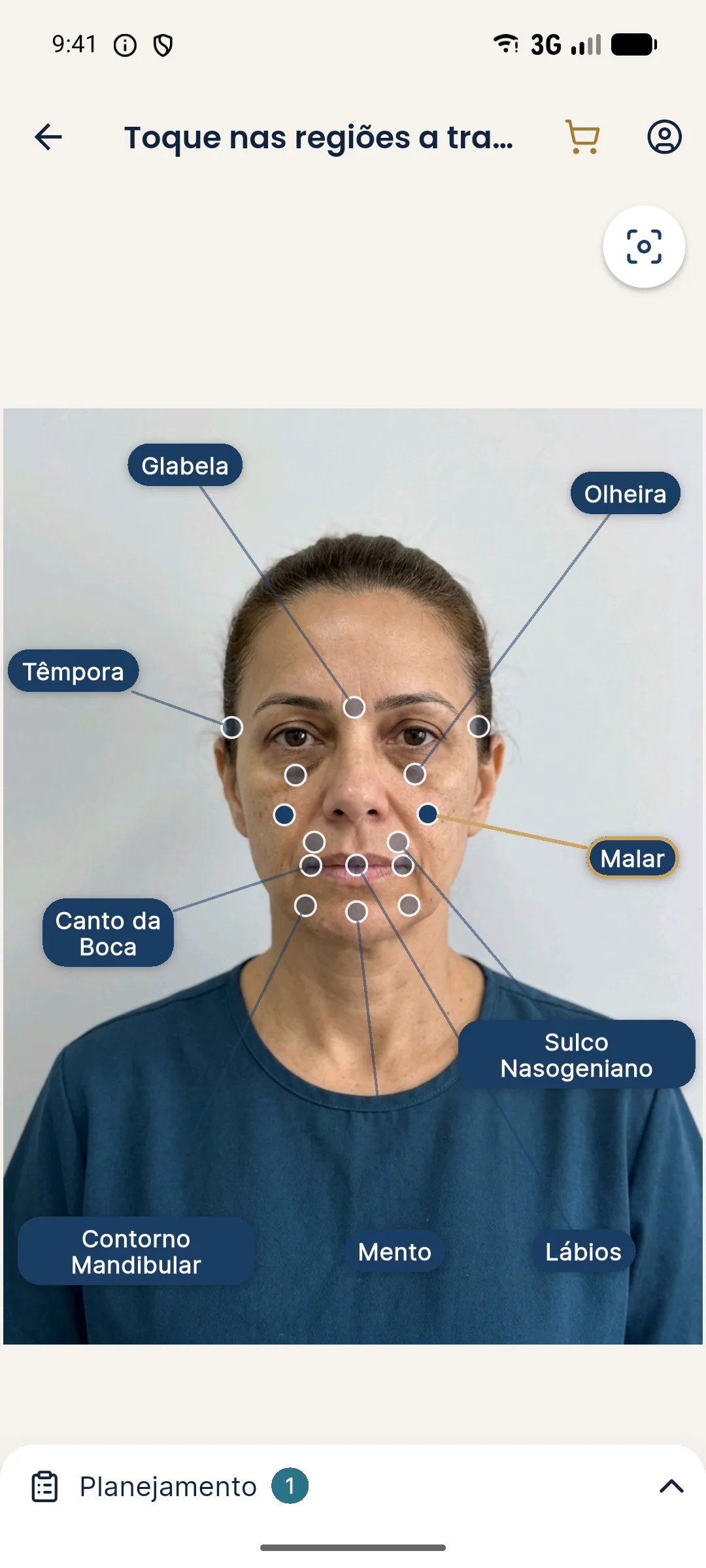
Compare the before photo with the projection using the slider and, if you want to show the detail of the treated area, use the magnifier in presentation mode. To present it well, see presenting the projection in the consultation.
Frequently asked questions
What makes a face look gaunt?
Loss of deep fat in the cheek and temple, bone resorption and thinning skin usually act together. Weight loss speeds up the picture.
Does filler fix a gaunt face?
It can restore support and soften the shadow when well indicated, always as an improvement and not a full correction. The patient needs to know the goal is gradual improvement, not a return to the face of years ago.
Does a biostimulator help a gaunt face?
It can be considered when the skin has lost quality and thickness, since it stimulates collagen over weeks. The indication is up to the qualified professional, after assessment.
Is there risk in treating a gaunt face?
Yes. The temples and cheeks have important vessels, and the professional must explain swelling, bruising, asymmetry and rare vascular risks, with hyaluronidase available.
Harmy images are illustrative simulations generated by AI from the patient's photo to support the conversation between practitioner and patient. They are not a promise of results. Indication, technique, product and volume are solely the decision of the licensed practitioner. This content is for information only and does not replace a clinical assessment.