
Presenting the visual projection at the consultation: what to say
Showing a simulation at the consultation is one of the most powerful and riskiest moments of the visit. Powerful because the patient understands in seconds what would take ten minutes to explain. Risky because an image is remembered as a promise, no matter how much you said otherwise. What decides which way it goes is what you say along with the image.
This page offers a short five-sentence script, what to avoid and how to document. Conduct and rules depend on the licensed professional and their council; see also presenting before and after at the consultation, which covers the same moment from the angle of the patient's decision.
What is the five-sentence script?
- Context. "Before deciding anything, I want to show you a simulation so we can talk with the same picture in mind."
- What it is. "This is an illustration made on your photo, changing only the areas we marked."
- What it is not. "It is not a guarantee or the final result. Your actual face responds in its own way."
- How to read it. "Notice what changes and what does not. The idea is a subtle adjustment that fits your face."
- Invitation. "Tell me what you think and what you would change. If something bothers you, we adjust the plan."
Why does the order matter?
Show it after the concern, the exam and the feedback on what is possible. If the image opens the consultation, the patient anchors on it and starts negotiating the plan around an "after" you have not yet explained. Also remember that the simulation is only a conversation tool: the plan is decided in the clinical assessment. See aligning expectations at the first consultation.
How to handle the screen?
In Harmy, the flow is straightforward: New projection, patient name, 1 frontal photo, marking the areas and ml, and Create projection. Then the Before and the After appear in a slider.
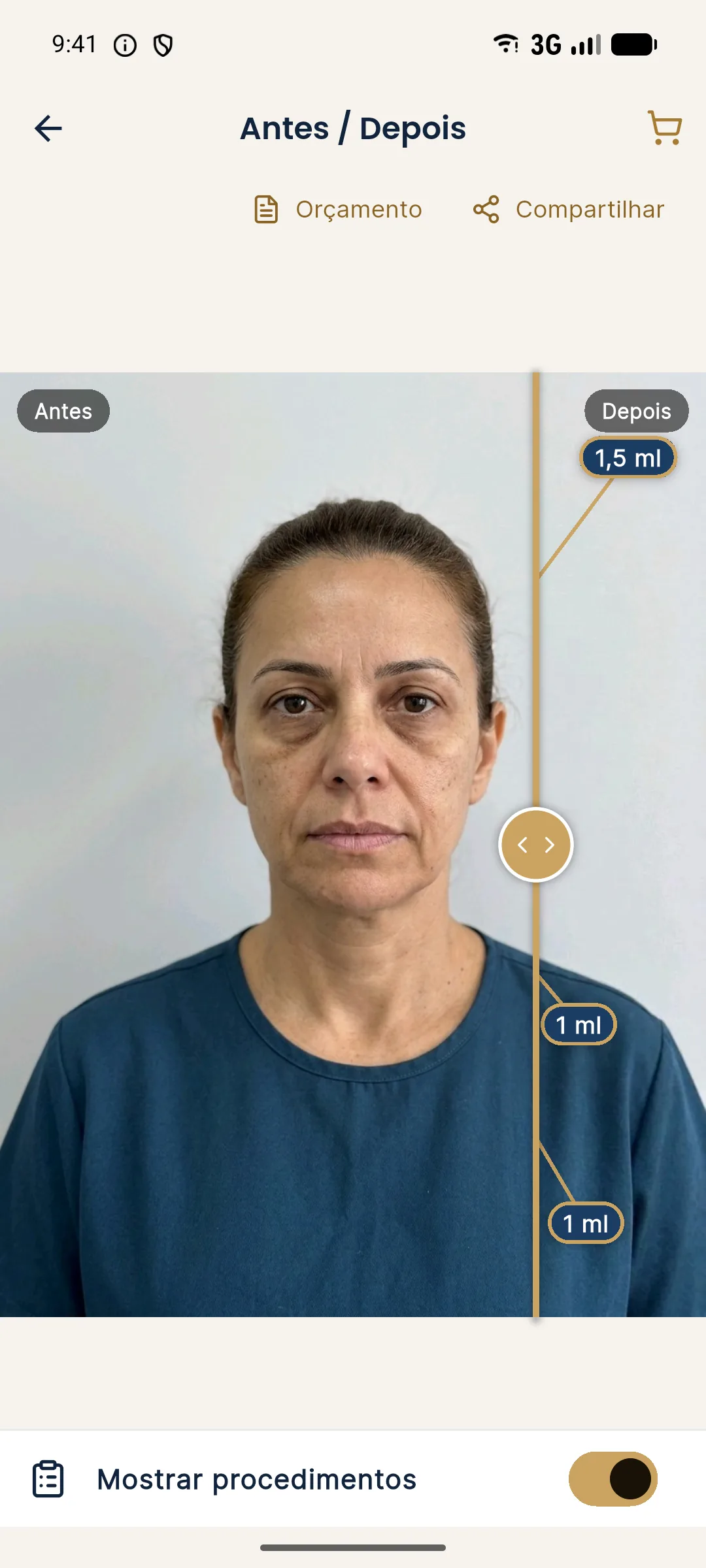
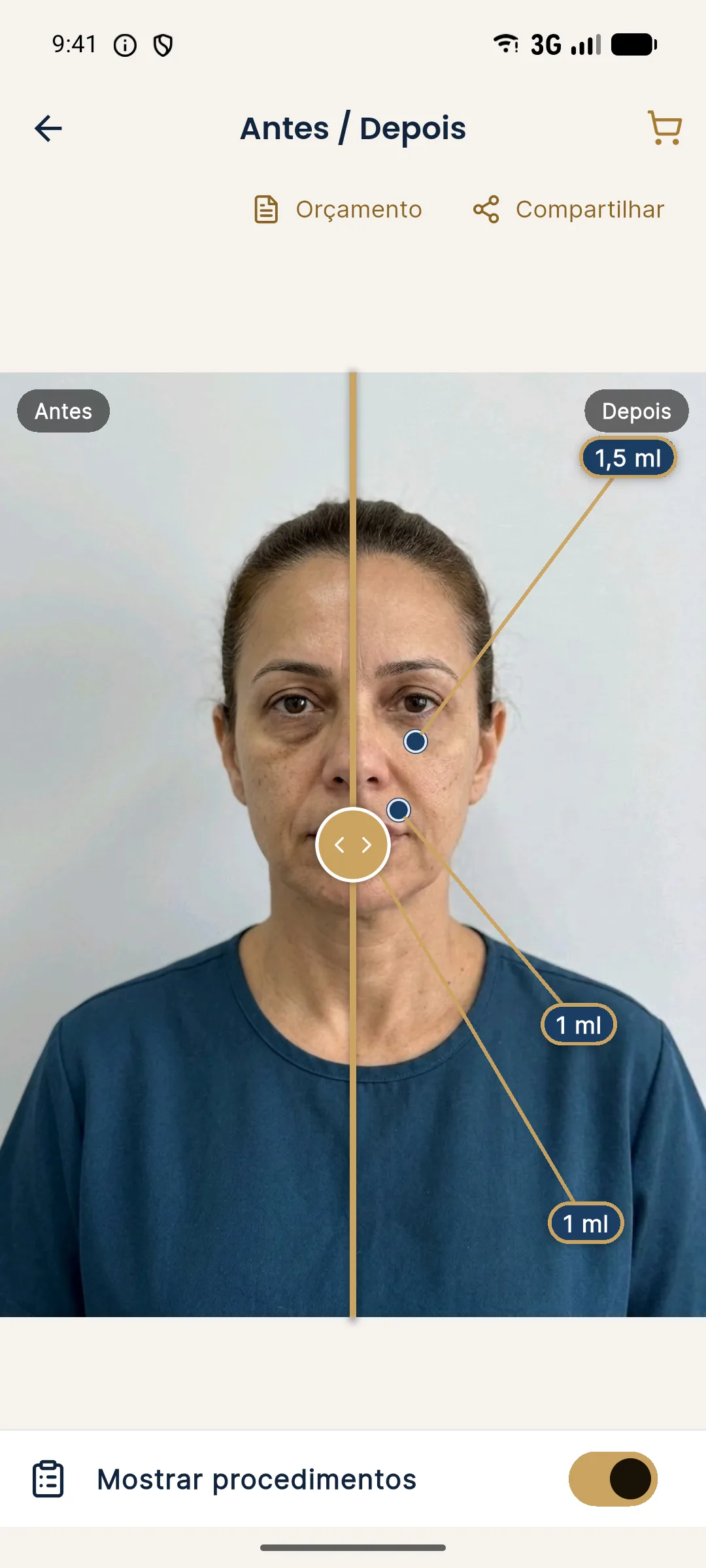
Practice first with the example patient (a fictional person) to gain fluency without using a real patient.
What to say while they look?
Leave a silence. The patient needs a few seconds to look. Then ask what they noticed before saying it yourself. This reveals where their expectation is.
| Patient reaction | What is going on | Possible response |
|---|---|---|
| "It's too little" | Goal above the plan | Return to the limit and explain the intensity chosen |
| "It looks beautiful" | Risk of over-enthusiasm | Reinforce that it is an illustration and the actual result varies |
| "It doesn't look like me" | Discomfort with a big change | Reduce the intensity or volume and propose stages |
| Silence and doubt | Insecurity | Ask what worries them |
What mistakes to avoid?
- Showing it as "your result". It is an illustrative simulation, not the result.
- Using the simulation to pressure. "Only today" and "it will look like this" are the opposite of alignment.
- Hiding the notice. It exists to protect the patient and you. See illustrative simulation notice for the patient.
- Publishing the simulation as an actual result. Follow what you may advertise (CFO and CONAR), the Brazilian dental council and advertising rules.
How to close the presentation?
Close with an alignment question, not a sales one: "What do you expect me to keep the same?" or "Does this represent what you had in mind?". Only then talk about the plan, stages and prices. If a companion is chiming in, see companion who gives opinions at the consultation.
What to record?
Record in the patient record that the simulation was presented, that it was described as illustrative and what adjustments the patient asked for. For the wording, see aligning expectations in writing. Concept and implications in illustrative simulation.
What if the patient asks for more than the plan allows?
It happens often: they look at the simulation and want more volume, more definition, more change. Use that moment to align, not as a sales opportunity. Explain, with the photo in hand, why the plan has that limit, what would change in the proportions of the face and which risks increase with excess. If it makes sense, propose stages and reassessment.
Frequently asked questions
How do I present the after simulation to the patient?
After hearing the concern and explaining the plan, show the simulation as an illustration of what the planned markings may suggest, and say that the actual result varies.
What should I say so it does not sound like a promise?
Use words like 'may', 'illustrates' and 'the idea is', and say out loud that the image is a simulation, not a guarantee or another patient's result.
Should I give the simulation image to the patient?
You can, as long as it comes with the illustrative simulation notice. Avoid publishing it as if it were an actual result, and follow your council's advertising rules.
Does the simulation persuade the patient to book?
It helps them understand the plan, but the focus should be aligning expectations. Used as sales pressure, it can cause frustration if the actual result is different.
Harmy images are illustrative simulations generated by AI from the patient's photo to support the conversation between practitioner and patient. They are not a promise of results. Indication, technique, product and volume are solely the decision of the licensed practitioner. This content is for information only and does not replace a clinical assessment.