
Gaunt face after weight loss: what to do

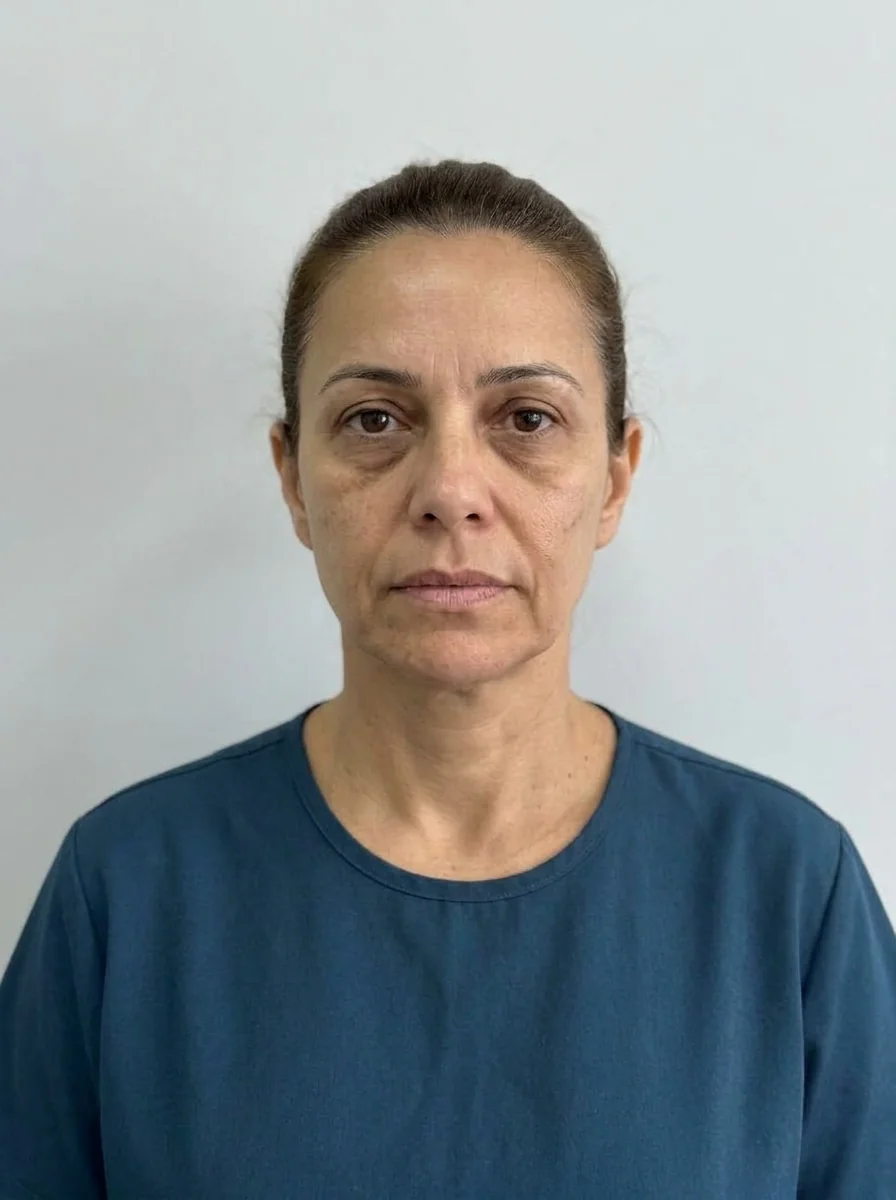 BeforeSimulation
- Highlighted area
Quick facts
- Concern
- I lost weight and my face aged, looks hollow and has loose skin
- Key insight
- Fat loss is fast, the skin does not keep up, and the plan should wait for stabilization
- Supporting measure
- Stable weight for months, photos with overhead light and a gentle skin lift test
- Limit
- Volume does not replace lost fat, and excess skin may call for surgery
The concern comes with a contradiction: the patient reached the weight they wanted, but the face looks older. It is common to hear "I lost weight and aged ten years." Facial fat decreases along with body fat, cheek support gives way, folds become more marked and the skin, which does not retract at the same speed, is left in excess.
For the HOF professional, the challenge is to give the face the right amount of time, choose which layer to restore first and explain that volume does not replace lost fat. This page organizes that reasoning. For a broader view, see facial volume loss after weight loss and face after bariatric surgery.
Why does the face change so much with weight loss?
Facial fat is organized in superficial and deep compartments. With weight loss, the compartments shrink unevenly, and the whole changes shape. The volume that supported the cheek, temple and perioral region decreases, and the retaining ligaments, once under tension, begin to show the transition as a fold. The page on fat pads and the one on facial fat compartments detail the topic.
The typical result is: a lower cheek, a deeper nasolabial fold, a more evident under-eye hollow, a concave temple and a less clean jaw contour, with jowl formation. In someone who lost weight very quickly, the skin had no time to adapt, and the look of excess is greater.
When to start treatment?
The temptation is to treat right away, because the patient is bothered. The best time is usually after weight has been stable for a few months, at the professional's discretion. Planning on a face that will still change leads to one of two failures: injecting too much and ending up disproportionate when the face changes again, or injecting too little and needing several extra sessions.
There are exceptions. If the distress is great and the weight loss is slow, a conservative first stage may be acceptable, with the awareness that there will be reassessment. The point is to agree with the patient that the plan evolves with their weight. See planning HOF for rapid weight loss for the logic of a flexible plan.
| Situation | Suggested approach | Reason |
|---|---|---|
| Still losing weight | Wait or intervene only minimally | The face keeps changing |
| Weight stable for a few months | Plan layered restoration | A reliable planning basis |
| Evident excess skin | Discuss limits and surgery | Volume may not be enough |
| Using a weight-loss medication | Align the pace and monitor | The loss may still continue |
| Risk of regaining weight | Avoid excessive volume | The face may change again |
What is the order of restoration?
Think in layers. The base is structure: the cheekbone and, in marked hollowing, the temples. Next come the folds and the transition to the jaw. Last, the detail of the under-eye area and the perioral region. The order keeps volume from showing up in the detail before structure is restored, and reduces the risk of a heavy look.
- Structure: cheekbone filler and temple filler, according to the degree of hollowing.
- Contour: jawline filler, when the line has lost definition and jowl has set in.
- Detail: under-eye area and folds, once structure is established.
- Skin quality: biostimulator, in selected cases, as in biostimulator and weight loss.
At every stage, the risks include swelling, bruising, asymmetry and, rarely, vascular occlusion, and hyaluronidase must be available. The temples and the nasolabial fold call for special attention because of their vascular anatomy.
And the leftover skin?
Volume restores structure, but it does not shorten the skin. When there is significant excess, filler may be hidden or may worsen the look of heaviness. In such cases, the honest conversation addresses the possibility of surgery, with an appropriate referral. Biostimulators and skin technologies can improve firmness and quality, but have limits in the face of marked laxity, and the indication depends on assessment. The page on loose skin on the face describes this limit.
For cases where the neck and jaw contour is the central concern, see also double chin after weight loss and laxity along the face contour.
How does Harmy help the conversation?
The app lets you mark Cheekbone, Temple, Tear Trough and Jawline and show a discreet projection, which helps the patient understand the gain in support. The "Full harmonization" shortcut marks cheekbone 2 ml, jaw 2 ml, chin 1.5 ml, lips 1 ml and fold 1 ml at Moderate, plus tear trough 1 ml Subtle, but that shortcut is only a starting point and should be adjusted to the case.
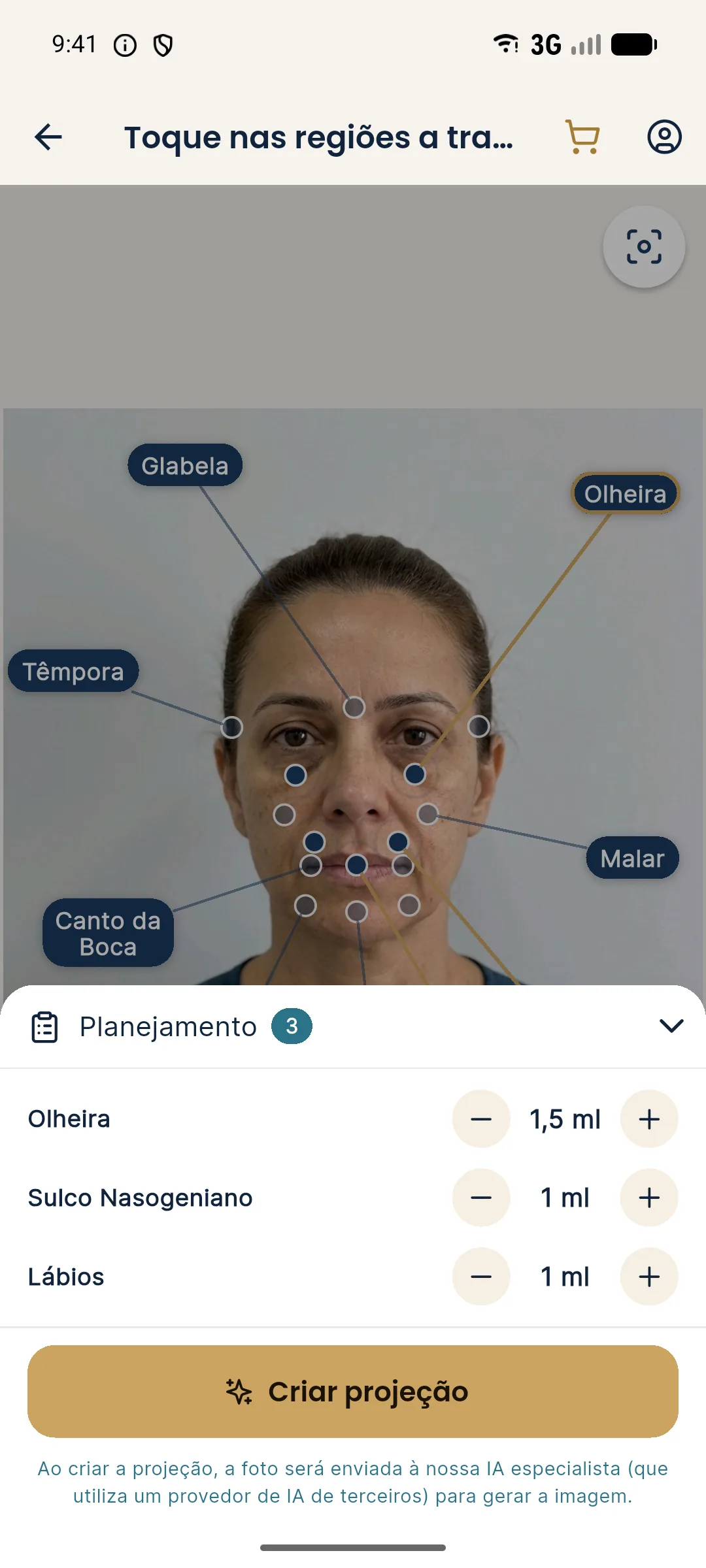
Stress to the patient that the image is a working hypothesis. If they are still losing weight, the projection will serve to plan the first stage, not the final face. The illustrative simulation notice is worth saying out loud.
Frequently asked questions
When can I have volume restored after losing weight?
In general it is advisable to wait for weight to stabilize for a few months, to avoid planning on a face that will still change. The timing is decided by the professional, case by case.
Does filler fix the face of someone who lost a lot of weight?
It can soften the hollowing and restore support, but it does not rebuild all the tissues. When there is excess skin, the improvement tends to be partial.
Is a biostimulator a good option after weight loss?
It can be considered for skin quality and firmness, at the discretion of the qualified professional, after assessment. It does not restore immediate volume and depends on the degree of laxity.
Do weight-loss medications change the face?
Rapid weight loss, by any method, can reduce facial fat and accentuate folds. The professional should ask about use and keep track of the pace of loss.
Harmy images are illustrative simulations generated by AI from the patient's photo to support the conversation between practitioner and patient. They are not a promise of results. Indication, technique, product and volume are solely the decision of the licensed practitioner. This content is for information only and does not replace a clinical assessment.