
Face after bariatric surgery: assessment

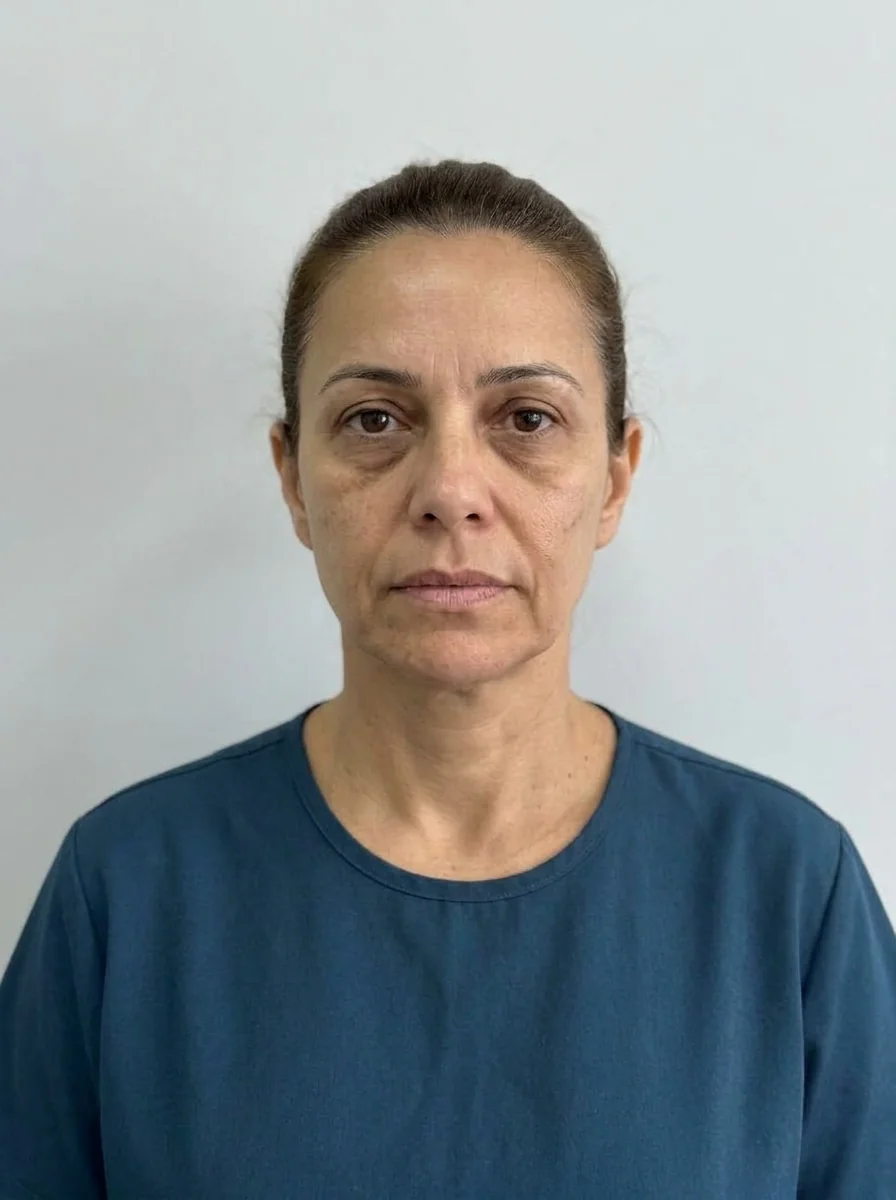 BeforeSimulation
Quick facts
- Concern
- A hollow face, loose skin, folds and a double chin after large, rapid weight loss
- Key reading
- The face lost fat and the skin did not keep up, and the plan depends on weight stabilization and nutrition
- Supporting measurement
- Stable weight for months, nutritional tests and a layer-by-layer assessment
- Limit
- Very loose skin calls for surgical assessment, and HOF restores support but does not reposition tissue
Bariatric surgery changes the body and the face. Large, rapid weight loss removes fat from all of the facial compartments, and the skin, which adapted to a larger volume, does not always keep up. The result can be a hollow face, with folds, a double chin, loose skin and a look of tiredness the patient did not expect, despite being very pleased with their health.
This page guides the assessment in this context, the timing of the plan and the limits of HOF (orofacial harmonization, in Brazil). The general reasoning appears in facial volume loss after weight loss and in planning HOF for people who lose weight quickly. For related concerns, see double chin after weight loss and double chin even when thin.
What happens to the face with large weight loss?
Facial fat is distributed in superficial and deep compartments, and both shrink with weight loss. With modest losses, the face adapts. With large, rapid losses, support disappears faster than the skin can retract. The result usually includes:
- A hollow face, with sunken temples and a cheek without projection.
- Deep-set eyes, with accentuated under-eye hollows and shadows.
- More marked folds, especially the nasolabial and the marionette lines.
- Double chin and jowls, with excess skin and tissue in the lower third.
- Thin, loose skin, with loss of elasticity.
Reading by layers of the face helps understand that the problem is both volume and skin. This explains why the plan must address support and quality, and why the result is limited in cases of significant excess skin.
When is the right time?
The best time is usually when weight is stable, generally for a few months, and the patient is under nutritional follow-up. Planning on a face that is still losing weight makes the applied volume "too much" when the loss continues, or makes the initial assessment misleading. The exact timing is the professional's decision, together with the medical and nutrition team.
Nutritional status and any ongoing supplementation also matter. Deficiencies in protein, iron, vitamins and other micronutrients can affect healing and skin quality. If possible, ask for recent tests and coordinate with the responsible physician. The topic appears in planning HOF for people who lose weight quickly and in reviewing the plan after weight gain.
What are the plan's priorities?
In a face with large volume loss, the reasoning is usually one of structural restoration, in stages, with attention to the skin. The typical order, at the professional's discretion, goes through midface and temple support, followed by skin quality and, last, contour and details. The logic is close to that described in face at 60, with the difference that the patient may be younger and have skin in different condition.
| Finding | Plan direction | Precaution |
|---|---|---|
| Sunken temples | Conservative restoration of support | Vascular-risk area |
| Cheek without projection | Midface support | Avoid a heavy look |
| Under-eye hollow and shadow | Assess the cause; indicate with care | Thin skin, risk of visibility |
| Double chin and loose skin | Assess stimulation or surgery | Excess skin limits the result |
| Thin, loose skin | Quality: biostimulation, care | Gradual response |
See temple filler, cheekbone filler and biostimulators: overview. For the plan in phases, HOF plan in three sessions.
At the temples, cheekbone and under-eye, the vascular risk is relevant, and possible complications include swelling, bruising, asymmetry, nodules and, rarely, vascular occlusion. Hyaluronidase must be available when hyaluronic acid is used. See safety and complications.
When is plastic surgery the answer?
With very large losses, the excess skin on the face and neck can be significant, with a marked double chin, platysmal bands and pronounced jowls. In that situation, volume only disguises it, and plastic surgery may be the most effective answer. Many bariatric patients already undergo reconstructive body surgery, and the face may come afterward.
HOF can complement surgery, before or after, with coordination between the professionals. Saying this clearly protects the patient from unrealistic expectations and from spending on something surgery would solve better. See face concerns after plastic surgery and patient referral in HOF.
How does Harmy help?
Harmy helps show, on the frontal photo, the support effect at the Cheekbone, Temple and Jawline. For the bariatric patient, seeing the subtle projection helps them understand that HOF restores support but does not "rebuild" the face they had before. The app does not simulate skin or double chin, and this should be said.
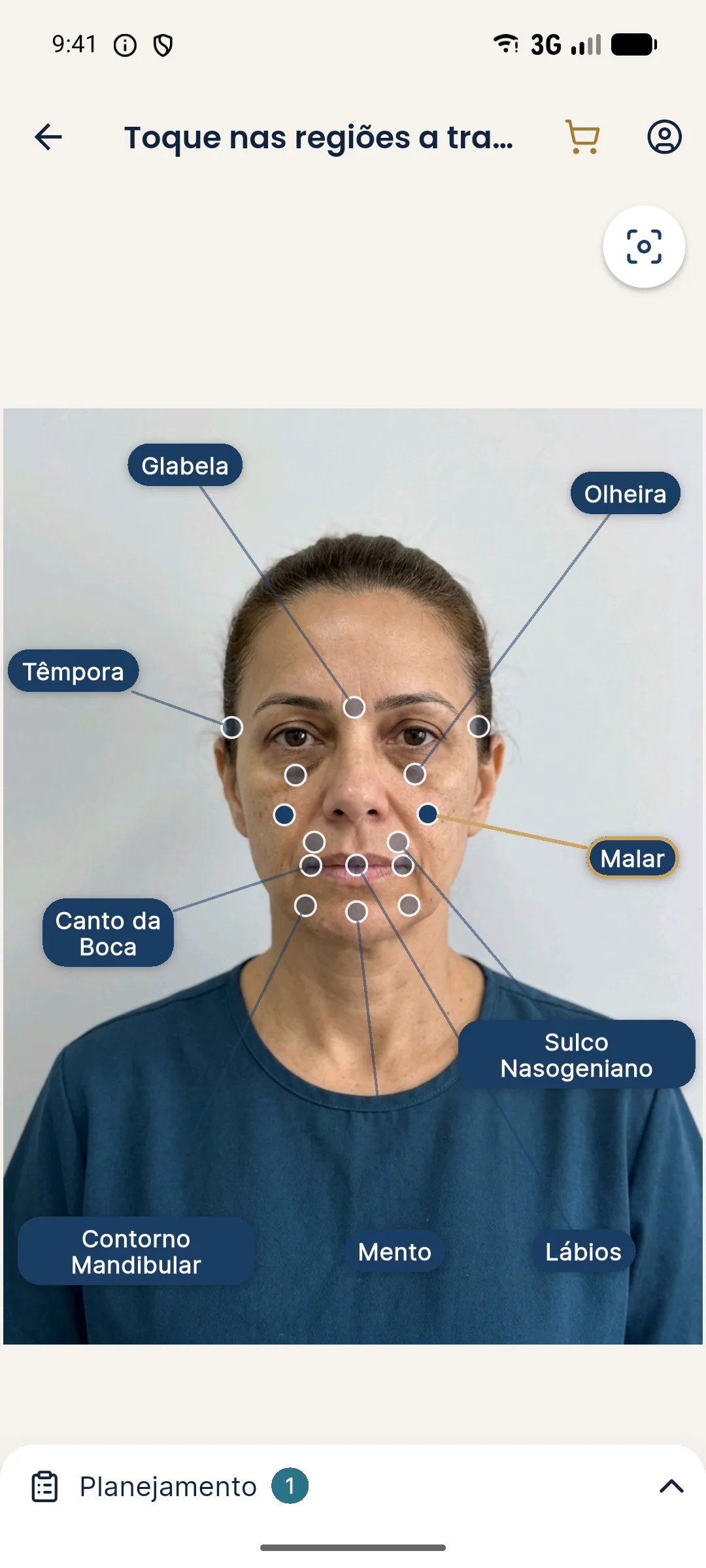
Record keeping
Record weight, time since stabilization, the responsible team, tests, the layer-by-layer assessment, standardized photos, the planned range and the risks explained. Revise the plan if weight changes. The history per patient and standardized clinical photography help compare over time.
Frequently asked questions
When should facial harmonization be done after bariatric surgery?
In general, after weight has stabilized and a nutritional assessment has been done, so as not to plan on a face that is still changing. The timing is decided by the professional, with support from the team following the patient.
Does filler help a hollow face after weight loss?
It can restore support and soften shadows when volume loss predominates. If the skin is very loose, the effect is limited, and the plan should be realistic.
Does a nutritional deficiency interfere with the procedure?
It can affect healing and skin quality. That is why it is important to know the test results and the supplementation under way, and to coordinate with the medical and nutrition team.
Is facial plastic surgery an option?
It can be, when there is excess skin and significant descent. Assessment with a qualified surgeon defines the indication, and HOF can complement before or after.
Harmy images are illustrative simulations generated by AI from the patient's photo to support the conversation between practitioner and patient. They are not a promise of results. Indication, technique, product and volume are solely the decision of the licensed practitioner. This content is for information only and does not replace a clinical assessment.