
Face at 60: volume loss and priorities

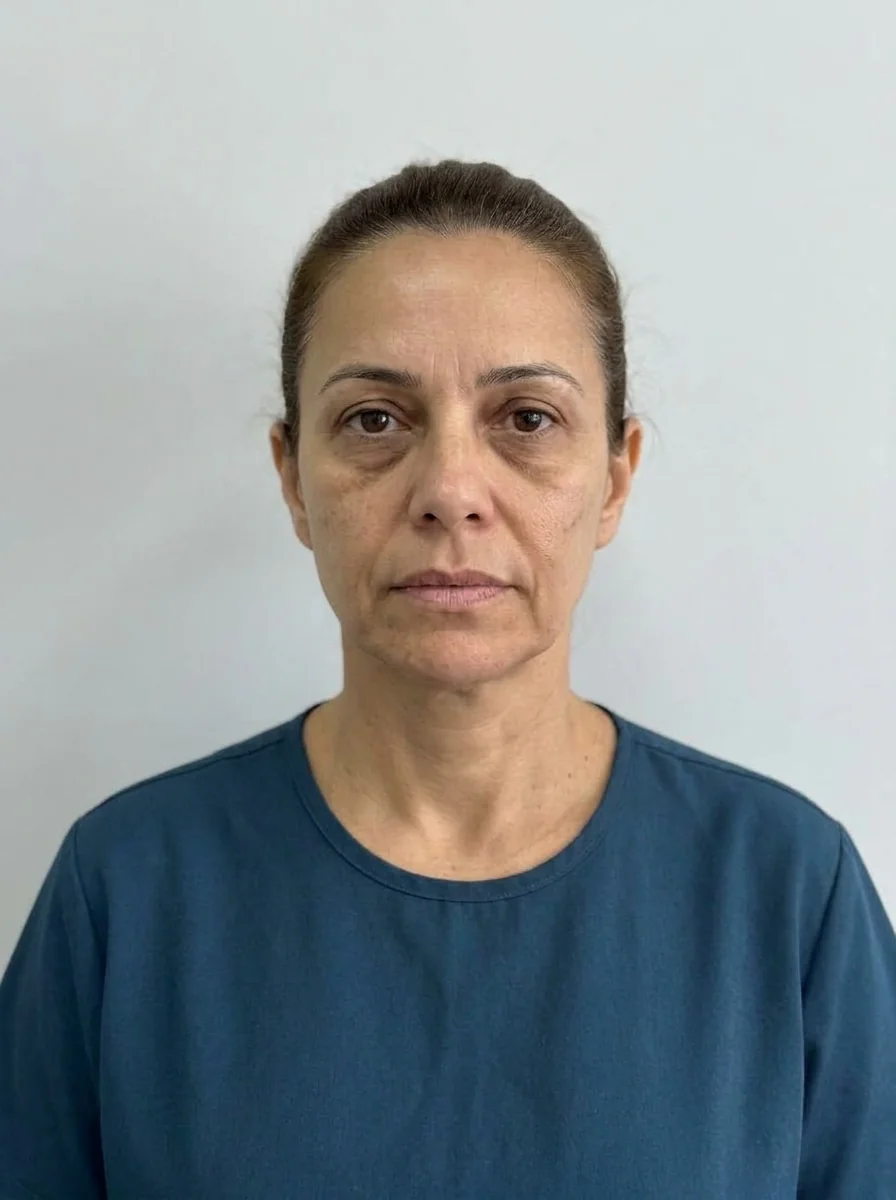 BeforeSimulation
- Nerve
- Highlighted area
Quick facts
- Concern
- A more hollow face, thin and loose skin, a tired look and a contour that has lost definition
- Key reading
- Every layer has changed: bone, fat, muscle, ligaments and skin, and no single tool solves it alone
- Supporting measurement
- Layer-by-layer assessment, skin quality and comparison with an older photo
- Limit
- Significant excess skin and sagging call for surgical assessment, and HOF complements
At 60, the face combines the effects of decades of change in every layer. Bone has resorbed, fat has lost volume and shifted, muscles have changed tone, ligaments have loosened and the skin has become thinner and less elastic. Treating a face like this with the logic of a 35-year-old face is the most common mistake.
This page helps set priorities when "everything has aged," choose a safe sequence and talk about what is possible. For the earlier context, see face at 40 and sagging after 40. For the next age range, face at 70 or older. The broader assessment is in facial analysis at 60 or older.
What changes in each layer at 60?
Thinking in layers makes the plan coherent. Review the layers of the face and notice how each contributes to the picture:
| Layer | Typical change | Visible effect |
|---|---|---|
| Bone | Resorption in the orbit, maxilla and jaw | Deeper-set eyes, recessed midface, less defined contour |
| Deep fat | Loss and repositioning | Hollowing at the temples and cheek, shadows |
| Superficial fat | Descent and accumulation | Folds, jowls, double chin |
| Muscle | Change in tone | Neck bands, asymmetries |
| Ligaments | Loosening | Descent of the midface and contour |
| Skin | Less collagen and elastin | Thin, loose, with static lines |
This reading explains why "filling the wrinkle" rarely solves it. Each sign on the surface has a cause in a deeper layer, and the plan has to decide where to act. For the reasoning, see facial aging by layers and facial skeleton before injecting.
What are the priorities?
In a 60-year-old face, a reasoning order usually works:
- Structural support: temples, cheekbone, jaw and, sometimes, chin. This is what gives the face its base back.
- Skin quality: biostimulator, skin booster and care, to improve thickness and texture.
- Contour: definition of the jawline and the transition to the neck.
- Detail: folds, under-eye hollows, lips and lines, after the base has improved.
Treating the detail before the base is the classic mistake. For example, filling the fold in a face without midface support tends to push volume into an area that still has no foundation. The discussion is in complete midface in the plan and in HOF plan after 60.
How do skin and health change the approach?
Two things weigh more at 60 than at 40. The first is thin skin: it shows the product, tolerates less volume and responds more slowly. The second is general health: use of anticoagulants, antiplatelets, medications that affect healing and chronic diseases raise the risk of bruising and complications. The medical history should be thorough and up to date.
See thin skin at 60, anticoagulants and injectable procedures and diabetes and injectable procedures. When in clinical doubt, contacting the patient's treating physician is a safety measure.
What can HOF do?
The most discussed approaches, at the discretion of the qualified professional and after an assessment, include:
- Temples and cheekbone, to restore the base and reduce shadows. See temple filler and cheekbone filler.
- Collagen biostimulator, to improve tissue quality. See biostimulators: overview and biostimulator in the cheeks.
- Jaw contour, with caution, to reduce the look of jowls. See jaw filler.
- Thread lift, in selected cases. See thread lift.
- Skin care, as an essential part of the plan.
At the temples, cheekbone and fold, the vascular risk is relevant: swelling, bruising, asymmetry, nodules and, rarely, vascular occlusion. Hyaluronidase must be available when hyaluronic acid is used, and the patient must be informed. See safety and complications.
When is surgery the most honest answer?
If there is excess skin and tissue, with significant descent, volume may only disguise it and produce a heavy face. In that situation, the honest path is to explain the limit and propose a surgical assessment. Many patients accept this well when they see the professional is prioritizing the result and not the session.
It is also valid to plan HOF before or after surgery, in combination, with the surgeon's guidance. See face concerns after plastic surgery and concerns that HOF does not solve.
What does Harmy show?
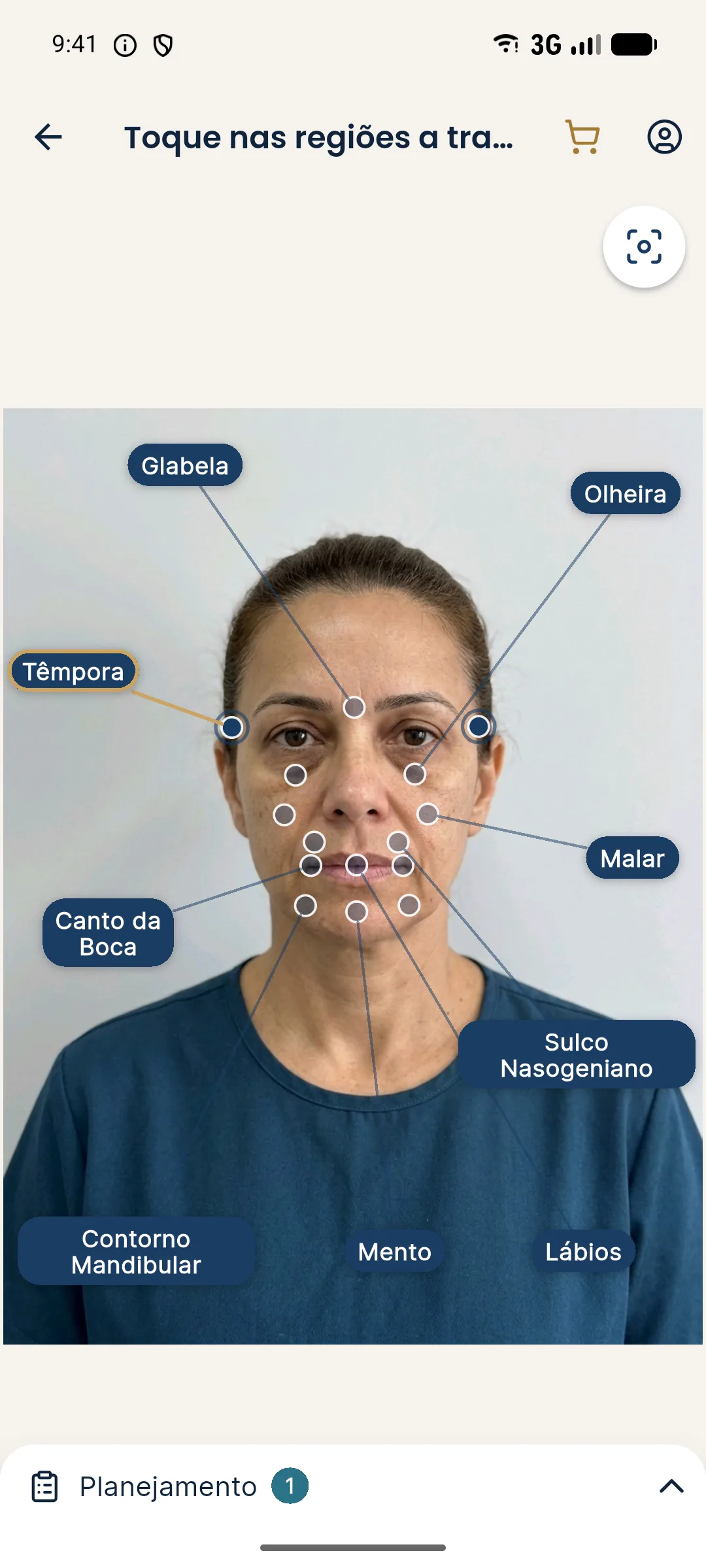
Harmy shows, on the frontal photo, the volume effect at the Temple, Cheekbone, Chin and Jawline in a subtle way. For the 60-year-old patient, this helps align expectations: seeing a modest change avoids the idea of "turning back decades." The app does not simulate the profile, skin texture or the effect of a biostimulator.
Record keeping
Record the health and medication history, the layer-by-layer assessment, the standardized photos, the planned range, the chosen order, awareness of the risks and what was explained about limits. Repeat the photos at follow-up. The history per patient and standardized clinical photography help keep the method consistent.
Frequently asked questions
Is facial harmonization still worthwhile at 60?
It can be, if there is a concern, adequate health and realistic expectations. The plan is usually more cautious, with attention to the skin, medications and health conditions.
What is the priority in the face at 60?
In general, structural support (temples, cheekbone, jaw) and skin quality, before details such as fine lines. The order depends on the assessment of the qualified professional.
Is filler safe in thin, loose skin?
It calls for care, because thin skin shows the product and tolerates less volume. The choice of material and amount is up to the professional, and the plan should be conservative.
When is surgery better than HOF?
When there is a significant excess of skin and tissue, with marked descent. In these cases, volume would only disguise it, and surgical assessment is the most honest path.
Harmy images are illustrative simulations generated by AI from the patient's photo to support the conversation between practitioner and patient. They are not a promise of results. Indication, technique, product and volume are solely the decision of the licensed practitioner. This content is for information only and does not replace a clinical assessment.